


Manas Dasgupta
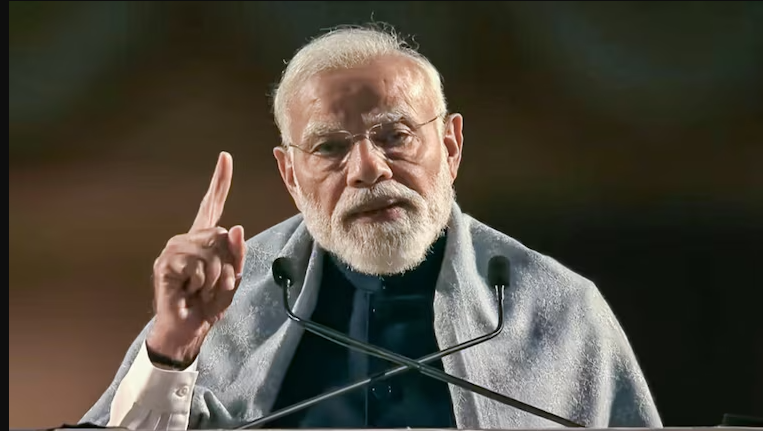
NEW DELHI, Feb 15: The Prime Minister Narendra Modi on Sunday said India had been able to negotiate trade pacts with various countries from a position of strength because of its strength in manufacturing, service sector and Small and Medium Enterprises and helped by “political stability and political predictability” that restored investor confidence in India.”
Mr Modi spoke about the spate of trade deals India has signed in the recent months with multiple countries, including the United States and European Union.
“We have a young and increasingly skilled population; and we are focusing on strong growth accompanied by low inflation and macroeconomic stability. Our youth are creating waves in fields as diverse as space, sports and start-ups. We have ensured political stability and a reform-oriented policy environment,” the prime minister said.
India and the six-nation bloc of Middle Eastern nations — the Gulf Cooperation Council (GCC) — has already inked terms of reference to formally launch negotiations for Free Trade Agreement. With it, the government has finalised as many as nine trade pacts in the last few years, covering 38 developed nations, the government has said.
On signing free trade agreements with 38 countries, Modi said India had negotiated these from a position of strength owing to stronger manufacturing, services and MSMEs. PM Modi said these FTAs had been designed to expand market access for MSMEs in textile, leather, chemicals, handicrafts, gems and other sectors.
The Prime Minister also strongly criticised the previous UPA-led government, saying that during their term, talks would begin and then breakdown and little real substance was achieved at that time despite long negotiations.
He also listed three major reform priorities for the Centre over the next decade, including more structural reforms, deeper innovation and simpler governance. He said while his government’s ‘Reform Express’ had achieved a massive scale of progress, he was “by temperament…never fully satisfied.”
In this context, PM Modi said fundamental reforms in how people transact via UPI platforms had made India a digital leader in the world. He said the country was also laying down the foundation for building a thriving AI (artificial intelligence) ecosystem by expanding computing power and data centre infra capacity. Mr Modi expressed the conviction that women would play the most important role in the creation of Viksit Bharat and maintained that welfare of women guided every decision made by the Centre.
The Prime Minister also spoke about the Budget, specifically defence Budget, and modernisation and said the budget was not a “now or never” moment born out of compulsion, but a “we are ready” moment born out of preparation. He claimed that none of the budgets presented by the NDA government were run-of-the-mill ‘bahi khata’ documents, adding that this was not their approach.
Mr Modi also said the private sector must focus less on protecting margins and invest aggressively in R&D supply chain and quality. At the same time, as productivity rises, the owners must share gains fairly with workers. “The next leap to Viksit Bharat will depend on bold investment by the private sector in innovation, long-term capacity and global competitiveness,” he said.