


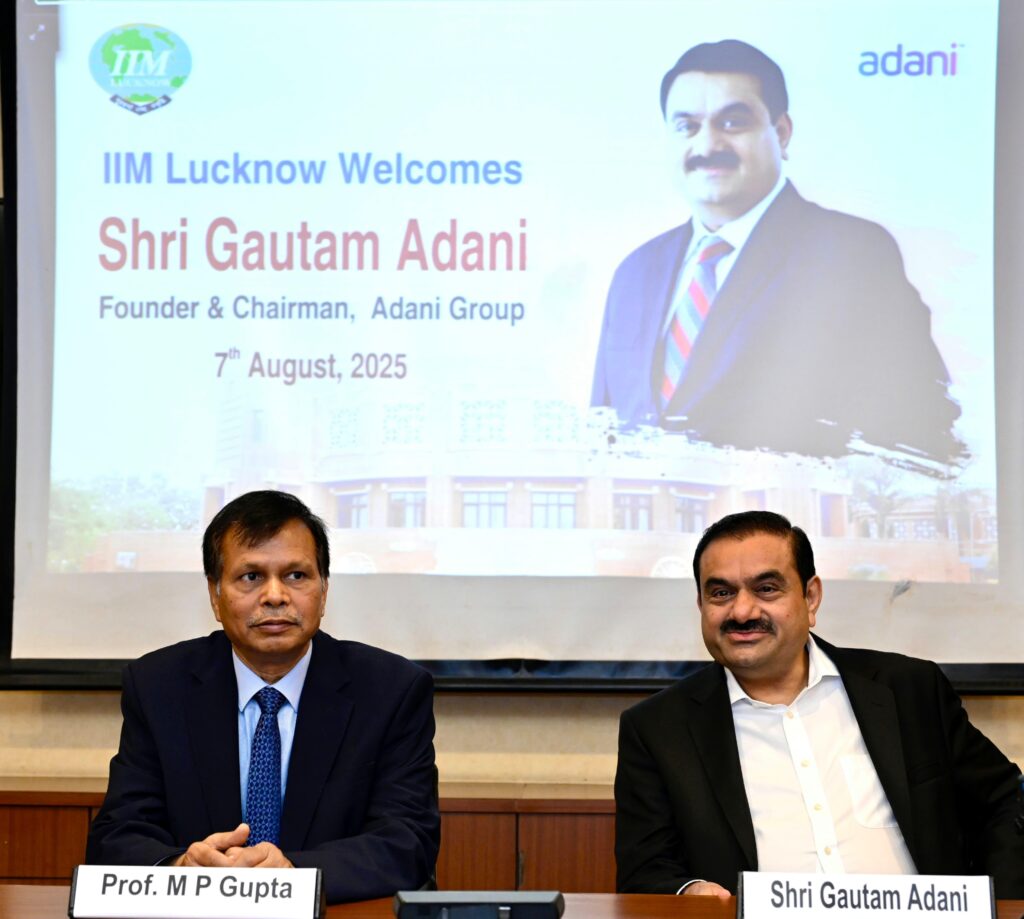
The $5-trillion target is no longer a dream — it’s merely a stepping stone. For Gautam Adani, Chairman of the Adani Group, the true inflection point lies ahead: a $25-trillion Indian economy by 2050. Addressing students at IIM-Lucknow on Thursday, he delivered more than a speech — he offered a national blueprint powered by belief, boldness and purpose.
“The winds of destiny are behind us,” he said. “Demographics, demand, digital infrastructure, and domestic capital — all are aligned for India’s rise.” This vision is anchored in a unique convergence. India today is home to the world’s youngest and most aspirational workforce. Its consumption is rising, its platforms — from Aadhaar to UPI (Unified Payments Interface) — are pioneering and for the first time, domestic capital is backing Indian ambition.
But vision without action is daydreaming — and Mr Adani’s story is anything but that. He urged the next generation to move beyond inherited playbooks. “I stand before you today, not to hand you a map, but to invite you to re-draw the map itself. To challenge your very definition of leadership,” he told the future leaders.
His own journey — from a teenage diamond trader to helming one of India’s most influential business houses — is a lesson in rewriting the rules. “Maps take you where others have been. You need a compass that points to possibilities,” he said. This compass-led leadership was most evident in the birth of Mundra Port in Kutch, Gujarat—now India’s largest—built on a barren stretch of dismissed marshland. “It wasn’t about skill. It was about belief,” he said. That belief transformed not just terrain, but trajectories.
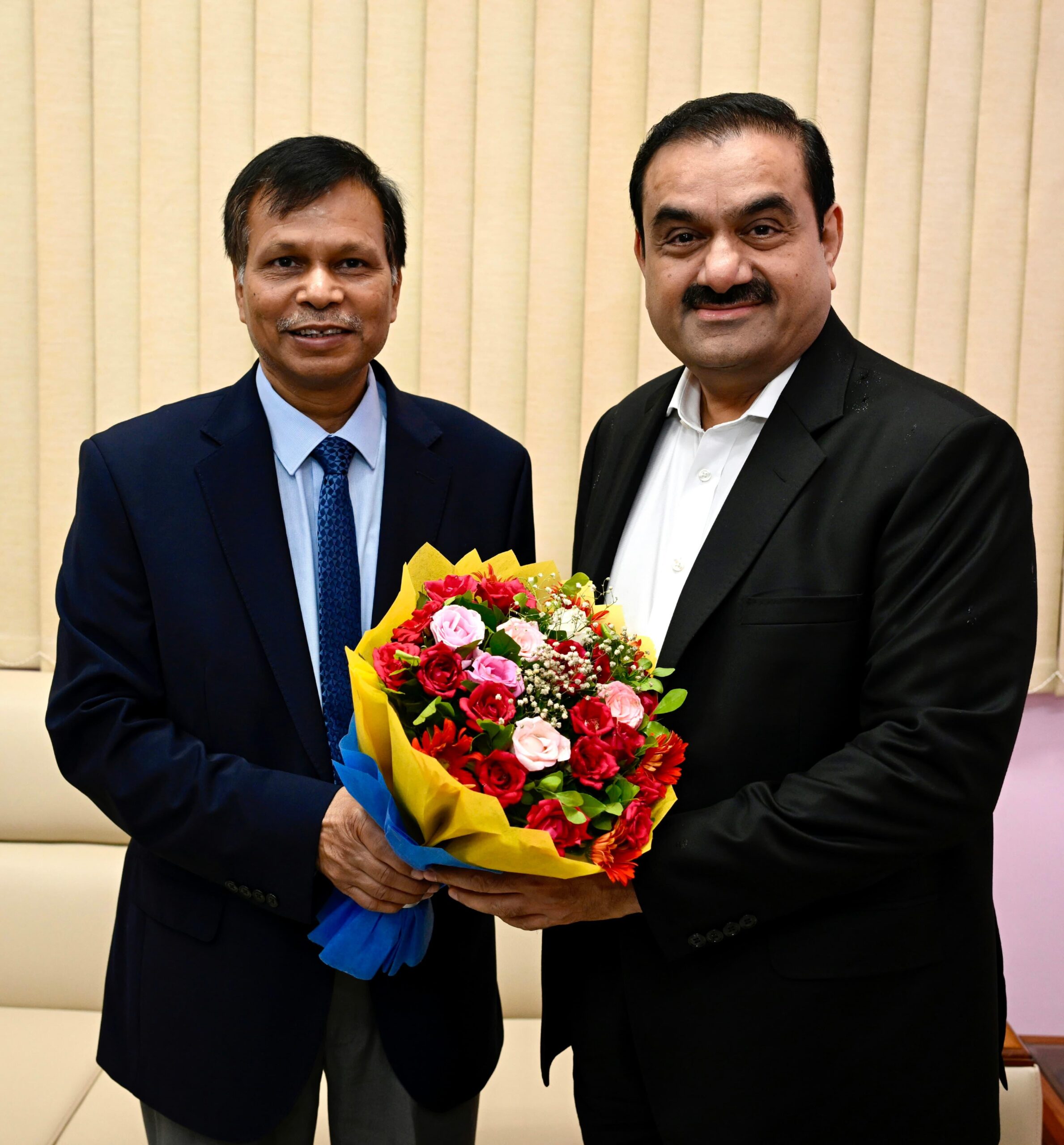

“The first project is always the hardest—not because it needs skill, but because it needs belief.” The same belief powered Khavda, also in Gujarat’s Kutch district, now the world’s largest renewable energy park, where 5 GW (gigawatt) of clean power has already gone live. “Khavda was never just about building in the desert. It was about reimagining what the desert could become.”
His message was consistent: leap before the market gives you permission. “Choose risk, not refuge. Leap before the market signals readiness.” But Mr Adani’s vision goes beyond GDP (gross domestic product) and gigawatts. It rests on a capitalism with conscience — where infrastructure is not just steel and cement, but dignity and inclusion.
“For me, Dharavi [one of the largest slums in the world] is not a project of cement and steel. It is about rebuilding dignity [for over 1.2 million residents],” he said, Whether it’s Carmichael coal in Queensland, Australia, Khavda in Gujarat, or Dharavi in Mumbai, Mr Adani sees each as a moral commitment. “Barren is not what is dry. Barren is what has never been seeded with dreams.”
In a time when quarterly numbers dominate boardroom agendas, Mr Adani advocates for a longer lens: one that values impact over income. “Development built without humanity is only expansion — not progress.” His charge to the youth was clear: “Go where the problems are hardest. Go where you are needed most. That is where real change is waiting.”
And in closing, a powerful invocation: “When the world asks, ‘Where is the future being built?’ Let your proud answer be: Here — in India.” This isn’t just an economic roadmap. It’s a call to arms — for belief, innovation, leadership, and above all, purpose. In Mr Adani’s vision, India’s future is already unfolding — and it needs builders, not followers.