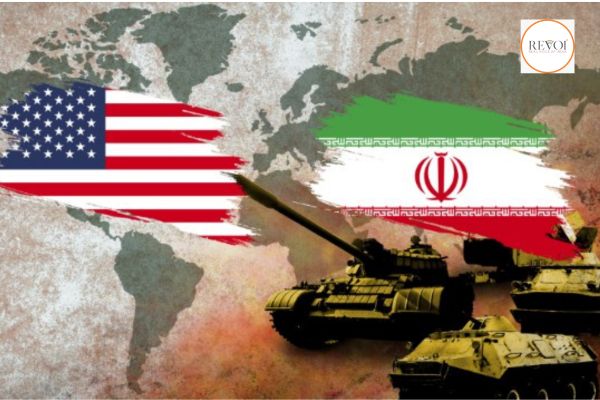
Global Breakdown Amidst the Iran-Israel-US War








By Harsh Pargat
The ongoing Iran-Israel-US war has started to cause global repercussions. This observation aligns with a statement given by Martin Luther King Jr, “Conflict anywhere is a threat to peace and justice everywhere”. The ongoing war has adversely affected global supply chains, particularly energy inputs from the Strait of Hormuz. Iran’s blockage of the Strait has adversely affected global crude oil prices. This article highlights the key global areas that have suffered severe consequences.
- The Aviation Sector
The global aviation sector has been adversely affected, according to data approximately more than 30,000 airlines affected. The fuel price for aircraft has witnessed an inflation in prices from USD$100 to USD$200. The alternation between flights from Muscat to Abu Dhabi wherein the global media showed how airlines advised passengers to travel by road. This highlights the uncertainties which the aviation sector has faced. The
- Impact on the Maritime Trade: The maritime trade has been adversely affected there has been a disruption in the global trade. The blockage of the Strait of Hormuz spot rates hike from 29 to 31 percent, according to Peter Sand, analyst at Xeneta.
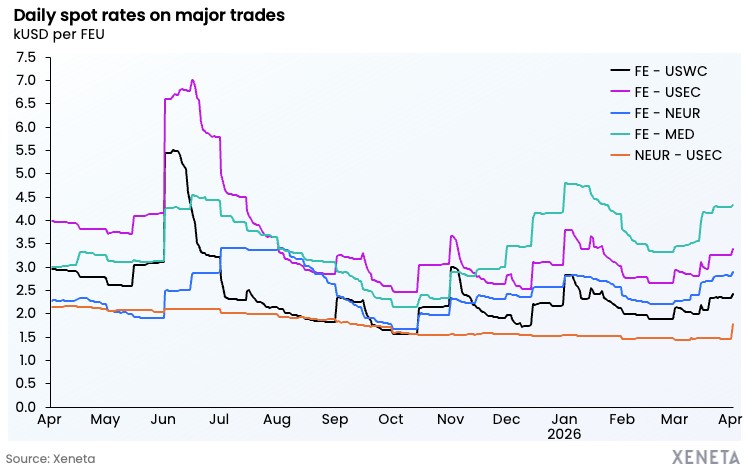
The current dynamics in global shipping markets reflect a growing shift in how risk is perceived and priced, particularly in the context of persistent geopolitical uncertainty in the Middle East. Industry stakeholders increasingly acknowledge that the burden of unpredictability is no longer shared evenly across the supply chain; rather, it is being decisively transferred onto shippers. This evolving reality underscores a broader transformation in maritime trade, where caution, memory, and market psychology are shaping commercial decisions as much as real-time disruptions.
According to market analysts, carriers have adopted a clear and consistent stance: uncertainty carries a cost, and that cost is ultimately borne by cargo owners. Even for trade routes that are not directly exposed to instability in the Middle East, the ripple effects of regional tensions are influencing freight pricing and capacity allocation. This is not merely a reaction to present conditions but is deeply rooted in recent experience. The memory of the 2024 Red Sea crisis continues to loom large over the industry. During that period, disruptions triggered a cascade of logistical challenges, including severe congestion at key transshipment hubs such as Singapore, where already elevated freight rates surged dramatically.
Psychological Impact on Shippers: Many who were caught off guard during the previous crisis are now unwilling to take similar risks. Instead of waiting for conditions to normalize, they are proactively securing shipping capacity at current rates, even if it means paying a premium. This behaviour reflects a strategic calculation rather than panic. For these shippers, the higher upfront cost is seen as an insurance against the possibility of even steeper rate hikes during the peak shipping season, which typically unfolds over the coming months.
In this context, the decision to lock in capacity early is less about immediate necessity and more about hedging against uncertainty. Those who choose to delay bookings in anticipation of market stabilization are effectively engaging in speculative behavior without reliable indicators to support their expectations. The absence of clear signals regarding when, or if, stability will return makes such a strategy inherently risky. Consequently, a growing segment of the market is prioritizing predictability over cost efficiency.
Fragile Security Environment Changes: The unhindered passage for vessels linked to friendly or non-hostile states—sometimes reportedly in exchange for certain considerations—the broader picture remains concerning. Incidents involving commercial shipping continue to be reported, reinforcing the perception that risks in the region are far from contained.
For instance, a recent advisory from the United Kingdom Maritime Trade Operations noted an attack on a tanker operating roughly 17 nautical miles north of Doha. Such developments highlight the persistent vulnerability of maritime traffic in the wider Gulf region, even as some vessels continue to transit these waters. The ongoing nature of these threats complicates decision-making for both carriers and shippers, further reinforcing the premium placed on certainty.
Compounding these challenges is a fundamental shift in how freight rates are being managed. Traditionally, carriers would adjust rates on a bi-weekly or monthly basis, providing a degree of predictability for shippers. However, in the current climate, this model is rapidly eroding. Carriers are increasingly opting for ultra-short-term pricing strategies, often releasing rates on a weekly basis.
This shift reflects the need for flexibility in an environment where conditions can change rapidly. By shortening the pricing cycle, carriers are able to respond more effectively to fluctuations in demand and capacity. They can make incremental adjustments—either lowering rates slightly to attract volume or maintaining existing levels to capitalize on limited supply—depending on prevailing market conditions. While this approach enhances operational agility for carriers, it also introduces an additional layer of uncertainty for shippers, who must now navigate a far more volatile pricing landscape.
Taken together, these developments point to a maritime sector that is being reshaped by both tangible risks and intangible perceptions. The interplay between geopolitical instability, market memory, and strategic behaviour is redefining how shipping decisions are made. For shippers, the emphasis is increasingly on securing reliability in an unpredictable world, even at a higher cost. For carriers, the focus remains on maintaining flexibility and managing exposure in a fluid operating environment in which global shipping finds itself in the middle of conflict.
(The writer is a Research Analyst International Relations & Security Studies with a focus on West Asia)
Please share your views – harshpargat@gmail.com