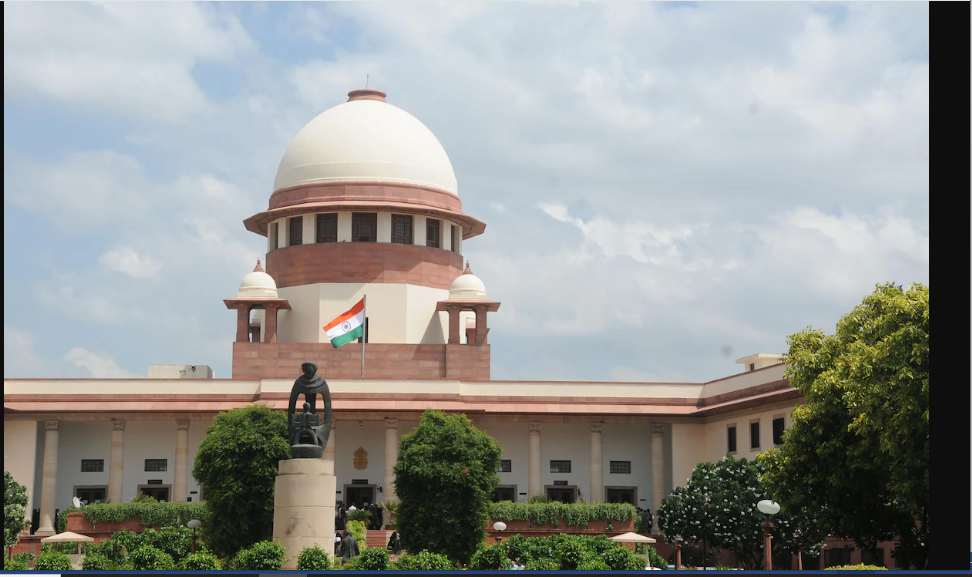

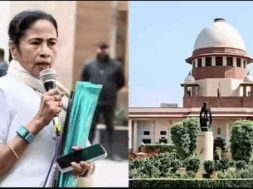
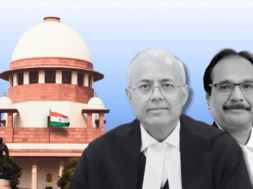


NEW DELHI, Nov 3: The Tamil Nadu ruling party Dravida Munnetra Kazhagam’s (DMK) organising secretary R.S. Bharathi on Monday moved the Supreme Court against the second phase of the “Special Intensive Revision” (SIR) exercise of the electoral rolls announced by the Election Commission of India to be effective from Tuesday in 12 states and union territories including Tamil Nadu.
The petition filed by Mr Bharathi said the SIR process amounts to “constitutional overreach” and was a thinly-disguised, de facto National Register of Citizens (NRC). “By imposing citizenship-like burdens of proof on electors, the SIR appears to be acting beyond its statutory purpose, effectively functioning as a de facto National Register of Citizens (NRC).
“If the SIR order of October 27 is not set aside, the exercise can arbitrarily and without due process, disenfranchise lakhs of voters from electing their representatives, thereby disrupting free and fair elections and democracy in the country, which are part of the basic structure of the Constitution,” Mr Bharathi submitted a petition on behalf of the party.
The petition, the first challenge in the apex court against the second phase of the SIR highlighted the lack of due process as well as the unreasonably short timeline for the SIR of the electoral roll in Tamil Nadu as designed to exclude voters.
“The unilateral imposition of such an unprecedented, resource‑intensive and socially disruptive process on a State, without consultation or demonstrable administrative exigency, transgresses the federal structure of the Constitution, recognised as part of its basic structure. In bypassing statutory safeguards, the State concerned has effectively been reduced to a mere implementing agency for centrally determined, unilateral processes posing a grave risk of disenfranchising large numbers of bona fide voters,” the DMK leader highlighted.
The plea, filed through advocate Vivek Singh, said a Special Summary Revision had already been conducted in Tamil Nadu between October 2024 and January 6, 2025. This exercise had addressed issues such as migration, death and deletion of ineligible voters. The existing electoral roll in Tamil Nadu had been updated and published on January 6, 2025 and continuously updated since then.
Referring to how the Bihar SIR had excluded registered electors en masse and introduced new and stringent requirement for voters to provide proof of citizenship, particularly for those not registered in the 2003 electoral roll, Mr Bharathi said the EC, through its SIR, was seeking to supplant the existing statutory framework which already governs the preparation and revision of electoral rolls.
“The manner in which the SIR has been directed to be conducted is found neither in Representation of the People Act (ROPA), 1950 or in the Registration of Electors Rules, 1960. Additionally, Section 28(3) of ROPA requires all Rules to be notified in the Official Gazette and laid before Parliament. No such notification has been issued for the SIR and the same has not been laid before the Parliament. Therefore, the SIR is without the force of law and lacks statutory basis,” the petition argued.
It noted that the orders even allow Electoral Registration Officers to refer cases of ‘suspected foreign nationals’ to the competent authority under the Citizenship Act, 1955, without due process. “The question whether a person is a foreigner is a question of fact and has to be determined by the Union government under the Citizenship Act, 1955,” the petition said.
Meanwhile, the ECI is scheduled to begin the enumeration phase of the special intensive revision (SIR) of electoral rolls in 12 States and Union Territories on Tuesday. The SIR exercise will cover close to 51 crore voters in Tamil Nadu, West Bengal, Kerala, Uttar Pradesh, Madhya Pradesh, Rajasthan, Chhattisgarh, Goa, Gujarat, Puducherry, Andaman and Nicobar Islands, and Lakshadweep. Among these, Tamil Nadu, Kerala, West Bengal, and Puducherry will go to the polls in 2026.
The first round of the clean-up exercise was carried out in Bihar earlier this year, during which more than 68 lakh names were deleted from the electoral rolls. The house-to-house enumeration process will take place from November 4 to December 4. The ECI will publish the draft rolls on December 9, after which claims and objections can be submitted from December 9 to January 8. Notices will be issued, and hearings and verifications will take place from December 9 to January 31.
The final electoral rolls will be published on February 7. In most of these States, the SIR exercise was last carried out between 2002 and 2004, and they have nearly completed the mapping of current electors according to it.
The ECI has implemented certain changes to the SIR 2.0, drawing upon insights gained from the experience in Bihar. Among the most significant changes is the directive that no documents should be collected from electors during the enumeration phase. The poll body took this decision after it found in Bihar that a substantial number of voters could be traced to the electoral rolls prepared after the preceding SIR.
Secondly, prior to the announcement of the SIR, the poll body had begun the process of matching the current voters’ lists with those from the years 2002 to 2004, during which the last SIR was conducted in these states. This procedure has been referred to as pre-mapping. So most States are expected to have the lists of people whose names were already there in the voters’ list, and they are thus not expected to submit any of the 11 indicative documents along with their enumeration forms.
Aadhaar has been added as the 12th document, as directed by the Supreme Court, but only as proof of identity and not of citizenship. The poll body has also amended the enumeration form, incorporating a column where a parent or a relative can provide a signature in the absence of the voter. This signature will be counter-signed by the booth-level officer (BLO). For electors whose enumeration forms have not been returned, the BLO may ascertain a probable cause, including death or duplication, through inquiries conducted with neighbouring electors and document these findings.
(Manas Dasgupta)