


Virendra Pandit
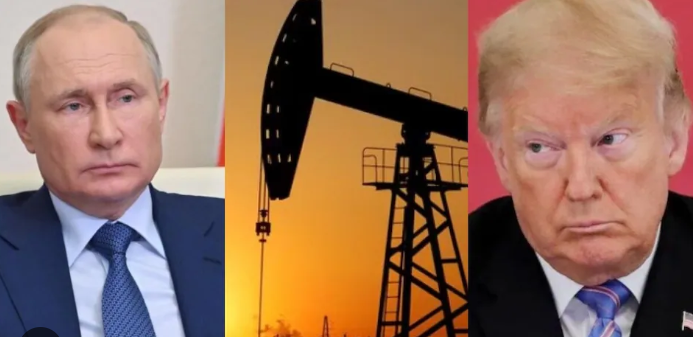
New Delhi: Disappointed with all his efforts to end the Russian war in Ukraine producing zero results, US President Donald Trump has cancelled his likely meeting with his Russian counterpart Vladimir Putin in Budapest, Hungary, and has instead slapped “tremendous” new sanctions on Russia’s two largest oil companies, the media reported on Thursday.
The US sanctions target Rosneft and Lukoil, which help fund the Kremlin’s “war machine,” according to US Treasury Secretary Scott Bessent.
“Given President Putin’s refusal to end this senseless war, Treasury is sanctioning Russia’s two largest oil companies that fund the Kremlin’s war machine,” he said in a statement.
The US sanctions came a week after Britain sanctioned Rosneft and Lukoil. Separately, EU countries approved a 19th package of sanctions against Russia, including a ban on imports of Russian LNG.
The US has even called on Japan, also a major buyer of Russian LNG, to halt its energy imports from Russia.
Washington said it could take further action against Russia as it called on Moscow to agree immediately to a ceasefire in its war in Ukraine. Trump has so far refrained from imposing sanctions on Russia over the war, relying instead on trade measures.
The new sanctions are likely to impact the Russian economy, as taxes from the oil and gas industries account for about a quarter of Moscow’s federal budget. But their ripple effect could be felt far beyond Russian territory, impacting Moscow’s global crude trade as Washington increases pressure on the region to phase out Russian supplies.
Oil and gas are reportedly Russia’s biggest exports, with China and India being its largest customers. Together, Beijing and New Delhi make up the majority of Moscow’s energy exports.
Last year, China bought a record of over 100 million tonnes of Russian crude oil, almost 20 percent of Beijing’s total energy imports.
Likewise, India has become the biggest buyer of discounted seaborne Russian crude in the aftermath of Moscow’s February 2022 invasion of Ukraine, importing about 1.7 million barrels per day in the first nine months of this year. Trump has imposed an additional 25 percent punitive tariff on goods from India in retaliation for such imports.
However, the US President has repeatedly claimed that Prime Minister Narendra Modi had assured him that New Delhi “was not going to buy much oil from Russia” as he too “wants to see the war end with Russia-Ukraine.” New Delhi has, however, maintained that its priority is to safeguard the interests of the Indian consumers in a volatile energy scenario.
Meanwhile, citing sources, a news outlet reported that Indian state refiners were reviewing their Russian oil trade documents to ensure no supply would be coming directly from Rosneft and Lukoil after the US sanctioned the companies.
Russia said that new US sanctions on its oil industry risked hurting diplomatic efforts to end the Ukraine war, and that it had developed a “strong immunity” to them.
“We view this step as being entirely counterproductive, including in terms of signalling the need to achieve meaningful negotiated solutions to the Ukrainian conflict,” Russian foreign ministry spokeswoman Maria Zakharova told a weekly briefing.
“Our country has developed a strong immunity to Western restrictions and will continue to confidently develop its economic potential, including its energy potential,” she added.