Congress Agitation against VB – G RAM G from January 10, Telangana Assembly Demands Restoration of MGNREGA




Manas Dasgupta
NEW DELHI, Jan 3: The Congress on Saturday announced a nationwide ‘MGNREGA Bachao Sangram’ from January 10 and run for 45 days till February 25 with the preparatory meetings beginning from two days earlier from January 8 to demand the withdrawal of the Viksit Bharat–Guarantee for Rozgar and Ajeevika Mission (Gramin) (VB-G RAM G) Act, and restoration of Mahatma Gandhi National Rural Employment Guarantee Act (MGNREGA) as a rights-based law, the right to work, and the authority of panchayats.
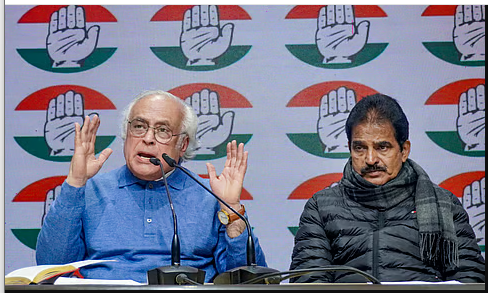
Addressing a media conference jointly, the Congress general secretaries K.C. Venugopal and Jairam Ramesh, who is also the party’s communication in-charge, said through the new VB-G RAM G Act, the Centre has ensured complete centralisation as “employment will no longer be a right under the new Act.”
Announcing the road map, Mr Ramesh said, “This will be a national movement. If needed, we will go to court. The result will be the same as what happened with the three black farm laws,” he added. He said it was not just a ‘MGNREGA Save Campaign’, it is the ‘MGNREGA Save Struggle’ and its first phase will begin on January 8 with preparatory meetings at all the State Congress headquarters to finalise plans for the agitation.
On whether the States ruled by the INDIA bloc (Indian National Developmental Inclusive Alliance) constituents would not implement the new Act or oppose it, Mr Venugopal said the Congress would hold consultations with all the alliance partners on the way forward. A consensus would be reached with the Chief Ministers of the non-BJP states and “we will explore possibilities of how to move forward on this,” Mr Venugopal said.
Mr Ramesh claimed that no BJP-ruled State was in a position to implement the VB-G RAM G law, which, he said, was against the federal structure of the country, while Mr Venugopal termed the Act an attack against the federal structure itself, as “no discussion was held with the States to implement it, even as their finances will be disturbed.”
He said through the ‘MGNREGA Bachao Sangram’, the Congress aimed to defend the right to work, protect the Panchayati Raj institutions, and stand with the women workers, Dalits, Adivasis, and the rural poor by taking the issue to every village of the country. “Our clear demand is to withdraw the VB-G RAM G Act and restore MGNREGA in its original, rights-based form, restoring people’s right to work and the authority of the panchayats,” Mr Venugopal said.
Sharing details, he said on January 10, district-level press conferences will be held, followed by a day-long fast and symbolic protests at the district headquarters on January 11. From January 12 to 29, panchayat-level chaupals and mass contact programmes will be organised at all the gram panchayats, followed by ward-level peaceful sit-ins on January 30 to press for the right to work, they said.
From February 7 to 15, State-level gheraos of Vidhan Sabhas will be organised, while four major rallies will be held between February 16 and 25 before the culmination of the nationwide movement, Mr Venugopal said.
Stating that the VB-G RAM G Act reflected “dangerous centralisation,” Mr Ramesh pointed out that there was no guarantee of employment or financial assistance for the State governments. Claiming that under the Act, only the Central government will decide how funds will be allocated, Mr Ramesh said it has become a centralised programme and not a right to employment, unlike in MGNREGA, where it was the responsibility of the Central government to provide employment.
The new law sets a 60:40 funding split between the Centre and the States, which is a violation of Article 258 of the Constitution, the Congress leaders alleged. Mr Ramesh said Article 258 States that this funding ratio will be determined only after the consent of the State governments and the Central government, but “they [the Centre] have decided it (the split) on their own without taking consent from anyone.” “We will challenge it [the Act] in court,” Ramesh said.
“Our demand is not modification, but complete withdrawal of this law and restoration of MGNREGA,” he asserted. Mr Ramesh also said while the agitation against the three “black” farm laws was Delhi-centric, the MGNREGA Bachao Sangram would be panchayat, block, district and State-centric.
Calling the new legislation harmful, Venugopal said, “This law wants to kill MNREGA. Because of MNREGA, hunger reduced, migration declined, and roads, canals and dams were created. During the COVID period and economic crisis, MNREGA became a protective net for the people of this country.”
He further alleged that under the G-RAMG framework, employment is no longer a guaranteed right. “Under G-RAMG, employment is no longer a right. Work will only be provided through panchayats and not by the government. MNREGA was demand-driven, while G-RAMG includes budget caps. It silently kills the legal right to work,” Venugopal said.
Jairam Ramesh warned that the decentralised nature of MNREGA was being dismantled. “MNREGA was a decentralised scheme. Now everything will be decided in Delhi and villages will suffer. Many panchayats will receive zero funds,” he added.
Meanwhile, the Telangana Legislative Assembly has adopted a resolution unopposed demanding that the Centre implement the Mahatma Gandhi National Rural Employment Guarantee Act and withdraw the VB G RAM G.
Chief Minister A. Revanth Reddy moved the resolution and said 90% of the beneficiaries under the MRNREG Scheme were from SC, ST and BC communities, and 62% of them comprised women. The scheme provided wage work on demand as a right since its launch at Bandameedipalle village of Anantapur district in then combined Andhra Pradesh in 2005. It also provided much relief to the wage work seekers in Mahabubnagar and Medak districts.
He said the new Act tramples upon the poor people’s right to wage work and was against their rights. Further, it dilutes the spirit of NREGS and was against the provision of wage work on demand and weighs against women workers. Demanding restoration of the old scheme, the Chief Minister said the new Act was also against the federal spirit in the matter of contribution of funds, as it mandates 40% funding by the State as against 100% wage component provision by the Centre in the old Act.
Seeking restoration of Mahatma Gandhi’s name to the scheme, he said a 60-day break to the scheme during peak farm season be removed as it would lead to exploitation of wage seekers and all the 266 types of works be continued.
Except those from the Opposition Bharat Rashtra Samithi (BRS) who boycotted the session, members of the ruling Congress, CPI, MIM and BJP spoke on the short discussion on the issue earlier. Members of the Congress, MIM and CPI — Ch. Vijayaramana Rao, M. Samuel, V. Bhojju, Y. Srinivas Reddy, Mir Zulfeqar Ali and K. Sambasiva Rao opposed the VB – G RAM G Act while A. Mahesgwar Reddy of the BJP supported the new Act.