Amartya Sen Feels SIR in West Bengal being Carried out “in a Hurry” Threatening Democratic Participation

Manas Dasgupta
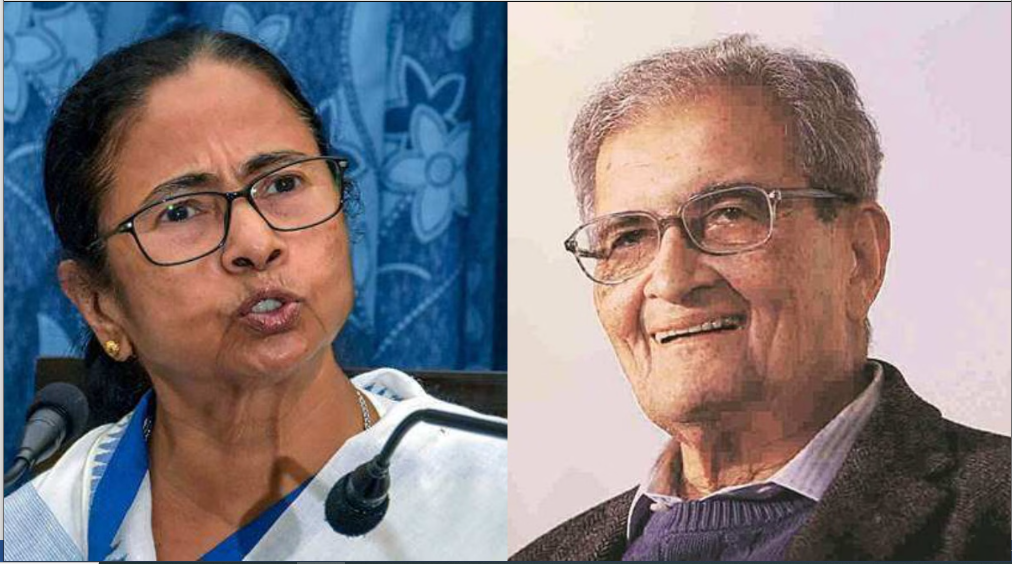
NEW DELHI, Jan 24: Days after the Nobel laureate Amartya Sen was served a notice by the Election Commission of India for a hearing under the “Special Intensive Revision” (SIR) of electoral rolls, on Saturday voiced deep unease over the exercise in West Bengal being conducted “in a hurry” threatening the democratic participation as the Assembly elections are due in a few months.
The 92-year-old economist reflected on the democratic value of electoral roll revisions and the circumstances under which they can strengthen voting rights and said the voters were not getting adequate time to submit the required documents because of the undue haste in which the exercise was being carried out. He stressed that such an exercise must be conducted with care and adequate time, which he believes were “missing” in Bengal’s case. “A thorough review of electoral rolls done carefully with adequate time can be a good democratic procedure, but this is not what is happening in West Bengal at this time,” Sen said.
Amartya Sen was served a notice from the West Bengal Election Chief Electoral Office for a hearing at his Santiniketan residence on January 16 owing to a “logical discrepancy” in his enumeration form. An official said the “age difference between him and his mother Amita Sen is less than 15 years” as per the form.
Drawing from his own experience during the special intensive revision of electoral rolls in Bengal, Mr Sen said time pressure was evident even among poll officials. “Sometimes, the officials of the Election Commission of India (ECI) themselves seem to lack enough time.
“When they questioned my right to vote from my home constituency in Santiniketan — from where I have voted earlier, and where my name, address and other details are registered in official records — they questioned me about my deceased mother’s age at my date of birth, even though, as a voter herself, my mother’s details, like mine, were stored also in their own official records,” he said.
The celebrated economist went on to describe the documentation challenges he encountered, noting that these difficulties were common for many Indians born in rural areas. “Like many Indian citizens born in rural India (I was born in the then village of Santiniketan), I do not have a birth certificate, and my eligibility to vote required further paperwork to be presented on my behalf,” he said.
Although the issue was eventually resolved for him, Mr Sen expressed concern for citizens who lack similar access to assistance. “Even though I could happily say (like the Beatles) — ‘Oh, I get by with a little help from my friends’ — I worried about others who do not have so many loyal friends. My friends helped me to get through the rigid gates of the formidable ECI,” he said.
Asked whether the SIR could politically advantage any political party in West Bengal, Mr Sen said he could not offer a definitive assessment, underlining that democratic integrity should remain paramount. “I am not an election expert, so I cannot answer the question with certainty. I have been told by those who seem to know more, that the BJP will benefit from the under-accounting.
“I don’t know whether that is true, but the real point is that the ECI should not insist on a faulty arrangement and force our proud democracy to commit an unnecessary error, no matter who benefits,” he said. On sections of society that are most vulnerable to being excluded during the SIR, Mr Sen pointed to the structural disadvantages faced by poorer citizens.
“An obvious answer must be the underprivileged and the poor. The documents needed for being allowed into the new electoral roll are often difficult to obtain for the underdogs of society. “The class bias that may show up in the necessary requirement of getting and showing particular documents in order to qualify to enter the new voters’ list will tend to work against the indigent,” Mr Sen said.
“Another possibility to look into may relate to the difficulties that minority communities sometimes face in getting their rights, including voting rights, respected. Indian Muslims are sometimes relegated to disadvantaged positions through the activism of the recently bolstered Hindutva extremists. Some categories of Hindus also may face discrimination and targeting.” Sen said. He said the ECI and the Supreme Court must make sure no adult Indian citizen faces difficulty in qualifying for voting.
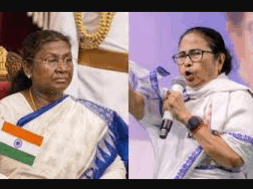
The West Bengal Chief Minister Mamata Banerjee had earlier claimed that three to four people were dying in her state by suicide every day due to anxiety over the ongoing SIR exercise and had blamed the ECI and the Central government for the deaths.
The Trinamool Congress chairperson asked why an FIR should not be registered against the poll body for the deaths. “More than 110 people have died. Why will a case not be filed against EC? The Election Commission of India will have to take responsibility for these deaths, the Government of India will also have to take responsibility,” Ms Banerjee said. There have been instances where people have registered police complaints against the poll body in the State.
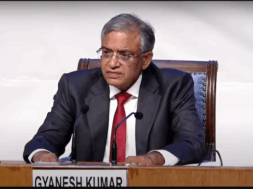
Ms Banerjee has been critical of the SIR since the start of the process and has written five letters to Chief Election Commissioner Gyanesh Kumar since November 2025. The Chief Minister said attempts were being made to disrespect national icons from Rabindranath Tagore to Bose and change the country’s history. “There is an attempt to change the history of India. Scholars are being disrespected. There is disrespect for the language and our culture,” she said.
Hitting out at Ms Banerjee, West Bengal BJP president Samik Bhattacharya said “those who are in politics banking on the legacy of Congress, they should not comment on treatment of national icons.” Mr Bhattacharya said the BJP was indeed “changing the history” of the country by getting rid of the “colonial hangover.”
Politics in election-bound West Bengal has been on the boil over SIR. After the completion of the first phase, about 58 lakh names were deleted from electoral rolls, bringing the number of voters in the State to 7.08 crore from 7.66 crore. There have been violent protests over notices to electors under the category of “logical discrepancies”. About 1.36 crore such notices have been issued.
The SIR in West Bengal is likely to be delayed after the top court on Monday issued certain directions to the ECI to ensure scrutiny of voters. The deadlines for SIR hearings in West Bengal and final electoral roll publication are February 7 and 14, respectively. A senior ECI official said, “After the Supreme Court directions, it is almost impossible to complete all hearings within the stipulated time and make a flawless final electoral roll.”