





Manas Dasgupta
NEW DELHI, July 21: The Bombay High Court on Monday acquitted all the 12 accused in one of the worst terror attacks, the 2006 serial bomb blasts in Mumbai local trains that claimed 189 lives and left over 800 people injured.
The shocker giving the accused the “benefit of doubt” came 19 years after the gory incident and 10 years after all the 12 were convicted by the lower court. In 2015, the trial court had convicted them and had sentenced five of them to death and the others to life imprisonment.
The Maharashtra Chief Minister Devendra Fadnavis expressed “shock” over the High Court order and said the state government would challenge the verdict in the Supreme Court. “The verdict of the Bombay High Court is very shocking and we will challenge it in the Supreme Court,” he said.
Setting aside the trial court order, the high court bench of Justice Anil Kilor and Justice Shyam Chandak said the prosecution had “utterly failed” to prove the case against the accused. “The prosecution has utterly failed to prove the case against the accused. It is hard to believe that the accused committed the crime. Hence, their conviction is quashed and set aside,” the bench said. The court said the accused shall be released from jail if they are not wanted in any other case.
The bench noted that the convicts were given the “benefit of doubt” due to the prosecution’s failure to prove the charges. The court questioned witness statements. It noted that 100 days after the blasts, it is not possible for a person to remember a suspect. The court also said the explosives, arms and maps recovered during the investigation appeared to be unrelated to the blasts. The prosecution, it said, could not even prove what kind of bombs were used in the blasts.
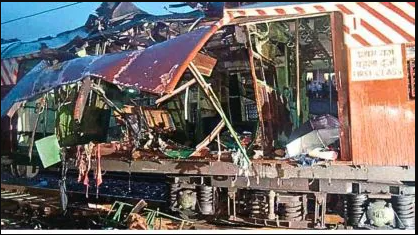
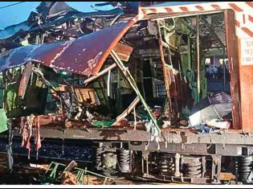
On July 11, 2006, seven bomb blasts had ripped through separate Mumbai local trains within 11 minutes. Rigged pressure cookers were used for the bombings to amplify the damage caused. The first occurred at 6.24 pm — rush hour due to people returning from work — and the last at 6.35 pm. The bombs were placed in first-class compartments of trains from Churchgate. They exploded near the stations of Matunga Road, Mahim Junction, Bandra, Khar Road, Jogeshwari, Bhayandar and Borivali.
A trial court in 2015 convicted 12 people in the blasts case. The special court of Maharashtra Control of Organised Crime Act sentenced Kamal Ansari from Bihar, Mohammad Faisal Ataur Rahman Shaikh from Mumbai, Ehtesham Qutubuddin Siddiqui from Thane, Naveed Hussain Khan from Secunderabad and Asif Khan from Jalgaon in Maharashtra were found guilty of planting the bombs and were given the death penalty.
Seven other convicts Mohammed Sajid Ansari, Mohammed Ali, Dr Tanveer Ansari, Majid Shafi, Muzzammil Shaikh, Sohail Shaikh and Zamir Shaikh were sentenced to life imprisonment for being part of the conspiracy. All the 12 convicts will now walk free after the high court’s ruling. All the accused were arrested in 2006. The prosecution had claimed that the accused individuals belonged to the banned Students’ Islamic Movement of India (SIMI).
By law, the trial court’s decision to give them the death sentence had to be confirmed by the High Court before it could be carried out. In 2015, the Maharashtra government approached the High Court to get this confirmation. At the same time, the five convicts also filed appeals to challenge the special court’s ruling. One of the accused died in 2021 due to COVID-19.
In July 2024, the High Court set up a special bench led by Justice Kilor, which held regular hearings for almost six months. Five months ago, the court had finished hearing the case and reserved its judgment.