



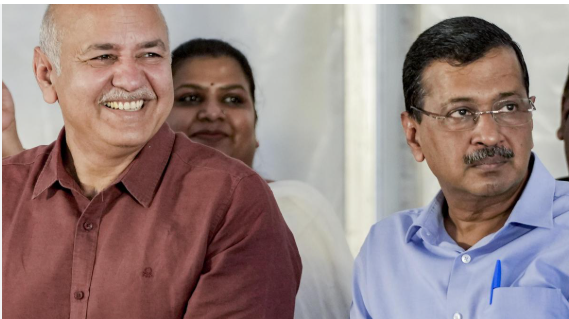

NEW DELHI, Apr 29: The Delhi High Court on Wednesday adjourned the plea by the Central Bureau of Investigation (CBI), challenging the discharge of the former Delhi chief minister Arvind Kejriwal and other accused in the Delhi excise policy case till Monday.
Delhi HC Justice Swarana Kanta Sharma has called for the complete trial court record of the case. The CBI had in February, 2026, filed an appeal in the High Court challenging the discharge by the trial court of Mr Kejriwal, his former deputy Manish Sisodia and a few others in the excise policy case.
The development comes after Justice Sharma on Monday rejected Mr Kejriwal’s request for her recusal from hearing the case citing a “direct conflict of interest” as the judge’s children are empanelled Central government lawyers, who receive substantial work through the Solicitor General, who appeared for the CBI.
On April 21, 2026, the Delhi HC observed that “a judge cannot recuse to satisfy a litigant’s unfounded suspicion of bias and based on manufactured allegations.”
Justice Sharma, however, rejected this argument, saying, “Even if relatives [of the judge] are empanelled on government panels, the litigant has to show relevance and impact on this case. No such nexus has been shown. Their empanelment or relationship has no connection with this dispute.”
“The litigant cannot dictate how the children of the judge have to live their lives in the absence of any proof that the office of the judge was misused,” she had said.
On April 27 Mr Kejriwal had written to Justice Sharma saying that he would not appear before the court personally or through an advocate for the hearing. Following suit, Mr Sisodia on Tuesday and another Aam Aadmi Party leader Durgesh Pathak on Wednesday also wrote to Justice Sharma that they will not participate in the proceedings personally or through a lawyer.
On February 27, a Delhi court had discharged Mr Kejriwal, Mr Sisodia and 21 others in the Excise policy case, saying the CBI case was wholly unable to survive judicial scrutiny and stood discredited in its entirety.
Legal fraternity, however, are divided over Mr Kejriwal’s decision not to appear in the court of Justice Sharma. While some lawyers supported Mr Kejriwal’s decision not to appear in person or through lawyer in her court, others insisted that dissatisfaction with judicial orders must be addressed strictly through established legal remedies and not by refusing to participate in court proceedings.
“If there are apprehensions about fairness, the law provides remedies: seek recusal, challenge orders and approach a higher forum. Walking out does not strengthen the cause of justice. It weakens public faith in it. Courts derive legitimacy from scrutiny within the system and not from narratives outside it,” some senior advocates said.
However, some activist lawyers like advocate Prashant Bhushan supported Mr Kejriwal’s decision, calling it “correct and justified.” “Undoubtedly, in the facts of this case, he has a reasonable apprehension of bias. I would say his apprehension is justified,” he said on X.
(Manas Dasgupta)