



Manas Dasgupta
NEW DELHI, Mar 27: The Centre on Friday slashed the special additional excise duty on petrol and diesel to reduce the losses to the oil companies forced to import crude at higher prices due to the ongoing West Asia war but there was no change in the fuel prices for the consumers.
The government reduced the excise on petrol and diesel by Rs 10 per litre bringing the centre-imposed taxes down to Rs 3 per litre of petrol and zero for diesel. The industry sources, however, made it clear that the excise reduction was unlikely to translate into lower prices at fuel stations for most consumers as the cut will largely be absorbed by oil marketing companies (OMCs) to offset heavy losses on pump sales.
OMCs are currently losing Rs 48.8 per litre of petrol or diesel sold, in large part due to the surge in Brent crude prices; the global benchmark crossed US$100 per barrel red line after the US-Israel war on Iran and the Strait of Hormuz blockade.
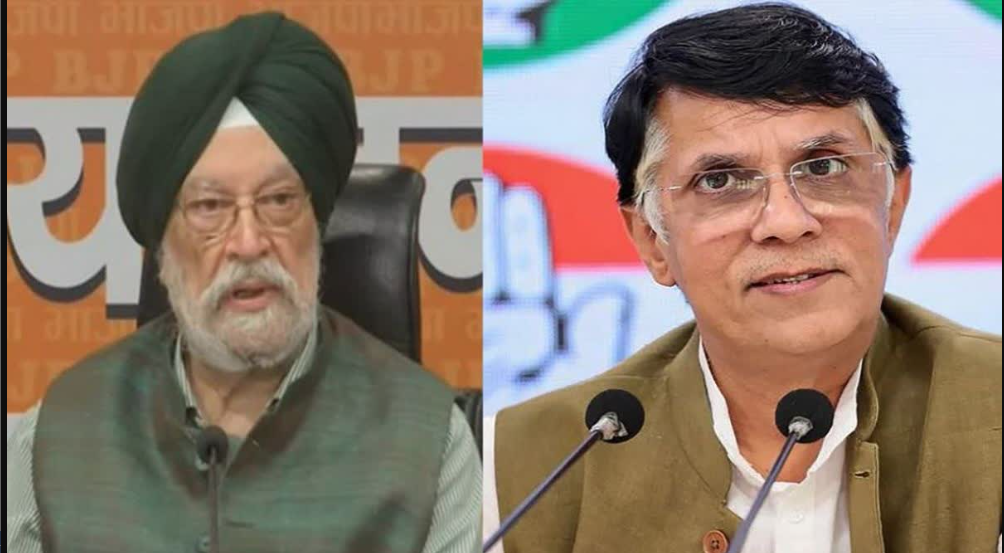
In a long X post, Petroleum Minister Hardeep Singh Puri said: “International crude prices have gone through the roof in the last month, from around US$70 per barrel to around US$122 per barrel. Consequently, petrol and diesel prices for consumers have gone up all over the world. Prices have increased by around 30 to 50 per cent in South East Asian countries, 30 per cent in North American countries, 20 per cent in Europe, and 50 per cent in African countries.”
“The Modi government had two choices – either increase prices drastically for citizens of Bharat as all other nations have done or bear the brunt on its finances so that Indian citizen is insulated from international volatility.” “… in keeping with the commitment of last four years, since the conflict in Russia-Ukraine started, the government decided to take a hit on its own finances again to safeguard the Indian citizen,” Puri said.
The union finance minister Nirmala Sitharaman Mr Puri also refuted there was any move to impose lockdown in India due to fuel crisis. “The attempts to spread rumours and create panic in such a situation were irresponsible and harmful,” he said.
Taking it to X, Mr Puri wrote, “The global situation remains in flux, and we are closely monitoring developments across energy, supply chains, and essential commodities on a real-time basis. India has consistently demonstrated resilience in the face of global uncertainties, and we will continue to act in a timely, proactive, and coordinated manner.” The Minister also said all necessary steps are being taken to ensure the uninterrupted availability of fuel, energy and other critical supplies. “We are fully prepared to handle emerging challenges,” he said.
Ms Sitharaman dismissed reports that suggested the government could consider a lockdown-like measure as fuel shortages loomed. “I want to reassure people that there shall not be any lockdown. I am surprised that some leaders are saying there will be a lockdown and there will be shortages of fuel. These are baseless. Such remarks coming from those in political domains are worrisome. There will be no lockdown such as we saw during Covid. I want to reassure people that there shall be no such lockdown as we saw in Covid,” she said. The Finance Minister said the main aim of pushing excise duty cuts for petrol and diesel was to insulate consumers from the rising price of crude oil due to the ongoing West Asia conflict.
The excise duty cut comes a day after Nayara Energy, India’s largest private fuel retailer with an 8.4 per cent market share and backing by Russian company Rosneft and Kesani Enterprises, hiked petrol and diesel by Rs 5.3 and Rs 3 per litre.
But even as the Union Ministers and the BJP leaders thanked the Prime Minister Narendra Modi for “providing relief to the people,” the Congress lashed out at the government for giving misleading information to the public pointing out that the excise duty slash was only for the benefit of the oil companies and was unlikely to be passed on to the consumers. The party also predicted that the “protection against rising fuel cost” was meant to last only till the elections to the four states and the union territory of Puducherry was over on April 29. “Wait till April 30,” the party cautioned the people.
The Congress leader Pawan Khera argued that the excise duty cuts are for oil marketing companies and not a relief for the common people, as they will end up paying the same amount even after the reduction. He also said that the government has raised excise duty 12 times in the last 11 and a half years, and cutting it now is no favour to the people of India.
“Look at the audacity of (oil minister) Hardeep Puri. He says they want to provide relief to the people of India so they don’t face the burden, and therefore the Government of India is taking the burden. The Government of India is the government of the people of India. The money belongs to the people of India,” Khera added.
The Congress general secretary Jairam Ramesh accused the BJP of slashing excise duty to “influence” assembly elections in four key states—Kerala, Tamil Nadu, West Bengal, and Assam — and the UT of Puducherry in April. In a post on X, Ramesh pointed out that when global crude oil prices fell over the past 12 years, the government did not reduce consumer fuel prices in India. He asserted that the latest move was made solely due to the impending elections.
“When global crude oil prices fell, as they did on seven different occasions in the past 12 years, consumer prices in India were not reduced. Today’s announcement was because of assembly elections. Wait till April 30,” the post read, once the voting for all these elections ends on April 29.
The total amount of excise duty levied by the central government on one litre of petrol was Rs 21.90. This has now come down to Rs 11.90. Similarly, total central excise duty on a litre of diesel has down from Rs 17.8 to Rs 7.8.
The US-Israel war on Iran, and Tehran’s consequent Hormuz blockade, have severely disrupted oil and gas export from the wider West Asia region. The Hormuz is a critical energy supply channel for the world; pre-war approximately a fifth of global seaborne crude oil and gas – between 20 and 25 million barrels of crude and about 10 billion cubic feet of gas per day – was shipped via the narrow maritime channel.
As such, it is a key supply route for India; an estimated 40 to 50 per cent of crude oil imports, i.e., between 2.2 and 2.8 million barrels per day, historically comes through that passage. India also imports large amounts of gas from West Asia; an estimated 16 to 17 per cent of Liquefied Natural Gas (LNG), exported by Qatar and the United Arab Emirates is purchased by Delhi. In addition, India also imports – from Qatar, again, and Iran via the Hormuz – large quantities of Liquefied Petroleum Gas (LPG) that is used by over 33 crore households.
This degree of heavy reliance led to worries about critical oil and gas shortages in the country as a result of the Iran war. However, the government has stressed there was no immediate danger. On Thursday the government reiterated its position and said India had about 60 days of oil stock cover and 30 days of LPG cylinder supply. Reports of shortages were slammed as a “deliberate misinformation campaign” to trigger panic buying.
The war in the West Asia has pushed international oil prices up by 50 per cent to over $100 per barrel. As per estimates, the current international crude prices, petrol prices should have been increased by ₹26 a litre and diesel by ₹81.90.
At the same time, the government has imposed duties on exports of diesel by ₹21.5 per litre and aviation turbine fuel (ATF) by ₹29.5 per litre, to ensure these vital fuels remain available domestically amid the West Asia crisis and disruptions in global energy supplies, Ms Sitharaman said on Friday.