



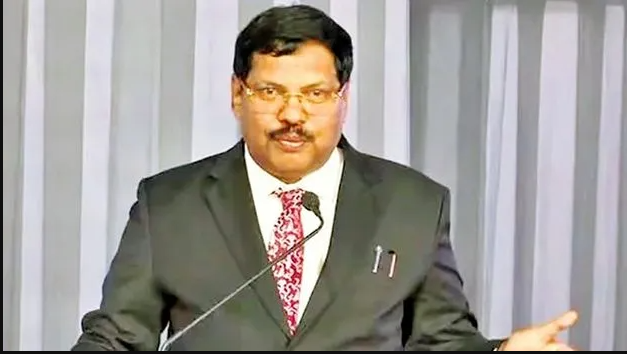

Manas Dasgupta
NEW DELHI, Feb 12: Contradictory opinions have been given by some former Chief Justices of India on the simultaneous elections to the Lok Sabha and all the state Assemblies in the country under the Narendra Modi government’s “one nation, one election” proposal.
Appearing on Thursday before the Joint Parliamentary Committee (JPC) reviewing the “Constitution (One Hundredth and Twenty-ninth Amendment Bill, 2024,” which aims to synchronise the elections for the Lok Sabha and state Assemblies, the former CJI BR Gavai said simultaneous elections did not violate the basic structure of the Constitution or its federal framework. But almost all of them have questioned the unrestricted power granted to the Election Commission in deciding the schedule of elections, especially for State Assemblies.
Justice Gavai said the legislation brings “only a change in the manner of elections once,” which did not breach the doctrine. The structure of elections and voter rights remain the same, he noted, and therefore the amendment would be constitutional. He further explained that it was well within Parliamentary competence to bring in such a law. Since instruments such as the “no-confidence motion” remain intact, Justice Gavai said, there was no impact on the accountability of the Union or State governments.
So far, six former CJIs have spoken to the panel. Two of them — Justices U.U. Lalit and Sanjiv Khanna — have argued that the proposed bill violate the basic structure of the Constitution. Justice Lalit had said the legislation in its present form will not withstand a legal challenge in the Supreme Court, while Justice Khanna said it was open to question as “violating and offending the basic structure of the Constitution.”
However, four of the other former CJIs — Justices Ranjan Gogoi, D.Y. Chandrachud, J.S. Khehar, and now, Justice Gavai — told the panel that the Bill did not violate the basic structure of the Constitution. All the former CJIs, however, have previously questioned the unrestricted power granted to the Election Commission in deciding the schedule of elections, especially for State Assemblies.
The Parliamentary Joint Committee, headed by BJP MP P.P. Chaudhary, is reviewing the Constitution (One Hundred and Twenty-Ninth Amendment) Bill, 2024, introduced in the Lok Sabha on December 17, 2024. The Bill seeks to empower the Election Commission to conduct simultaneous elections to the Lok Sabha and the state Assemblies.
The panel’s deliberations are far from over, but giving an indication of his view, Chairman Chaudhary said the Bill should be implemented “at the earliest in national interest.” He argued that synchronised elections would save the country both time and money.
Mr Chaudhary also told reporters that in Thursday’s meeting, several members suggested creating a common electoral roll for panchayat/municipal, Assembly, and national elections. “Making separate electoral rolls for each of these elections is a tedious task that usually falls on government teachers and thereby indirectly impacts the students from poor families who attend these schools,” he said.
Former CJI and Rajya Sabha member Ranjan Gogoi, who had appeared before the JPC last year, had pointed out loopholes in the Bill. He cautioned that it would not be advisable to give the Election Commission (EC) unrestricted powers to decide the schedule, according to informed sources.
The Parliamentary Joint Committee headed by BJP MP P.P. Chaudhary is reviewing the Constitution (One Hundred and Twenty-Ninth Amendment) Bill, 2024, which was introduced in the Lok Sabha on December 17, 2024. The Bill seeks to empower the Election Commission to conduct simultaneous elections for the Lok Sabha and all State Assemblies.
According to the sources, DMK Rajya Sabha member P. Wilson pointed out that Section 82 A(5) of the new Bill states that “if the EC is of the opinion that the elections to any Assembly cannot be conducted along with the general election to the House of the People, it may make a recommendation to the President, to declare by an order, that the election to that Legislative Assembly may be conducted at a later date.”
By not specifying a deadline for the Election Commission, isn’t the legislation giving it “arbitrary and unregulated powers.” Justice Gogoi accepted the argument and said it would not be advisable and the Section needed to be suitably amended to plug the loophole and was not legally tenable. The EC, he said, could not be given unchecked powers to decide to prolong or curtail a State Assembly’s tenure.