



Manas Dasgupta
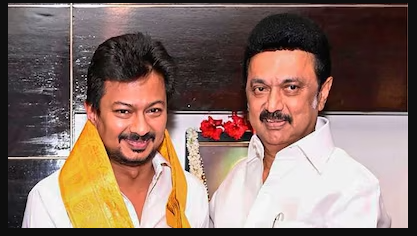
NEW DELHI, Jan 26: Close on the heels of the Tamil Nadu chief minister MK Stalin accusing the Centre of attempting “cultural invasion” through language policy, his son and deputy chief minister Udhayanidhi Stalin launched a sharp attack on what he termed “Hindi imposition,” warning that the language has “devoured” several regional mother tongues across the country, particularly in northern India.
Speaking at the Language Martyrs Day commemoration, Udhayanidhi paid tribute to those who lost their lives during the anti-Hindi agitation of the 1960s and reiterated the DMK government’s firm opposition to the three-language policy.
Udhayanidhi repeated some old arguments that the introduction of Hindi in several northern states has led to the gradual disappearance of native languages such as Haryanvi, Bhojpuri, Bihari and Chhattisgarhi as mother tongues. He claimed this trend demonstrates how linguistic dominance can erode regional identity and cultural heritage.
“Today in many states their mother tongue has vanished. For example, Haryana’s mother tongue is Haryanvi. Since Hindi entered, their mother tongue has gone missing. Bihar’s mother tongue is Bihari. Since Hindi entered, it has made them forget Bihari. Chhattisgarh’s mother tongue is Chhattisgarhi, Uttar Pradesh’s mother tongue is Bhojpuri. Hindi has entered these states and people have forgotten their mother tongue. Like this, Hindi is a language that has devoured many languages. That’s why our Chief Minister remains strong in opposing Hindi imposition till today, following our leader Kalaignar,” Udhayanidhi said.
Udhayanidhi described the three-language policy as a “ploy to impose Hindi” and said Chief Minister MK Stalin’s opposition was aimed solely at safeguarding Tamil language, culture and identity. He defended Tamil Nadu’s long-standing two-language policy – Tamil and English – calling it a proven model that has driven the state’s progress in education, industry, healthcare and overall development.
Udhayanidhi’s remarks followed his father’s accusation against the Central government who argued that the National Education Policy was being used as a vehicle to push Hindi into schools and colleges after direct attempts at language imposition failed. “When DMK formed the government, Peraringnar Anna passed the law paving the way for the two-language policy. Till today none can even touch that. One group is trying to impose Hindi on us in the name of the three-language policy. As they are unable to impose language directly, they are trying to impose it through schools and colleges.”
Mr Stalin also criticised Union Higher Education Minister Dharmendra Pradhan for withholding Rs 3,458 crore in central funds due to Tamil Nadu’s refusal to implement the three-language policy. “Whether it is Rs 3,000 crore, Rs 5,000 crore or Rs 10,000 crore, we will not accept the three-language policy. Are we slaves to surrender to threats using power and money? We come from the proud lineage of Tamil warriors like Anna and Kalaignar,” Mr Stalin said.
For decades, Tamil Nadu has followed a two-language formula – Tamil to help learners to think in their mother tongue and English to connect with rest of India and globally. The state believes sustained investment in English education has contributed to its strong performance in higher education, industrialisation and social development compared to several Hindi-speaking states.
The DMK also argues that making Hindi mandatory could increase school dropout rates and risk turning non-Hindi speakers into “second-class citizens” within their own state. Interestingly, even the BJP’s Tamil Nadu ally, the AIADMK opposes the three-language policy. The BJP, however, denies that the policy amounts to Hindi imposition, calling it an opportunity for students to learn an additional Indian language and reduce over-reliance on English.
With Tamil Nadu Assembly elections due in three months, language and Tamil identity have once again emerged as a major political flashpoint between the ruling DMK and the BJP.