




Manas Dasgupta
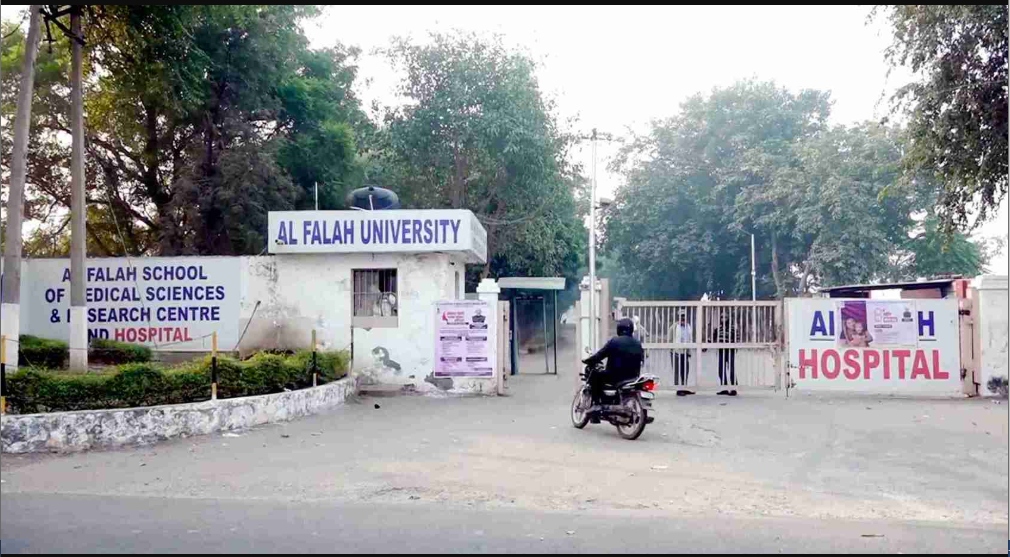
NEW DELHI, Nov 21: Uncertainty and anxiety looms large among the students and their parents as the regular classes for the first year MBBS courses resumed at the Al-Falah Medical College, considered to be the ground zero of the “white collar” doctors’ cell of terrorists involved in the November 10 Delhi blast, even as the investigating agencies are unfolding the “Hamas-type” operational styles of the “Faridabad module” which was allegedly plotting to make India bleed with its nation-wide terror strikes.
The investigating agencies said on Friday that the doctors in the terror module might be using staff lockers at hospitals and medical centres to store arms and explosives in the “Hamas style” of storing arms in Gaza, raising the worrisome possibility of an advisory, or even operational link with the Hamas.
The National Investigation Agency (NIA) which is probing the Delhi blast near Red Fort in which 13 people were killed and over 30 others injured, believe that the doctors in the cell used their medical professions as cover jobs. At least three suspects linked to that attack, Mohammed Shakeel, Adeel Ahmad Rather, and Shaheen Saeed as well Dr Umar Un Nabi, the doctor who was behind the wheels of the Hyundai i20 that exploded near Red Fort, as used their medical profession as cover jobs while their main target was terrorism.
Besides the doctors directly connected with the with the terror cell, investigations into their activities in the Al-Falah university also led to the investigators into the financial irregularities allegedly practiced by the university administration resulting in the arrest of the university founder Jawad Ahmed Siddique by the Enforcement Directorate for alleged money laundering. Of the doctors found involved in terror activities, Shakeel and Umar Nabi worked in Al-Falah university, while Rather was employed at the Government Medical College in Jammu and Kashmir’s Anantnag.
As the Jammu and Kashmir police raided the Anantnag Government Medical College, they found an assault rifle and ammunition in a locker that was allotted to Rather. A second rifle and more ammo was found in a car owned by Saeed. That recovery and intel from interrogated suspects alerted the NIA to terrorists’ plans to convert hospitals in Anantnag, Baramulla, and Budgam districts into weapons storage centres, relying on medical facilities as not generally being suspected of links to terrorism and terrorist activity.
The plan, sources said, had grim echoes of weapons being hid in and under major Gaza hospitals. For example, in June Israeli military claimed to have found a network of Hamas-built tunnels under the Al-Shifa Hospital. The tunnels hid weapons and served as command-and-control centres, they claimed.
The terror doctor module, which intelligence has linked to the Pakistan-based terror group Jaish-e-Mohammed – had similar plans, NIA sources said. If true, this will mean the operational link between the Pak terror group and the terrorists who conspired and detonated the Red Fort car bomb has expanded, with connections to the Hamas.
Sources said this piece of intelligence emerged when Rather was interrogated. Adeel Rather was the first suspect arrested in the ‘terror doctor’ case after he was identified as the man who put up posters supporting Jaish in J&K’s Nowgam. He was picked up from Uttar Pradesh’s Saharanpur and information he provided was key in exposing the Al-Falah ‘terror doctors’.
The Al-Falah Hospital has become ground zero in this case; on Thursday sources said over 200 men and women employed at the facility are being investigated for possible links to the Red Fort attack or other terror strikes, and it is believed that at least 10 suspects have “disappeared” from the university. The police are trying to track them down, but their phones have been turned off.
The investigating all revealed that Muzammil Shakeel was using a flour mill to prepare chemicals for explosives. The flour mill was located at his rented room in Faridabad, from where the police recovered 360 kg of ammonium nitrate and other explosives on November 9. A grinder, and some electronic machines were recovered from the house of a taxi driver in Haryana’s Faridabad. He used to grind urea in the flour mill and prepare chemicals for explosives.
During the interrogation, Ganaie said he had been using the flour mill to separate ammonium nitrate from urea for a long time and to refine the explosives, sources said.
He first took the flour mill, the grinder, and other electronic machines to the driver’s home, saying that they were gifts for his sister’s wedding, and later, shifted them to his rented accommodation. The NIA has detained the taxi driver for questioning.
The driver told the NIA that he met Ganaie when he had taken his son for treatment to the Al-Falah Medical College and Hospital about four years ago, sources said.
Amidst the uncertainty, the regular classes for first year MBBS students resumed on Thursday. And as the students trickled back into the university campus mired in controversy, heavy police presence in the campus added to the anxiety of the students and parents who were accompanying their wards to the campus which is now under public and media glare.
Several parents at Al Falah who travelled from cities such as Chandigarh, Lucknow Delhi, Haldwani said they were still struggling to assess whether the campus was safe, especially after investigators widened their probe to faculty members allegedly connected with Umar, who taught fourth-year students.
Father of a student said he was unable to decide whether to pull his daughter out of the varsity. “We panicked and asked her to return home immediately. Even today, we don’t know if keeping her here is the right decision. But what is the alternative? We can’t jeopardise her education.”
Another person who was accompanying his daughter from Agra, said the developments around the university shook the family, while others expressing concern over the developments said the college need to rebuild the trust. “My son worked so hard to reach here. But after the news broke, our fear was real. The college needs to rebuild trust, communicate openly and ensure our children are safe. All we want is transparency,” a Lucknow resident said.
The students said the vice-chancellor and faculty members held counselling sessions earlier this week to reassure them. “They told us things would settle down and not to pay attention to rumours,” said a first-year student. The administration also advised students to avoid interactions with outsiders and refrain from sharing unverified information online.
Another student said those who attended Dr Umar’s classes were questioned extensively and those who had minimal academic interaction had to give statements as well. Restrictions have been stepped up on the campus as students said they are under constant monitoring of guards and officers. “There’s no normal college life left,” another student said.