




Manas Dasgupta
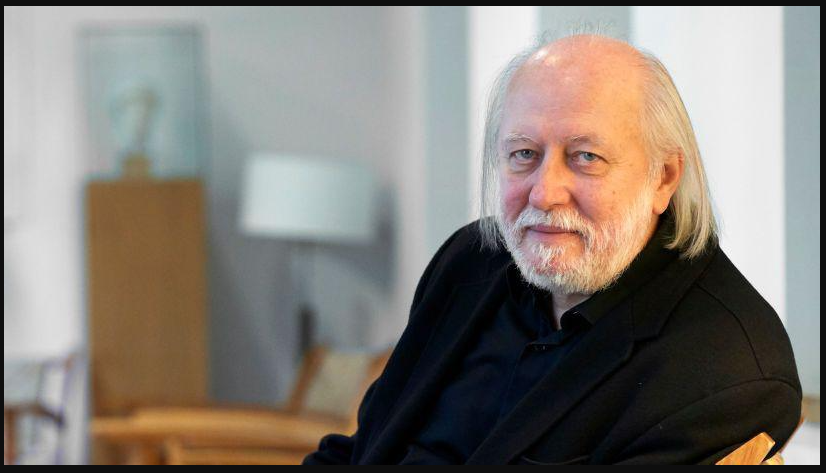
NEW DELHI, Oct 9: Hungarian author László Krasznahorkai on Thursday won the Nobel Prize 2025 for Literature “for his compelling and visionary oeuvre that, in the midst of apocalyptic terror, reaffirms the power of art,” the Royal Swedish Academy of Sciences announced on Thursday.
Born in 1954 in a small town of Gyula, southeast Hungary near the Romanian border, Mr Krasznahorkai became literary sensation in Hungary with his first novel ‘Sátántangó published in 1985 (‘Satantango’, 2012). He joined the illustrious list of laureates that includes Ernest Hemingway, Toni Morrison and Kazuo Ishiguro.
Krasznahorkai is a great epic writer in the Central European tradition, which extends from Kafka to Thomas Bernhard, and is characterised by absurdism and grotesque excess. Another captivating work by Krasznahorkai is the shorter story Aprómunka egy palotáért: bejárás mások őrületébe (Spadework for a Palace: Entering the Madness of Others, 2020) published in 2018.
His ‘Herscht 07769’ published this year, is described as a great contemporary German novel, on account of its accuracy in portraying the country’s social unrest. His other notable works include 2003 novel ‘Északról hegy, Délről tó, Nyugatról utak, Keletről folyó’ (‘A Mountain to the North, a Lake to the South, Paths to the West, a River to the East’, 2022), and ‘Seiobo járt odalent’ (2008; ‘Seiobo There Below’, 2013).
‘Seiobo There Below’ is a collection of 17 stories arranged in a Fibonacci sequence about the role of beauty and artistic creation in a world of blindness and impermanence. “In ‘Herscht 07769’ we find ourselves in not a feverish nightmare in the Carpathians but rather a credible portrayal of a contemporary small town in Thüringen, Germany, which is nevertheless also afflicted by social anarchy, murder and arson. At the same time, the terror of the novel plays out against the backdrop of Johann Sebastian Bach’s powerful legacy. It is a book, written in a single breath, about violence and beauty ‘impossibly’ conjoined,” the Nobel Committee’s statement said.
The literature prize has been awarded 117 times by the Nobel Committee of the Swedish Academy to a total of 121 winners. Last year’s prize was won by South Korean author Han Kang for her body of work that the committee said “confronts historical traumas and exposes the fragility of human life.”
The literature prize is the fourth to be announced this week, following the 2025 Nobels in medicine, physics and chemistry. Nobel Prize award ceremonies are held on December 10, the anniversary of Alfred Nobel’s death in 1896. Nobel was a wealthy Swedish industrialist and the inventor of dynamite who founded the prizes.
Each prize carries an award of 11 million Swedish kronor (nearly $1.2 million), and the winners also receive an 18-carat gold medal and a diploma. The Nobel Prize announcement week kicked off with the prize for medicine on Monday followed by physics on Tuesday and chemistry on Wednesday.