




Manas Dasgupta
NEW DELHI, Aug 15: India is set to witness major reforms in the Goods and Services Tax (GST) regime this year with the Centre having proposed to “essentially move towards simple tax” with 2 slabs—”standard and merit” with special rates applicable for only for select few items, the finance ministry said on Friday.
The announcement of the new GST regime was made by the Prime Minister Narendra Modi while addressing the nation on the occasion of the 79th Independence Day which he said would be a “Diwali gift” for the people of the country as the new GST structure was expected to be implemented by the major festival.
Mr Modi said these “next-generation” reforms would drop by before Diwali promising a massive reduction in taxes on common-use items. The aim was to simplify the current multi-slab system into a more streamlined model. The “Diwali bonanza” announced by Mr Modi proposes to reduce the existing four GST slabs to just two, at 5% and 18%. The government is keen to see the new consumer- and trader-friendly framework come into effect before the festive season.
The Centre has now unveiled a three-pillar blueprint for the reforms that has been sent to the Group of Ministers (GoM) for further discussions. The GST Council would take it up in its upcoming meeting. GST was rolled out on July 1, 2017. It has completed eight years, and the time has now come to review these changes, Mr Modi said. A high-powered committee was formed for the review, and the states were consulted too, following which he said the government has come up with a new set of GST reforms.
“This will substantially reduce the taxes on items for the common man. Our MSMEs will benefit hugely. Daily-use items will become cheaper, which will also strengthen our economy,” the Prime Minister assured.
The finance ministry sources later said it has proposed to have two slab rates – 5% and 18% against the current four-slab structure. Majority of commodities of common man use will be under 5% (99 percent of items in 12% slab category will go to 5 percent) and 90 percent of items in 28 percent to be accommodated in 18% slab, sources said.
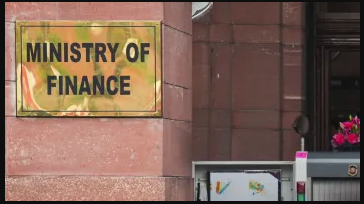
In a statement issued after Mr Modi’s address, the ministry said the central government has sent its proposal on GST rate rationalisation and reforms — specifically linked to structural reforms, rate rationalisation, and ease of living — to the Group of Ministers (GoM) constituted by the GST Council to examine this issue.
It said the Centre’s proposal shared with the GoM rests on three pillars — structural reforms, rate rationalisation and ease of living. The proposal includes reduction of taxes on common man items and aspirational goods. It added that the GST Council would in its next meeting — the date for which is yet to be announced — deliberate on the recommendations of the GoM and would strive to implement the bulk of the reforms within this financial year.
The sources said the core of the proposal was a significant rationalisation of rates. The plan suggests that around 99% of commodities used by the common person, including items for students, farmers, and aspirational middle-class consumers, would fall under the lowest tax category of 0 to 5%. These include products from the textile and handicrafts sectors, which are crucial for boosting rural livelihoods. Additionally, essential services and goods like medicines, health, and insurance are also slated to see a reduction in their GST rates if the proposal is cleared.
The new structure also addresses goods currently in the higher tax slabs. Around 90% of these items would be accommodated in the new 18% slab. The proposal carves out a separate, higher category for a few “sin items” considered injurious to health, such as tobacco and pan masala. These goods, along with potentially some forms of gaming, would be subject to a 40% GST rate, the highest legal rate permitted.
Government sources indicate that work on this proposal has been underway since 2022, with inputs from various stakeholders. The move is being driven by a clear directive from the Prime Minister to make the GST system more growth-friendly and beneficial for consumers and Micro, Small, and Medium Enterprises (MSMEs). Other envisaged benefits of the new GST look include quicker refunds and easier tax calculations.
However, the final approval hinges on the states. The proposal will now be put before the GST Council, with a meeting expected in September or October. There is a potential for some opposition-ruled states to resist the move, fearing a short-term loss in revenue. The Centre, however, believes that the new structure will increase consumption, ultimately fuelling a higher GDP, and is calling on all states to cooperate with this pro-people reform. The onus is now on them to support the measure for the collective economic benefit.
The reform measures are anchored in cooperative federalism and would strengthen key economic sectors, stimulate economic activity, and enable sectoral expansion, said the Finance Ministry. A correction in the inverted duty structure, under structural reforms, would align input and output tax rates, and help in reducing the accumulation of input tax credit and support domestic value addition. Once classification issues are resolved, it would streamline the rate structures, help minimise disputes, and simplify the compliance processes. It would also ensure greater consistency across sectors, the government said.
These reforms also aim to provide long-term clarity on rates and policy direction. This would help in building industry confidence and lead to better business planning. The rationalisation of tax rates would enhance affordability and boost consumption. The government aims to move towards a simpler regime with two slabs: standard and merit, wherein special rates will be kept only for a few items.
It will benefit all sections of society, especially the common man, women, students, middle class, and farmers, said the Finance Ministry. The reforms also focus on furthering the ease of doing business in the country. It aims to simplify the registration processes for small businesses and start-ups. With pre-filled returns, it hopes to reduce manual interventions and eliminate mismatches. It is also expected to ensure faster and automated processing of refunds for exporters and those with an inverted duty structure.
The Centre has assured that it will make every effort to facilitate early implementation of the reforms. “The government reaffirms its commitment to evolving the GST into a simple, stable, and transparent tax system – one that supports inclusive growth, strengthens the formal economy, and enhances ease of doing business across the country,” the government said.
The GST Council, chaired by the Union Finance minister Nirmala Sitharaman and comprising state finance ministers, is expected to meet in September to discuss the GoM proposal on rate rationalisation. Currently, GST is a four-tier tax structure of 5, 12, 18 and 28 per cent, where essential items are either exempted or taxed at the lower tax bracket, while demerit and luxury items at the highest slab. Besides, a compensation cess is levied at varied rates on demerit and luxury items like pan masala and cars.