



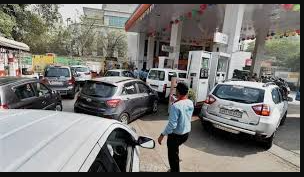

NEW DELHI, July 8: The Delhi government’s “no fuel” order for “overage” private vehicles, older than 15 years for petrol vehicles and 10 years for diesel vehicles, which was enforced from July 1 bit rolled back within a day after strong public protests, is likely to be brought back from November 1.
Sources said on Tuesday that the regulations to not allow fuel to these overage vehicles to force the owners to retire such vehicles would be reinforced from November 1. According to sources, the Commission for Air Quality Management (CAQM) amended its earlier Direction No. 89, postponing the implementation of the “No Fuel” policy.
To make the order more stringent, the revised order would now be enforced not just in Delhi but the entire National Capital Region (NCR) areas which include Gurugram, Faridabad, Ghaziabad, Gautam Buddh Nagar and Sonipat.
The Delhi government had launched the anti-pollution campaign on July 1 targeting so-called “end-of-life vehicles.” Under the original plan, petrol pumps were instructed not to dispense fuel to diesel vehicles older than 10 years and petrol vehicles older than 15 years. The campaign relied on automated camera systems at fuelling stations to detect vehicle age and traffic police were given powers to impound or issue challans to violators. The initiative was spearheaded by the CAQM as part of broader efforts to control worsening air quality in the capital region.
However, the move triggered strong backlash from vehicle owners following which Delhi Environment Minister Manjinder Singh Sirsa announced the lifting of the ban and hinted that the government would work on a more balanced system to manage older vehicles.
Earlier, Delhi Lieutenant Governor VK Saxena formally intervened by writing to Chief Minister Rekha Gupta, urging the government to put the ban on hold. In his letter, VK Saxena expressed concern over the policy’s impact on common people, writing, “It would be unfair to impound their cars and scrap them even if they have run just a few thousand kilometres.”
While the immediate enforcement has been deferred, officials confirm that the policy would be implemented from November 1, with Delhi and NCR as the key enforcement zones. Senior CAQM officials maintained that the policy was crucial to curbing vehicular emissions in Delhi but agreed to delay its implementation after discussions with the Environment Secretary and following VK Saxena’s letter.
The government is now expected to engage in further consultations to develop a more phased and citizen-friendly enforcement strategy even as preparations continue for full-scale rollout later this year, sources said.
(Manas Dasgupta)