


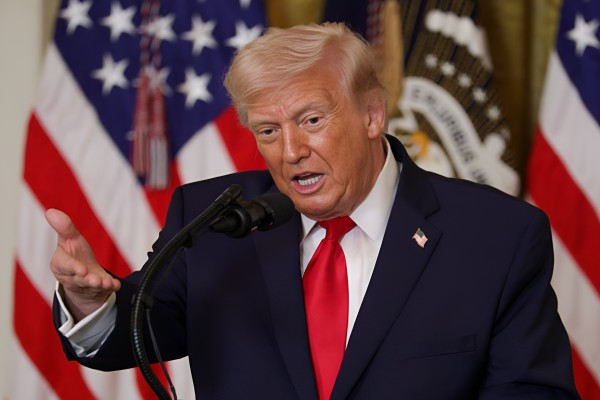
New Delhi: President Donald Trump said on Sunday that Iran could telephone if it wants to negotiate an end to the ongoing war, reiterating that Tehran must not possess nuclear weapons.
His remarks came after Iran urged the U.S. to remove obstacles to a potential deal, including its blockade of Iranian ports. Trump said talks would only move forward if Iran agrees to abandon any nuclear weapons ambitions.
Efforts to revive negotiations suffered a setback on Saturday after the U.S. cancelled a planned visit by envoys Steve Witkoff and Jared Kushner to Islamabad. Meanwhile, Iranian Foreign Minister Abbas Araghchi held discussions with mediators in Pakistan and Oman before heading to Russia for talks with President Vladimir Putin.
Financial markets reacted to the stalled talks, with oil prices rising, the dollar strengthening slightly, and U.S. stock futures edged lower in early Asia trade on Monday amid failed peace talks, leaving Gulf shipping blocked.
“If they want to talk, they can come to us, or they can call us. You know, there is a telephone. We have nice, secure lines,” Trump told “The Sunday Briefing” on Fox News.
“They know what has to be in the agreement. It’s very simple: They cannot have a nuclear weapon, otherwise there’s no reason to meet,” Trump said.
Iran has proposed a plan through Pakistani mediators that includes reopening the Strait of Hormuz and ending hostilities, while deferring nuclear negotiations to a later stage. However, there has been no official confirmation from U.S. authorities.
Axios reported on Sunday, citing an unnamed U.S. official and two sources with knowledge to the matter, that Iran has proposed a plan through Pakistani mediators that includes reopening the Strait of Hormuz and ending hostilities, while deferring nuclear negotiations to a later stage. However, there has been no official confirmation from the U.S. State Department and White House.
Iran has consistently maintained that its nuclear programme is intended for peaceful purposes and has called on Washington to recognise its right to enrich uranium. Western nations, however, remain concerned that the programme could be used to develop nuclear weapons.
Although a ceasefire has temporarily halted large-scale fighting since the conflict began following U.S.-Israeli strikes on Iran on February 28, no formal agreement has been reached. The war has led to significant casualties, rising oil prices, inflationary pressures, and growing concerns over global economic stability.
Trump Faces Domestic Pressure To End War
With his approval ratings slipping, President Trump is facing growing domestic pressure to bring an end to the war. Meanwhile, Iran—despite military setbacks—has gained leverage through its ability to disrupt shipping in the strategically crucial Strait of Hormuz, which typically carries about a fifth of the world’s oil supply.
Tehran has largely restricted movement through the strait, while the U.S. has imposed a blockade on Iranian ports, escalating tensions further.
Before departing for Russia, Iranian Foreign Minister Abbas Araghchi returned to Islamabad after holding talks on Sunday in Oman.
Iranian state media reported that Araghchi discussed maritime security with Omani leader Haitham bin Tariq al-Said and called for a regional security framework free from external interference.
In a post on X, Araghchi said discussions in Oman “included ways to ensure safe transit that is to benefit of all dear neighbors and the world.”
According to Iran’s semi-official Tasnim News Agency, Araghchi’s talks with Pakistani officials included “implementing a new legal regime over the Strait of Hormuz, receiving compensation, guaranteeing no renewed military aggression by warmongers, and lifting the naval blockade.”
Iran’s ambassador to Russia, Kazem Jalali, said in a post on X that Araqchi’s would meet with President Vladimir Putin“in continuation of the diplomatic jihad to advance the country’s interests and amid external threats.”
“Iran and Russia are present in a united front in the campaign of the world’s totalitarian forces against independent and justice-seeking countries, as well as countries that seek a world free from unilateralism and Western domination,” Jalali said.
On Sunday, Trump said he had cancelled a planned visit by U.S. envoys, citing excessive travel and expense for what he viewed as an insufficient offer from Iran. “They offered a lot, but not enough,” he said.
Iranian President Masoud Pezeshkian, in a call on Saturday with Pakistani Prime Minister Shehbaz Sharif, reiterated that Tehran would not enter “imposed negotiations” under threats or blockade, an Iranian statement said.
He stressed that Washington must first remove such obstacles, including its maritime blockade, before meaningful talks on a settlement can begin.
U.S. And Iran Have Extensive Disagreements
Differences between the U.S. and Iran go well beyond Tehran’s nuclear programme and control of the Strait of Hormuz.
President Trump has pushed for limits on Iran’s support to regional allies such as Hezbollah in Lebanon and Hamas in Gaza, as well as restrictions on its ballistic missile capabilities. Iran is seeking sanctions relief and an end to Israeli military actions against Hezbollah.
Following the cancellation of the latest diplomatic visit, two U.S. Air Force C-17 aircraft carrying security personnel, equipment, and vehicles used to protect U.S. officials departed from Pakistan, two Pakistani government sources told Reuters on Sunday.
Trump claimed on Saturday there was “tremendous infighting and confusion” within Iran’s leadership.
Iranian President Masoud Pezeshkian said last week there were “no hardliners or moderates” in Tehran and that the country stood united behind its supreme leader.
The ongoing war has destabilised the Middle East, with Iran launching strikes on Gulf nations and renewed fighting between Israel and Iran-backed Hezbollah in Lebanon.
In Lebanon, Israeli strikes on Sunday killed 14 people and injured 37 others, the health minister said.
(DD News)