


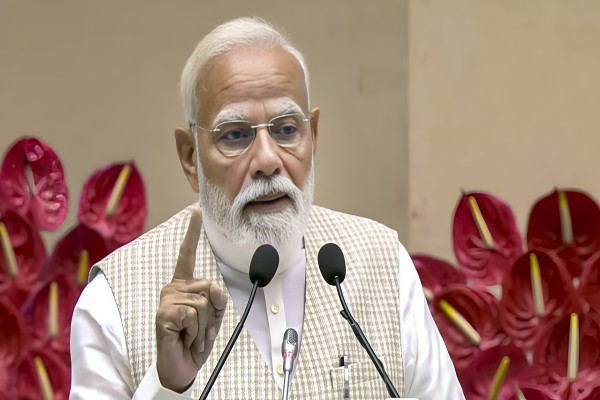
New Delhi: Prime Minister Narendra Modi on Tuesday said India is poised for a significant step forward on women’s reservation, underlining the government’s commitment to enhancing women’s representation in legislative bodies.
His remarks have reignited discussions around the implementation and impact of the long-debated policy aimed at ensuring greater participation of women in governance.
Emphasizing the need for women-led development processes, the Prime Minister mentioned the importance of political empowerment of women as one of the top priorities of the government. He added that greater presence of women in Parliament and state assemblies would help consolidate the process of democratization and lead to better policy-making.
In a letter to the women of India, the Prime Minister praised “Nari Shakti” and recognized the contribution of women to the development of India’s social, economic, and cultural fabric. He said that the resilience, achievements, and power of women has always been an important part of the nation’s progess and has been motivating the whole society.
Reiterating the commitment of the government, he noted that a number of steps have been taken to uplift women at various levels, including education, business, leadership, and administration.
He stressed the importance of involving women in decision-making process as an important step towards developing a developed India.
The Centre has been working to operationalise the system of women’s reservation in view of the legislative enactment. This initiative is aimed at reserving a substantial number of seats for women in the Lok Sabha and state legislatures. While it has bipartisan support, it has also raised implementation issues.
Politicians note that the issue of women’s reservation has remained a constant feature in legislative discussions in India for many years now. Even though there have been several attempts to bring about legislation on this matter, the current attempt is making a major shift in the political landscape.
Decisions on implementation is expected be made by the government, especially with regard to demarcations and the allocation of seats. The entire process will have an important bearing on the timing of implementation of the policy.
This initiative is regarded as a revolutionary change that will influence the country’s political landscape in terms of increased inclusiveness and representation. Experts say greater involvement of women in law-making bodies would mean well-balanced and socially-conscious governance.
If implemented effectively , this initiative of introducing women’s quota could be considered as a momentous event in India’s democratic journey. It signifies an endeavor towards gender equality and democratization in general.
(DD News)