


By Harsh Pargat
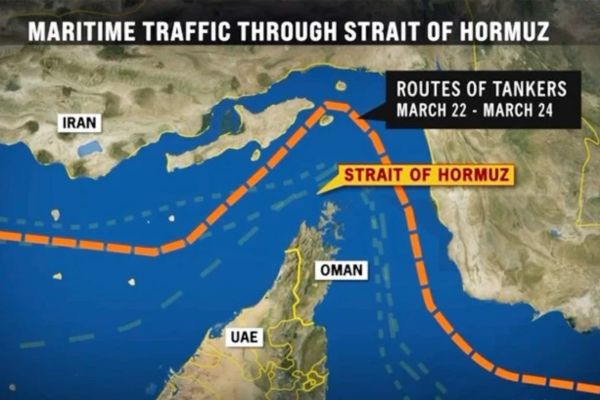
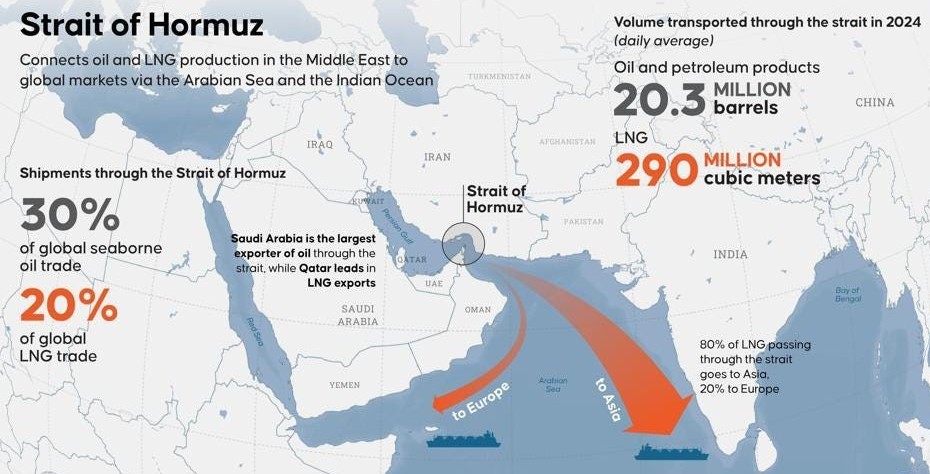
At first glance, the Strait of Hormuz may appear to be just another narrow waterway on the global map. Measuring only about 21 miles at its narrowest point, it is easy to underestimate its significance. Yet, this small stretch of water carries nearly one-fifth of the world’s oil and gas supplies, making it one of the most critical maritime chokepoints in the global economy. In simple terms, what happens in the Strait of Hormuz does not stay there—it affects fuel prices, shipping costs, and economic stability across the world.
The Strait serves as a vital link between the energy-rich Gulf region and major markets in Asia, Europe, and beyond. Every day, millions of barrels of crude oil and liquefied natural gas pass through this route from countries such as Saudi Arabia, Iraq, the United Arab Emirates, Kuwait, and Qatar. For energy-dependent nations like India, China, Japan, and South Korea, this is not just a shipping lane—it is an economic lifeline. Even a small disruption can trigger immediate consequences, including rising oil prices, increased transportation costs, and higher inflation.

In the context of ongoing geopolitical tensions and conflict in the region, the importance of the Strait has become even more pronounced. One of the most critical aspects of this situation is that the global market reacts not only to actual disruptions but also to the fear of them. The mere possibility of instability—whether due to military confrontation, naval blockades, or mining operations—can send shockwaves through international markets. This makes the Strait not only a physical chokepoint but also a psychological one, where perception plays as much of a role as reality.
The narrowness of the Strait and the heavy volume of maritime traffic make it particularly vulnerable during times of conflict. Unlike open seas, where ships can easily reroute, vessels passing through Hormuz have limited room for manoeuvre. This creates an environment where even small-scale or asymmetric actions—such as the use of mines, fast attack boats, or drones—can significantly disrupt shipping. Importantly, such tactics do not require full-scale war to be effective. They allow regional actors to exert pressure and signal escalation without directly engaging in large military confrontations.
This dynamic is often described as “grey zone” strategy—actions that fall between peace and war. In this context, the Strait becomes a tool of strategic leverage. It allows states to influence global energy markets and international politics without crossing the threshold into open conflict. However, this ambiguity also makes the situation more unpredictable and difficult to manage, especially for external powers that have a stake in maintaining free navigation.
The current conflict has also led to increased naval activity in and around the Strait. International coalitions and major powers have stepped up patrols and escort missions to ensure the safe passage of commercial vessels. These operations highlight a broader reality: instability in the Strait of Hormuz is not just a regional concern but a global one. Any prolonged disruption could have cascading effects on economies worldwide, particularly those heavily dependent on imported energy.
For countries like India, the stakes are especially high. A significant portion of India’s energy imports comes through this route. Any sustained disruption could lead to higher fuel prices, increased import bills, and broader economic challenges. This, in turn, could impact everything from transportation costs to household expenses, making the issue directly relevant to everyday life.
Recognizing these risks, Gulf countries have begun investing in alternative routes to reduce their dependence on the Strait. Pipelines and export terminals that bypass Hormuz are part of a long-term strategy to enhance energy security. For instance, Saudi Arabia has developed pipelines that transport oil to ports on the Red Sea, while the UAE has expanded its export capacity through Fujairah. While these initiatives are significant, they are not yet capable of fully replacing the massive volumes that currently pass through the Strait. In the short term, therefore, Hormuz remains irreplaceable.
Beyond energy and economics, the Strait of Hormuz also reflects the broader geopolitical tensions in West Asia. Its security is closely tied to regional rivalries and the involvement of global powers. Any escalation in conflict risks turning this vital trade route into a zone of confrontation. Such a scenario would not only disrupt energy supplies but could also lead to wider instability in international relations.
In conclusion, the Strait of Hormuz is far more than a narrow waterway—it is a strategic artery that sustains the global economy. In times of conflict, its importance is magnified, serving both as a point of vulnerability and a source of geopolitical influence. Ensuring its stability is therefore not just a regional priority but a global necessity. As tensions continue to evolve, the challenge lies in managing risks, avoiding miscalculations, and maintaining the delicate balance between security and stability in one of the world’s most crucial maritime corridors.
(The writer is a Research Analyst, International Relations & Security Studies, with a focus on West Asia)
Please share your views harshpargat@gmail.com