


By Harsh Pargat
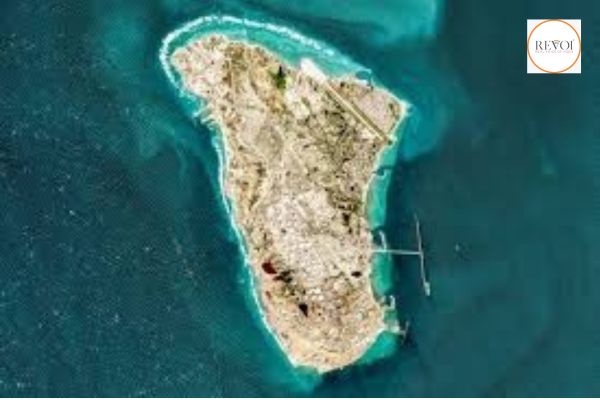
Strategic Topography: The Kharg Island topographically is a littoral small outcrop in the Arabian Gulf. The island serves as Iran’s main source of crude oil exports accounting for 90% of Iran’s total exports. This is not the first instance were the Kharg island has faced a threat of invasion. The Portuguese and the Dutch companies in 1700 to 1766 attacked these islands.
Plausible Reasons for Attacking the Kharg Islands:
According to reporting by CNN, echoed across multiple outlets, sections of the US policy establishment appear to view control over Kharg Island as a potential pressure point against Iran’s economic core. The logic underpinning this assessment is relatively straightforward yet strategically consequential. Kharg serves as a critical hub for Iran’s oil exports, and any disruption to its functioning would directly affect Tehran’s primary revenue stream.
Also read: SC Wary of Presenting AI-generated Non-Existent Judgements
From Washington’s perspective, such a move could offer a form of coercive leverage that stops short of a full-scale military campaign. Rather than targeting dispersed energy infrastructure across Iran or committing to a costly and politically fraught ground invasion, control of Kharg would allow the United States to concentrate pressure at a single, high-value node. In theory, this could significantly constrain Iran’s fiscal capacity, thereby compelling a recalibration of its regional posture—particularly its actions linked to instability in the Strait of Hormuz.
However, this can extend the conflict and have repercussions beyond Levant. While the seizure or neutralization of Kharg Island may promise economic leverage, it risks escalation in one of the world’s most sensitive maritime corridors.
Iran’s Fortification of the Island:
Iran’s response, as reported by CNN, reflects a clear recognition of Kharg Island’s strategic vulnerability. The reported deployment of missile systems and the laying of naval mines along its coastline point to a deliberate effort to transform the island into a hardened defensive position. This is not simply about protecting infrastructure; it is about safeguarding a critical economic lifeline that underpins the Iranian state’s fiscal stability.
From a military standpoint, such preparations significantly raise the costs of any potential operation. Analysts caution that a ground or amphibious assault would not be a limited or surgical undertaking. Iranian forces are likely to adopt a strategy of denial and attrition—leveraging defensive depth, familiarity with terrain, and asymmetric tactics to inflict sustained losses. The emphasis, as some experts note, would be less on outright victory and more on making any intervention prohibitively expensive in both human and political terms.
Also read: West Asia Conflict: Airlines to Cut 3,000 Flights Per Week in Summer Schedule
Equally important is the signaling embedded in Tehran’s rhetoric. By warning of retaliation against infrastructure across the Gulf, Iran is effectively expanding the scope of deterrence beyond Kharg itself. This introduces a broader escalation ladder, where an attack on a single island risks cascading into disruptions across regional energy networks and maritime routes. In that sense, the issue is no longer confined to territorial control, but becomes part of a wider contest over stability in one of the world’s most strategically sensitive energy corridors.
Dilemma of Plausibility of Execution Versus Retaliation
Regardless of how the ongoing talks evolve, recent military movements in the Gulf suggest that the situation is being shaped as much by precautionary positioning as by diplomacy. The United States has deployed around 1,000 paratroopers from the 82nd Airborne Division along with 5,000 Marines, the latter embarked aboard the USS Tripoli, an amphibious assault ship designed to support rapid-response operations. While such deployments are often framed as deterrent measures, their scale and composition also signal preparedness for a range of contingencies, including limited offensive action if circumstances were to deteriorate.
From Tehran’s perspective, these developments appear to reinforce longstanding concerns about external threats to its territorial and strategic assets. Iran’s Parliament Speaker, Mohammad Bagher Qalibaf, publicly stated that intelligence assessments point to the possibility of an attempt by adversarial actors—potentially with regional backing—to seize one of Iran’s islands. While such claims cannot be independently verified in the public domain, they reflect a broader pattern in which military signaling is interpreted through the lens of strategic mistrust.
Also read: Centre Claims India has 60 Days of Fuel Stocks
Qalibaf’s remarks also included a warning that any such move would provoke a forceful response, including strikes against critical infrastructure linked to those involved. This form of rhetoric is consistent with Iran’s established deterrence posture, which seeks to raise the potential costs of escalation by expanding the scope of retaliation beyond immediate points of conflict.
Viewed in totality, the situation illustrates a familiar dynamic in the Gulf, parallel tracks of diplomacy and military signaling unfolding simultaneously. For Washington, deployments serve to reinforce leverage and reassure partners; for Tehran, public warnings and threat articulation aim to deter perceived encroachments. Seeing the recent developments in progress it looks like a wait and see scenario whether “boots will be deployed “or dialogue will prevail and should gulf states reconsider the notion of changing security seeing the contemporary regional dynamics. The answer to all these questions can only be determined as the events in progress turn out.
(The writer is Research Analyst, International Relations & Security Studies, with a focus on West Asia)
Share your views at harshpargat@gmail.com