


Manas Dasgupta
NEW DELHI, Feb 1: Even though the 2026 union budget has belied the expectations of some big ticket announcements for the states going to the polls in the current year, it still has some important projects for these states including West Bengal, Tamil Nadu, Kerala and Assam. The initiatives ranged from dedicated rare earth and rail and freight corridors to schemes aimed at boosting agricultural production and tourism.
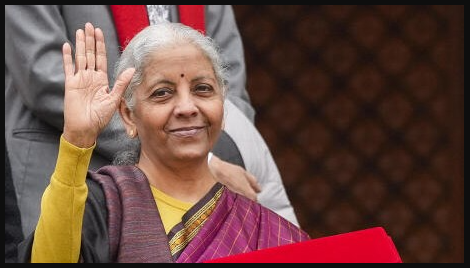
With an eye on West Bengal, where the BJP hopes to come to power after three straight chief ministerial terms by Trinamool Congress chief Mamata Banerjee, Finance Minister Nirmala Sitharaman proposed an ‘East Coast Industrial Corridor’ with a well-connected node in Durgapur and the creation of five tourism destinations in the five ‘Purvodaya’ states – Bihar, Jharkhand, West Bengal, Odisha, and Andhra Pradesh.
Sitharaman also proposed a dedicated freight corridor connecting Surat in Gujarat and Dankuni in Bengal. The new freight corridor will establish a direct link between the two states, from the east to the west, setting up new corridors for logistics and freight movement.
On the rail front, the finance minister announced seven high-speed rail corridors between cities “as growth connectors”. One of these corridors will be between Varanasi and Siliguri in West Bengal.
One of the big announcements in the Budget was the proposal to establish dedicated rare earth corridors in four states – Tamil Nadu, Kerala, Odisha and Andhra Pradesh. “The scheme for rare earth permanent magnets was launched in November 2025. We now propose to support the mineral-rich states of Odisha, Kerala, Andhra Pradesh and Tamil Nadu to establish dedicated rare earth corridors to promote mining, processing, research and manufacturing,” the finance minister said in her speech.
Two of these states, Tamil Nadu and Kerala, are where the BJP has struggled to make any significant electoral inroads but is hoping to do better in the Assembly polls in a few months from now. Two of the proposed high-speed rail corridors – between Hyderabad and Chennai, and Chennai and Bengaluru, are in Tamil Nadu – and the state is also getting bird-watching trails along the Pulicat Lake, which it shares with Andhra Pradesh, as well as the development of the archaeological site of Adichanallur in Thoothukudi district as a vibrant, experiential cultural destination.
Podhigai Malai in the Western Ghats has been identified for the development of world-class trekking and hiking experiences. Both Tamil Nadu and Kerala, among the largest producers of coconuts in India, will also benefit from the Coconut Promotion Scheme.
“India is the world’s largest producer of coconuts. About 30 million people, including nearly 10 million farmers, depend on coconuts for their livelihood. To further enhance competitiveness in coconut production, I propose a Coconut Promotion Scheme to increase production and enhance productivity through various interventions, including replacing old and non-productive trees with new saplings/plants/varieties in major coconut growing states,” Sitharaman announced. For Kerala, the government also said ecologically sensitive turtle trails will be developed along key nesting sites in the coastal areas.
BJP-ruled Assam has been included in a scheme for the development of Buddhist circuits, along with Arunachal Pradesh, Sikkim, Manipur, Mizoram and Tripura. The scheme will cover the preservation of temples and monasteries, pilgrimage interpretation centres, connectivity and pilgrim amenities.
As part of the focus on mental healthcare, the National Mental Health Institute in Assam’s Tezpur will be upgraded to a Regional Apex Institution and the state will also benefit from the Centre’s stated aim in the Budget of accelerating development and employment opportunities in the Northeast region. All of these states, which have large agricultural populations, will also gain from the support for sandalwood, cocoa and cashew, as well as Agar trees in Assam.
While Durgapur town in West Bengal is set to be developed as an integrated node within the East Coast Industrial Corridor, the WHO Global Traditional Medicine Centre in Jamnagar in Gujarat will be modernised to support advanced research. In addition, a new National Institute of Design will be set up somewhere in the eastern region through a competitive challenge route.
In the infrastructure sector, seven corridors will be created with High-Speed Rail Networks to serve as growth connectors, linking hubs including Mumbai-Pune (Maharashtra), Pune-Hyderabad (Telangana), Hyderabad-Bengaluru (Telangana/Karnataka), Chennai (Tamil Nadu), Delhi-Varanasi (Delhi/Uttar Pradesh), and Varanasi-Siliguri (Uttar Pradesh/West Bengal).
The government will also initiate the operationalisation of 20 National Waterways starting with NW-5 in Odisha and connecting industrial hubs like Talcher and Angul and Paradeep and Dharma ports.
The states in the Himalayan region, particularly Himachal Pradesh, Uttarakhand, and Jammu & Kashmir will see the development of sustainable mountain trails while new bird-watching trails are proposed for Pulikat Lake between Andhra Pradesh and Tamil Nadu alongside mountain trails in the Araku Valley and Podhigai Malai.
The coastal states of Odisha, Karnataka, and Kerala will develop Turtle Trails to protect and promote nesting sites. A major scheme for Buddhist Circuits will be launched in the North-Eastern region including Arunachal Pradesh, Sikkim, Assam, Manipur, Mizoram, and Tripura, focusing on monastery preservation and pilgrim facilities.
The Tamil Nadu chief minister MK Stalin has hit out at the Union Finance Minister stating that Ms Sitharaman has once again given ‘zero’ to Tamil Nadu in the Union Budget and dubbed the annual financial statement as “directionless.” Commenting on the Union Budget 2026-27, Mr Stalin said “Union Budget is a huge disappointment.” Mr Stalin alleged that Tamil Nadu’s interests were fully ignored in the Budget.