


Manas Dasgupta
NEW DELHI, June 27: The first BJP government in West Bengal is all set to table the Uniform Civil Code (UCC) Bill in the state Assembly on Monday during the ongoing budget session to establish a common framework of civil laws—governing marriage, divorce, inheritance, maintenance, and adoption—for all citizens regardless of their religious affiliation..
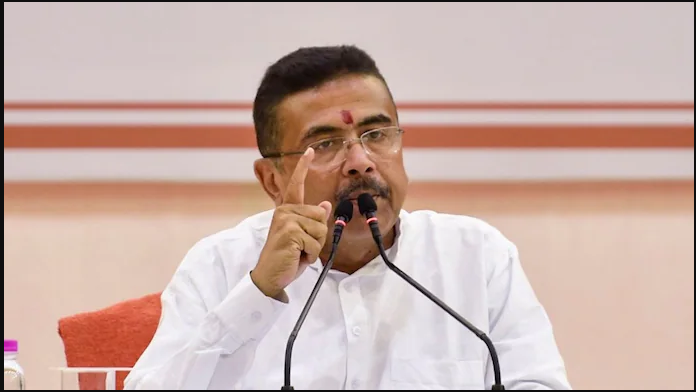
The Chief Minister Suvendu Adhikari said his government would implement the UCC in the state by following due legal procedure, on the lines of Uttarakhand, Gujarat and Assam. The measure would come ahead of the BJP’s stated six-month deadline it had promised in its 2026 Assembly election manifesto.
Official sources said the matter was discussed and finalised at a Business Advisory Committee meeting in the assembly on Thursday evening. Following its introduction, the bill would be subject to legislative debate and scrutiny as it navigates the Assembly.
Speaking on the sidelines of a government programme to mark the 189th birth anniversary of literary icon Bankim Chandra Chattopadhyay at College Street in north Kolkata, Mr Adhikari said the state would follow the prescribed process for bringing in the UCC. “There is a procedure for UCC implementation, and we will adhere to that. This will be similar to Gujarat and Assam,” he said, referring to the two states that have initiated legislative and administrative steps towards adopting UCC.
One of Mamata Banerjee’s senior party leaders, Trinamool Congress (TMC) Lok Sabha MP Saugata Roy, criticised the move. “We are opposed to UCC right from the beginning. It is against secularism. BJP is enforcing it in the states where it is in power. Jawaharlal Nehru committed that the UCC would be introduced in India only if Muslims accepted it. Since Muslims have not accepted it, the BJP is moving a step towards forming a communal government,” Roy. The West Bengal Congress has also opposed the move.
The UCC has remained one of India’s most debated issues since the period before Independence. It was extensively discussed in the Constituent Assembly before the makers of the Constitution decided to include it under the Directive Principles of State Policy, which are not legally enforceable.
Besides, UCC, the Suvendu Adhikari government is also set to introduce some other controversial bills including two bills that dramatically widen the scope of “anti-social activity” incorporating provisions for preventive detention for up to 12 months without trial and another legislation against “love jihad”, “land jihad” and forced religious conversion.
The two bills — the West Bengal Public Safety and Control of Anti-social Activities Bill, 2026, and the West Bengal Maintenance of Public Order (Amendment) Bill, 2026 — mirror similar laws in Uttar Pradesh, Gujarat, Tamil Nadu and Maharashtra, officials said.
The West Bengal Public Safety and Control of Anti-social Activities Bill, 2026, seeks to allow preventive detention for as long as 12 months without trial. It also includes provisions for repeated detention if required. The West Bengal Maintenance of Public Order (Amendment) Bill, 2026, proposes the seizure of an offender’s property, which can then be auctioned to compensate for losses, officials said.
According to the Bill, anti-social activity includes any act “that causes or is likely to cause, directly or indirectly, alarm, danger, fear or insecurity among people; poses a great or widespread danger to life or property; disturbance in public order; obstructs business, trade or professions; involves the unlawful dispossession of any person from movable or immovable property; and causes substantial loss or damage to public and private property.”
The proposed law also includes “any illegal activity relating to mining, quarrying, sand extraction, forest produce or wildlife which causes substantial loss to the public exchequer” under the definition of “anti-social activities.”
The TMC MP Mahua Moitra hit back at the BJP government over its proposed laws, accusing it of trying to “uproot” the Opposition through intimidation and divisive and draconian policies. She also objected to the proposed Bill on “anti-social activity”, saying it “provides neither judicial safeguards nor legal protection.”
“It is even more stringent than the Emergency era MISA (Maintenance of Internal Security Act), the UAPA (Unlawful Activities (Prevention) Act) and other harsh laws. Multiply all of them by 10 and only then do you arrive at this Bill,” she said. “It has become clear within one month how disastrous the consequences of this government could be for the people of West Bengal,” she said.