


Manas Dasgupta
NEW DELHI, Jan 6: Amidst rising violence against Hindus in Bangladesh, the Bangladesh police on Tuesday formally filed the charge-sheet against 17 accused in the Sharif Osman Hadi murder case claiming that the student leader was killed due to “political vengeance” at the behest of the Awami League, the erstwhile ruling party of that country.
“Through public rallies and social media, Hadi had strongly criticised the past activities of the now-banned Awami League and Chhatra League. Hadi’s outspoken remarks angered leaders and activists of Chhatra League and its affiliated groups,” Md Shafiqul Islam, Additional Commissioner of the Dhaka Metropolitan Police’s (DMP) Detective Branch, said.
The Chhatra League is the student wing of deposed Prime Minister Sheikh Hasina’s Awami League party. “Considering the political identities of the accused and the victim’s previous political statements, the investigation has revealed that Hadi was shot dead due to political vengeance,” Mr Islam told a press briefing in Dhaka, as the DMP submitted the chargesheet against 17 accused.
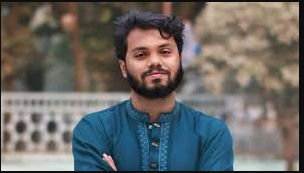
Inqilab Moncho spokesperson Hadi, 32, rose to national prominence during the July-August 2024 mass protests that led to the fall of the Hasina-led government, was shot in the head on December 12 during an election campaign in Dhaka. He was also a parliamentary candidate for the upcoming February 12 elections. Hadi was airlifted to Singapore for treatment but died on December 18.
Mr Islam said the alleged shooter, Faisal Karim Masud, was directly involved with the Chhatra League. Another accused, Taizul Islam Chowdhury Bappi, who allegedly helped Masud and Alamgir Sheikh, another prime suspect, flee after the killing, was the president of Pallabi Thana Chhatra League and an Awami League-nominated ward councillor, he said. So far, 12 individuals have been arrested in connection with the case.
On Monday, Home Affairs Adviser Jahangir Alam Chowdhury had told reporters after a meeting of the Advisory Council on law and order at the Secretariat that the final chargesheet in the Hadi murder case would be submitted on January 7. However, police filed the chargesheet a day earlier amid protests in Dhaka by Inqilab Moncho, which has been demanding justice for the killing.
Meanwhile, amidst the deteriorating law and order situation creating widespread fear, Rana Pratap Bairagi and Sarat Mani Chakraborty, two Hindu men, were killed by unidentified assailants within hours of each other in Bangladesh. In both cases, unidentified assailants came to both men’s places of work and attacked them fatally.
It was not immediately clear if there was a communal angle to the killings, but it followed a series of violent incidents against minorities in the Muslim-majority country, especially the Hindu community members.
According to Bangladesh media reports, Bairagi, 38, was a resident of Arua village in Keshabpur upazila of Jessore in Khulna Division. Son of Tushar Kanti Bairagi, Rana Pratap Bairagi owned an ice manufacturing factory in Kapalia Bazar, Monirampur, and also served as the acting editor of the newspaper ‘Dainik BD Khobor’ published from Narail.
Reports claim that Bairagi had multiple criminal cases against him. One case was reportedly registered against him at Abhaynagar police station and three cases at Keshabpur police station, police said. Further details of these cases were not available at the time. The incident occurred around 5:45 pm at Kopaliya Bazaar on Monday, when unidentified assailants lured him out of his factory and shot him dead in public.
Media report said three men on a motorcycle called him from the ice factory and took him to the alley in front of Kapalia Clinic and Diagnostic Centre on the west side of Kopaliya Bazar. The unidentified men then shot him in the head from close range and fled. He died on the spot.
“We have received information that one Rana Pratap Bairagi was shot dead at the Keshabpur area of Jessore,” Bangladesh Puja Celebration Committee President Bashudeb Dhar said. “Bairagi was shot three times in the head, and his throat was slit,” Monirampur Police Station Officer-in-Charge Md. Rajiullah Khan told the media. Khan also said the reason for his murder was not known. An investigation was launched into the incident.
Police said Bairagi “appeared to be a victim of an internal feud” of the banned Purbo Banglar Communist Party, describing him as an “active member” of the group.
In another incident, a 40-year old grocery shop owner Sarat Mani Chakraborty was reportedly attacked with sharp weapons in Narsingdi district around 10 pm on Monday. The police said Chakraborty was at his grocery shop in the Charsindur Bazaar in the Palash Upazila area of Narsingdi when unidentified assailants suddenly attacked him with sharp weapons and critically injured him.
Local residents rushed him to a hospital, but Chakraborty succumbed to his injuries on the way. He is survived by his wife, Antara Chakraborty and his 12-year-old son, Abhik Chakraborty. As per local media reports, Chakraborty was previously employed in South Korea before returning to Bangladesh a few years ago.
The incidents marks the latest in a spate of violent incidents against the Hindu community members. On January 3, Khokon Chandra Das (50) died after he was brutally attacked, hacked and set on fire. On December 24, a Hindu man, Amrit Mondal, was lynched over alleged extortion in Rajbari town’s Pangsha upazila. Before that, on December 18, Dipu Chandra Das (25) was lynched by a mob, and his body was set on fire over alleged blasphemy in Mymensingh city.
Unidentified men also set the house of Qatari expatriate workers Shukh Shil and Anil Shil on fire in the Raojan area on the outskirts of Chattogram on December 23, but the residents managed to escape unharmed. There has been a spate of violence targeting the minority community in the country in the last few weeks, and mob violence or clandestine attacks have emerged as a major crisis in Bangladesh’s changed political landscape.