


Manas Dasgupta
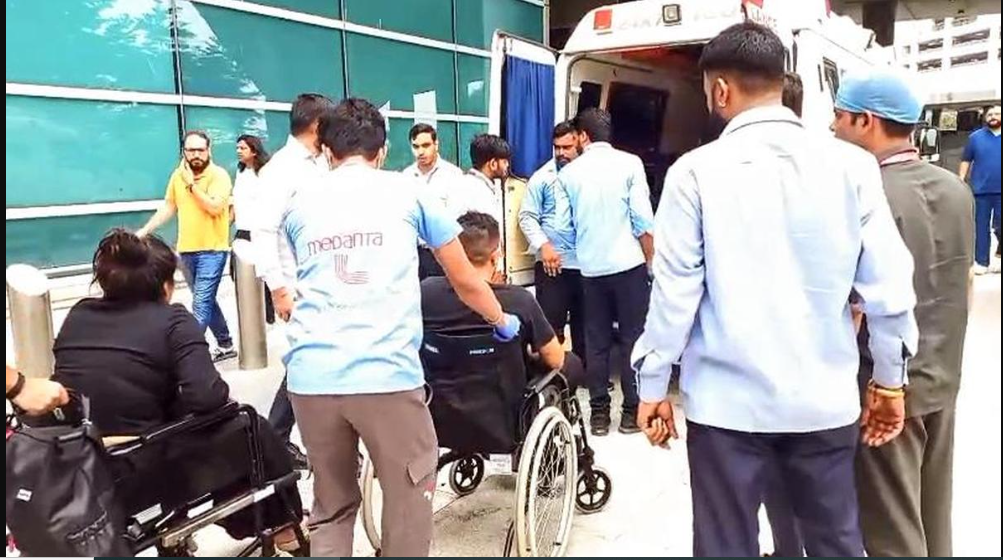
NEW DELHI, Aug 10: The Phuket–Delhi Air India flight that experienced a “momentary loss in altitude” on August 4 injuring at least 17 passengers and crew members, may not have been caused by turbulence as was initially believed but new reports suggest triple hydraulic failure may have caused a sudden altitude drop, an incident that has never happened with the A-320.
The circumstances surrounding the Phuket-Delhi Air India flight that reportedly encountered severe turbulence have brought up several bizarre and murky angles. Turbulence was preceded by a cascade of failures involving the aircraft’s hydraulic and flight-control systems contradicting the airline’s initial attribution of the incident to turbulence.
Nearly 2.5 hours after taking off from Phuket at 6.56 a.m., Air India flight AI 2379 operated on Airbus A320 neo was hit by a cascade of technical failures at 9.32 a.m. IST, involving the aircraft’s hydraulic and flight-control systems.
The sequence involved low-pressure indications and failures affecting one or two hydraulic systems at a time, with different combinations involving all three systems — an occurrence several pilots described as extremely rare. This was followed by an autopilot disconnect and simultaneous fault indications affecting both the left and right elevators, which are the control surfaces that move the aircraft’s nose up or down.
The A320 neo has three independent hydraulic systems that power critical functions including the primary flight controls, landing gear, nose-wheel steering, thrust reversers, flaps and slats, and braking systems.
The French manufacturer of the aircraft has joined the investigation. “In accordance with ICAO Annex 13, Airbus is providing technical assistance to the relevant investigating authorities. We are actively supporting the airline and will provide further information as it becomes available. A team of specialists is being dispatched to assist with the investigation,” Airbus said in a statement on Monday.
In a note by the Civil Aviation Ministry on the incident that happened while the plane was flying over Odisha, the word “turbulence” was missing. Even after assuming the pilot did encounter a serious situation in the cockpit such as a triple hydraulic failure, it was inexplicable for the pilot to be seen in the back of the aircraft. Rule No. 1 in aviation is that you continue to fly in such a situation.
The automated post-flight maintenance report records failures and warning indications in different hydraulic systems, occurring either individually or in combinations of two systems but affecting all three of them, sources said. The report records nine such fault messages within one minute.
As the aircraft pitched up and a stall warning (indicating loss of lift or height) was triggered, one of the pilots took manual control and attempted to push the nose down, sources added. The pilot may have applied significant control input while attempting to recover the aircraft, the source said, causing the aircraft to lose around 300 feet of altitude in a matter of moments and throwing passengers and crew upward.
The available technical records do not show further fault messages after this sequence. Sources said this indicates that the flight-control systems were recovered following the pilots’ intervention, although the precise relationship between the technical failures, the flight-control response and the subsequent altitude excursion remains subject to investigation.
The pilots decided to continue to Delhi rather than divert to a nearby airport due to the availability of better medical facilities for the injured passengers as well as aircraft engineering support.
The biggest question, then, is if a pilot encounters something which would normally trigger a Mayday scenario, there is no reason for the pilot to be at the back of the aircraft despite knowing passengers could be injured. Another key question is why did the pilot not land in the first available airport if the plane has just encountered a huge technical failure? Instead, the pilot decided to continue the flight to Delhi.
The pilot-in-command of the Tata-owned airline had also tested positive for psychoactive substances during the post-flight screening in Delhi. However, it is unlikely for a full-fledged commander of an Airbus aircraft in any airline to be irresponsible enough to get into recreational drug use before flying an aircraft, with the lives of over 100 people in his or her hands.
Also, failing the urine test does not necessarily mean the pilot used any kind of recreational substances. But if there is a consistent failure in the urine test, it may mean something. The results of the final tests are awaited. Some drugs taken as part of prescription medication would remain in the bloodstream, though pilots cannot pop in pills just like that. They have to be cleared in certain cases by the airline’s doctors.
Air India in a statement said the Aircraft Accident Investigation Bureau (AAIB) is looking into the matter. “As the investigative process is ongoing, Air India cannot comment on any findings or observations related to the investigation. We will continue to extend our full cooperation to relevant authorities as required,” the airline said.
The incident has been classified as a serious incident and is being investigated by the Aircraft Accident Investigation Bureau (AAIB). Neither Air India nor the Ministry of Civil Aviation has mentioned the technical fault indications in their respective press statements.
Air India’s initial statement attributed the momentary loss of altitude to “in-flight turbulence”, but subsequent statements did not repeat the reference to turbulence. The Ministry’s statement, too, made no mention of turbulence. Neither Air India nor the Ministry statement mentioned any snags encountered during the flight.
Some of the 17 people who were injured in the Air India incident are still in the hospital.