


Manas Dasgupta
NEW DELHI, Aug 28: Even as some top US officials have warned that unless India was prepared to curb its purchase of Russian crude, President Donald Trump was unlikely to soften his stand on the 50% highest tariff on Indian exports, the government sources continue to express the confidence that the discord between the two countries would be “amicably resolved” soon.
After an additional 25 per cent tariff as penalty for India’s purchase of Russian oil came into effect on Wednesday, government sources have said efforts were underway to resolve the ongoing discord between India and the US. They said the current situation was a temporary one in an otherwise long-term relationship between the two countries.
They further stated that exporters need not panic as the impact of US tariffs were unlikely to be severe. This is because of India’s diversified export base. Total tariffs on India now reach as high as 50 per cent, sharing top spot with Brazil. Two-thirds of India’s exports to the US – worth over $60 billion annually – are now in the tariff net.
But Mr Trump’s top economic adviser has warned that if India failed to curb its Russian crude trade, the US President would not ease his stance on punitive tariff rates. US National Economic Council Director Kevin Hassett called trade negotiations with India “complicated” as he accused New Delhi of “intransigence” in opening its markets to American products. “If the Indians don’t budge, I don’t think President Trump will,” he said.
Hassett said trade negotiations with India were “complicated”, claiming part of it “has been tied to the pressure we’ve been trying to put on Russia in order to secure a peace deal and save millions of lives. And then there’s the Indian intransigence about opening their markets to our products.” Linking India-US trade negotiations to a marathon, Hassett said talks require a long-term outlook and acceptance of “ebbs and flows” before New Delhi and Washington reach the final position.
“When you look at trade negotiations, one lesson we’ve all learnt is that you need to keep your eyes on the horizon and recognise that there are going to be ebbs and flows before we reach the final position,” he said. The Trump adviser’s remarks echoed US Treasury Secretary Scott Bessent’s earlier comments, where he said high tariffs on India are “not just over India’s purchase of Russian oil” but also due to the protracted nature of the ongoing trade deal talks.
“I’d thought we’d have a deal in May or June; that India could be one of the earliest deals. But they, kind of, tapped us along,” Bessent had remarked on Wednesday. He claimed New Delhi had been “a bit uncooperative” during negotiations and said, “This is a very complicated relationship,” even as he had expressed the confidence that “at the end of the day the two countries will come together.”
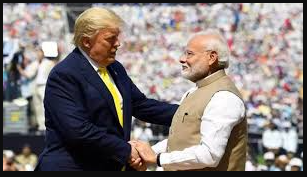
Mr Bessent also explained that US President Donald Trump and Prime Minister Narendra Modi have a “very good rapport at the top level.” He said, “This is a complicated relationship. President Trump and Prime Minister Modi have a very good rapport at the top level, but it’s not just about Russian oil.”
Regarding bilateral trade, Bessent reiterated Trump’s stance and said US had a large trade deficit with India and when there is a “schism” in trade relations, the ‘deficit’ country is at an advantage and the ‘surplus’ country “should worry.” “The US is the deficit country. When there is a schism in trade relations, the deficit country’s at an advantage. It’s the surplus country that should worry. So, the Indians are selling to us. They have very high tariffs and we have a very large deficit with them,” the Treasury Secretary said.
India has asserted that it is prepared to stand firm against US pressure, with PM Modi vowing he would “never compromise” the interests of the country’s farmers. The government estimates the tariffs will impact $48.2 billion worth of Indian exports to the US. Officials have warned that, though the immediate impact of new duties appears limited, the ripple effects on the economy pose challenges that must be addressed. The new duties could make shipments to the US commercially unviable, triggering job losses and slower economic growth, they said.