


Manas Dasgupta
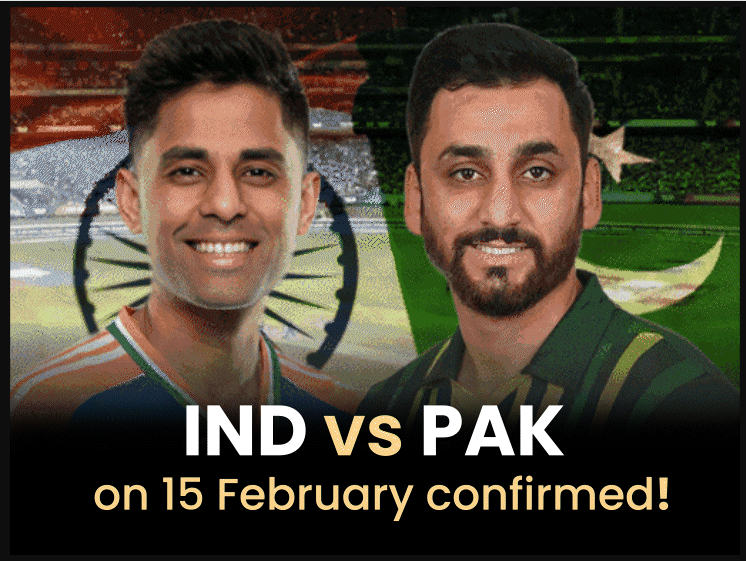
NEW DELHI, Feb 10: Pakistan are set to play against India in their T20 World Cup group match in Colombo on February 15 as after days of chest-thumping solidarity with Bangladesh, the Pakistan Cricket Board (PCB) folded at the first sign of financial consequences surrendered to the International Cricket Council (ICC) on Monday midnight and retreated from its boycott call.
The PCB’s U-turn on playing India at the 2026 T20 World Cup wasn’t a tactical reset-it was a public collapse. The result is a credibility wound that will linger long after February 15. When Bangladesh refused to tour India over security concerns, Pakistan stepped forward as an ally. The PCB hinted it would also reconsider participation if Dhaka’s position was ignored.
The Pakistan government had earlier barred its team from taking the field against India in solidarity with Bangladesh, who were removed from the tournament by the ICC. However, a series of discussions involving Pakistan, Bangladesh, the ICC, and boards from other nations, including the UAE and Sri Lanka, took place before the U-turn was made official on Monday.
Bangladesh Cricket Board president Mohammad Aminul Islam praised Pakistan’s firmness, calling it brotherly support that had forced India onto the defensive. Pakistan initially held its ground, insisting it would not play the India fixture. But once the ICC raised the prospect of sanctions and revenue loss, resolve evaporated. The protest ended not with negotiations, but with submission.
Bangladesh was left alone. Pakistan moved on. In international sport, alliances are measured by what you do when pressure arrives-not what you say before it does. Pakistan spoke loudly, then exited early. It tried to appear defiant while ensuring it paid no price. That contradiction is now its defining takeaway from this episode.
Cricket administrators around the world noticed. Boards operate on trust and predictability. Pakistan has just demonstrated it offers neither. Today it’s Bangladesh, tomorrow it could be any smaller board that assumes Pakistan’s support will hold when stakes rise. The message is clear: solidarity lasts only until money enters the room. And money entered quickly. It entered during Sunday’s meeting with ICC in Lahore.
The India-Pakistan T20 clash is one of cricket’s most lucrative assets, estimated to generate nearly USD 500 million in combined broadcast and commercial revenue. By threatening to derail it, the PCB transformed its own fixtures into unstable properties. Broadcasters don’t price emotion. Sponsors don’t reward brinkmanship. They value certainty.
Pakistan has now labelled itself a risk variable. Future media rights involving Pakistan will be negotiated with caution. Global brands will think twice before attaching themselves to a board willing to politicize marquee events. And when the ICC redraws commercial frameworks, Pakistan’s leverage will be weaker.
PCB chairman Mohsin Naqvi is under intense pressure as his promise of “major surgery” after Pakistan’s 2024 T20 World Cup collapse rings hollow. Former opener Ahmad Shahzad has gone public, accusing Naqvi of lying to fans and failing to deliver meaningful reform after the defeat to India. Despite early rhetoric around bold changes, sources say Naqvi was advised to avoid confrontation with senior players — resulting in what critics call cosmetic reshuffles, while the same power centres continue to dictate selection and strategy.
The heat intensified ahead of the 2026 T20 World Cup after Naqvi endorsed a proposal to boycott Pakistan’s match against India in solidarity with Bangladesh. The move triggered a rare united backlash from former stalwarts Mohammad Hafez, Inzamam-ul-Haq and Arif Ali Abbasi, who warned that a boycott would isolate Pakistan within the ICC and inflict lasting financial damage. The PCB’s subsequent U-turn — agreeing to play after government intervention — only deepened scrutiny, with Naqvi accused of capitulating to international pressure while attempting to spin the reversal as hospitality toward ICC “guests.”
What makes this episode worse is that it was avoidable. If it genuinely wanted to stand with Bangladesh, it should have stayed the course. Instead, the PCB attempted collapsed under the weight of its own contradictions. The government later framed the reversal as a move to uphold the “spirit of cricket,” citing appeals from Sri Lanka and the UAE both of which weren’t sportsmanship, but damage control.
The ICC also issued a release after the weeks-long drama officially came to an end. In the statement, the sport’s top governing body said: “In that prevailing spirit, it was agreed that all members will respect their commitments as per the terms of participation for ICC events and do all that is necessary to ensure that the ongoing edition of the ICC Men’s T20 World Cup is a success.”
It was also understood that the ICC rejected a total of three demands made by the PCB, one of which was the resumption of bilateral series against India.
The U-turn was presented as “protecting the spirit of cricket” but in reality it was a forced climb-down. It was the result of a week-long pressure campaign involving diplomacy, money, and ICC leverage – a political thriller played out behind closed doors.
The sequence began in early February when Pakistan’s government publicly confirmed it would travel for the T20 World Cup but refuse to take the field against India – framing the move as solidarity with Bangladesh after the ICC removed them from the tournament.
PCB chairman Mohsin Naqvi echoed the line, insisting Pakistan was standing up for Bangladesh, not acting in self-interest. It was a maximalist position: participate in the tournament, boycott the marquee match. But the moment that announcement went public, alarm bells rang across the cricket economy.
Refusing to play a scheduled World Cup match carries consequences – and the ICC made that clear. Officials warned Pakistan that a boycott would trigger points forfeiture and open the door to financial penalties, including loss of ICC-generated revenues. Beyond formal sanctions, there was the reputational hit: walking away from the biggest fixture in global cricket would isolate the PCB commercially.
Broadcast partners also weighed in. The India-Pakistan game underpins the tournament’s entire business model. A late cancellation threatened to punch a massive hole in World Cup revenues. Reports indicate Pakistan’s reversal saved the ICC an estimated Rs 1,470 crore. That figure alone explains how quickly the tone shifted.
While the ICC applied institutional pressure, Sri Lanka Cricket delivered the most pointed diplomatic intervention. SLC sent a formal two-page appeal to the PCB. The message was blunt and personal. The ICC also warned of the fallout: contractual breaches, disciplinary action, and potential damages. In blunt terms, it reminded Pakistan that selective participation undermines the very foundation of a global tournament – and could leave the PCB exposed on multiple fronts.
Pakistan agreed to turn up on the negotiating table. Back-channel negotiations culminated in a marathon meeting in Lahore on Sunday involving PCB chairman Mohsin Naqvi, Bangladesh Cricket Board president Aminul Islam, and ICC director Imran Khwaja.
The PCB had earlier been the only board besides Bangladesh to vote against Bangladesh’s removal from the tournament. Pakistan wanted any retreat on the India match tied to relief for Dhaka. What emerged was a quiet PCB-BCB alignment. The ICC reportedly agreed to soften its stance on Bangladesh, allowing them to avoid sanctions – a crucial face-saving measure that helped unlock Pakistan’s reversal.
Sources say the PCB used the moment to press for additional ICC funding and assurances of more frequent India-Pakistan fixtures in future ICC cycles. The Emirates Cricket Board and ICC officials also highlighted how a boycott would hurt Associate nation funding tied to shared revenues – adding moral pressure to the financial squeeze.
On Monday night Pakistan’s government conveyed that the team would play India after all. Publicly, Islamabad insisted no concessions had been sought from India. Privately, the message was clear: the cost of holding out had become unsustainable.