


Manas Dasgupta
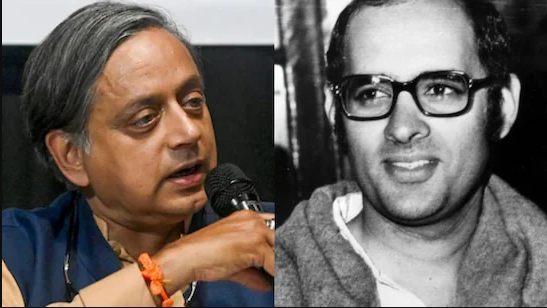
NEW DELHI, July 10: Causing more embarrassment for the party, the senior Congress leader Shashi Tharoor has written an article on the Emergency imposed by the Indira Gandhi government in 1975 squarely blaming the former prime minister and her son Sanjay Gandhi for the “unspeakable cruelty” including forced vasectomy and slum demolitions, in New Delhi, during the period offering a whip to the rival BJP to beat the main opposition with.
The Congress leaders appeared to struggle to stay clear of his controversial article, a move that is likely to widen his rift with the Congress leadership. Besides articulating the excesses during the Emergency and the lessons the country must learn from them, the Thiruvananthapuram MP also pointed to how these excesses were “downplayed”, a barb aimed at his party colleagues.
The Emergency is a tricky subject for the Congress, especially since the Narendra Modi government came to power in 2014 and started observing June 25 — the day the Emergency was announced — as Samvidhan Hatya Divas. The Opposition party has tried to counter the BJP’s narrative, saying it has imposed an “undeclared Emergency.” In his article for media non-profit Project Syndicate, Mr Tharoor has written about how Emergency remains embedded in India’s collective memory even 50 years after it was imposed.
Kerala’s Leader of the Opposition V.D. Satheesan sidestepped questions from reporters about whether the Congress deemed Mr Tharoor’s bid to rake up the Emergency’s “dark past” was a wilful act of dissidence aimed at putting the party’s national and State leadership on the defensive ahead of the crucial local body polls in 2025 and the Assembly elections in 2026 in Kerala.
Responding on the sidelines of the Opposition United Democratic Front (UDF) leadership meeting in Kochi, Mr Satheesan said: “I read Mr Tharoor’s article and I have an opinion about it, which I reserve for myself. Mr Tharoor is a member of the Congress Working Committee. No Congress leader in Kerala will hazard an adverse comment about Mr Tharoor. If at all, if any party worker has a difference of opinion, the person can approach the All India Congress Committee (AICC), which is the sole arbitrator on matters concerning CWC members.”
Mr Tharoor’s article caused quite a stir in Kerala’s political circles after Deepika, a mouthpiece of the influential Syrian-Catholic community, translated and published Mr Tharoor’s piece on Thursday, which had recently appeared as an opinion piece in an international media portal.
In the article, Mr Tharoor dwelt on the “litany of human rights abuses, including torture in detention and extra-judicial killings,” which marked the period. He appeared to place the blame for the excesses on Indira Gandhi and Sanjay Gandhi.
“I was in India when the Emergency was declared, though I soon left for graduate studies in the United States and observed the rest of it from afar. At its onset, I was struck by the profound sense of disquiet. The vibrant cacophony of Indian public life, so accustomed to vigorous debate and free expression, had been replaced by an eerie silence,” he has written, recounting his experiences during that time.
“The judiciary buckled under immense pressure to back the move, with the Supreme Court even upholding the suspension of habeas corpus and citizens’ fundamental right to liberty. Journalists, activists, and opposition leaders found themselves behind bars. The broad constitutional transgressions enabled a horrifying litany of human-rights abuses. Torture in detention and extrajudicial killings – though less publicized at the time – were dark realities for those who dared to defy the regime,” Mr Tharoor added.
The article mentioned the role of late Sanjay Gandhi, Indira Gandhi’s younger son and Rahul Gandhi’s uncle, in the excesses committed during the Emergency, which lasted for nearly two years. “In fact, the quest for ‘discipline’ and ‘order’ often translated into unspeakable cruelty, exemplified by the forced vasectomy campaigns led by Gandhi’s son, Sanjay, and concentrated in poorer and rural areas, where coercion and violence were used to meet arbitrary targets. Slum demolitions, carried out with ruthless efficiency in urban centres like New Delhi, rendered thousands homeless, with little to no concern for their welfare,” Mr Tharoor wrote.
“These acts were later downplayed as unfortunate excesses. And some might point out that, in the Emergency’s immediate aftermath, there was a fleeting sense of order imposed, a temporary respite from the unruliness of democratic politics. But the violence was a direct consequence of a system where unchecked power had become tyrannical, and whatever order the Emergency delivered came at a very high price: the soul of our republic,” he added.
Mr Tharoor’s “acts were later downplayed as unfortunate excesses” point is a veiled strike at Congress leaders’ weak defence of all that went wrong during the Emergency in the years that followed. The Congress leader then went on to articulate how the “trauma” and “mistrust” in affected communities played out during the polls after the Emergency, in which India voted out Indira Gandhi.
The 50th anniversary of that dark period, he said, “is an occasion for historical reflection and introspection.” “The Emergency offered a vivid demonstration of how fragile democratic institutions can be, even in a country where they are ostensibly robust. It reminded us that a government can lose its moral compass and sense of accountability to the people it purports to serve. And it showed how the erosion of freedom often happens: subtly at first, with the chipping away of seemingly minor liberties in the name of virtuous-sounding causes, until ‘family planning’ and ‘urban renewal’ become forced sterilizations and arbitrary home demolitions,” he said.
Elaborating on the “manifold” and “enduring” lessons of Emergency, Mr Tharoor wrote, “First, freedom of information and an independent press are of paramount importance. When the fourth estate is besieged, the public is deprived of the information it needs to hold political leaders accountable. That said, the cravenness of many media outlets in the face of intimidation remains inexcusable.
“Second, democracies depend on an independent judiciary able and willing to serve as a bulwark against executive overreach. Judicial capitulation – even when temporary – can have severe and far-reaching consequences,” he added.
“The third lesson – perhaps the most pertinent in our current political climate – is that an overweening executive, backed by a legislative majority, can pose a grave danger to democracy, especially when that executive is convinced of its own infallibility and impatient with the checks and balances that are essential to democratic systems. The Emergency was possible precisely because power was centralized to an unprecedented degree, and dissent was equated with disloyalty,” the Congress leader wrote in the article.
“The India of today is not the India of 1975. We are a more confident, more prosperous, and, in many ways, a more robust democracy. Yet the lessons of the Emergency remain alarmingly relevant. The temptation to centralize power, to silence critics, and to bypass constitutional safeguards can emerge in many forms, often cloaked in the rhetoric of national interest or stability. In this sense, the Emergency should serve as a potent warning: democratic stalwarts must be eternally vigilant,” he warned.
“All of us – in India and around the world – who believe in democracy must ask ourselves: are we sufficiently attuned to the subtle erosion of democratic values? Could we recognize, let alone resist, the advent of strongman rule? Are we doing enough to protect the institutions, from the press to the judiciary to civil society, that safeguard our freedoms? Let us not merely remember the Emergency as a dark chapter in India’s history, but instead internalize its lessons. Let it be a constant reminder to people everywhere that democracy cannot be taken for granted; it is a precious inheritance that must be constantly nurtured and fiercely defended,” he concluded.
While the article urges caution against centralisation of power and autocratic regimes, it also touches upon a subject Congress leaders have tiptoed around for decades due to the power an extra-constitutional authority like Sanjay Gandhi wielded during the Emergency and how decisions that violated human rights were green lighted by Congress’ icon Mrs Indira Gandhi. The timing, too, is significant: Mr Tharoor’s ties with the Congress high command are on the rocks.
Recently, Mr Tharoor had spelled trouble for the Congress by amplifying on social media a survey by a Mumbai-based organisation, which placed Mr Tharoor as the most-preferred Chief Ministerial candidate in Kerala, far outpacing other Congress and Communist Party of India (Marxist) [CPI(M)] contenders, including Chief Minister Pinarayi Vijayan and K.K. Shailaja, MLA.
Mr Satheesan responded that the survey did not merit any comment. “There are scores of such surveys every day,” he said. Mr Tharoor’s post, quoting the survey arguably came at an inopportune moment for the Congress. It came at a time when the Kerala Pradesh Congress Committee (KPCC) was attempting to douse the so-called “captain controversy”, which erupted after some media outlets hailed Mr Satheesan as the architect of the Congress’ resounding win in the four-cornered Nilambur Assembly bypoll.
The reports elicited a somewhat acerbic comment from Mr Satheesan’s predecessor and senior Congress leader Ramesh Chennithala who said the media had not accorded him the honorific status of “a party captain” when the UDF won several critical Assembly bypolls when he was the Leader of the Opposition in the first Pinarayi Vijayan government.
Mr Tharoor had earlier drawn criticism from within the Congress in Kerala for allegedly contradicting the AICC’s positions and the party’s official line regarding the BJP and the CPI(M) governments at the Centre and the State, respectively. Some political quarters sought to portray Mr Tharoor’s views as an indicator of his “strained relations” with the party’s High Command, which they claimed could presage a more serious fallout between the four-time Thiruvananthapuram MP and the AICC.
Last month, Mr Tharoor’s praise for Prime Minister Modi drew a barb from Congress president Mallikarjun Kharge. “We said the country comes first, party later. Some people feel ‘Modi first, country later’. What can we do?” Mr Kharge said. In response, Mr Tharoor put up a post widely seen as a response to his party colleagues’ barbs. “Don’t ask permission to fly. The wings are yours. And the sky belongs to no one,” read the message with a bird’s photograph.
Mr Tharoor has been articulating New Delhi’s position to national and international media in the wake of the Pahalgam terror attack and India’s counterstrike, Operation Sindoor. His sharp remarks endeared him even to critics, who praised him for setting aside party differences in an hour of crisis.