


Manas Dasgupta
NEW DELHI, Sept 22: Describing the ‘pilot error’ narrative after the AI 171 crash as “unfortunate,” the Supreme Court on Monday issued notices to the Centre and the Directorate General of Civil Aviation (DGCA) on a plea seeking an independent and expeditious investigation into the June 12, 2025, crash of the London-bound Air India Boeing Dreamliner soon after its take-off from the Ahmedabad airport killing over 270 people.
A bench of Justice Surya Kant and Justice N Kotiswar Singh said the media reports which indicated that “pilot error” was to be blamed for the crash, purportedly quoting some preliminary findings by the Aircraft Accident Investigation Bureau (AAIB), was “unfortunate.”
The bench issued notice to the Centre, the Director General of AAIB, and the Director General of Civil Aviation (DGCA) on the plea by Safety Matters Foundation, an aviation safety NGO. “Issue notice to the respondents for the limited purpose of ensuring a free, fair, impartial, independent and expeditious investigation by an expert body,” it ordered.
The court sought the response from the AAIB which in July published a preliminary report on what led to the tragedy. The report mentioned a conversation between Captain Sumeet Sabharwal and First Officer Clive Kundar. The report stated that the cockpit audio has confirmed that one pilot asked, “Why did you cut off?” And the other replied, “I didn’t”. This led to speculation that a pilot error was behind the shocking tragedy.
Aviation safety NGO Safety Matters Foundation has filed a Public Interest Litigation, alleging that the preliminary report withholds critical information and violates citizens’ fundamental rights to life, equality and access to truthful information. The PIL also criticised the report for downplaying systemic anomalies, such as fuel-switch defects and electrical faults, and for prematurely attributing the crash to a pilot error.
Appearing for the petitioner, Senior Advocate Prashant Bhushan said more than 100 days have passed since the June 12 crash, but only a preliminary report has been released. “It doesn’t say what may have happened and what precautions should be taken. The result is that all passengers who are travelling on these Boeing planes are at risk today,” he said.
Mr Bhushan said the five-member team formed to investigate the crash has three serving members from the aviation regulator DGCA, creating a serious conflict of interest. “How can employees of the same organisation that is under question carry out the probe?” he asked.
The plea by the foundation contended that “the Preliminary Report issued by” the AAIB “is incomplete, selective, and lacking in transparency, thereby undermining the credibility of the investigative process and the trust of the travelling public.”
It said, “The Preliminary Report fails to comply with Rule 2(25) of the Aircraft (Investigation of Accidents and Incidents) Rules, 2017, which states that such a report serves the purpose of disseminating all data obtained during the early stages of the investigation. Instead, the Report contains selective disclosures, such as paraphrased references to cockpit voice recordings without timestamps, full transcripts, or corroborative context.”
“This selective presentation creates a misleading impression and undermines transparency…such selective disclosure of partial information has the effect of shaping a biased public perception, one that tends to attribute the cause of the accident to pilot error while absolving the manufacturer and the airline of potential responsibility,” it added.
The plea alleged that “by releasing incomplete and unverified extracts of the cockpit voice recording, the Respondent has created an information environment that unfairly tilts the narrative in favour of the operator and manufacturer, contrary to the principles of impartiality, transparency, and public accountability that must govern air accident investigations.”
Mr Bhushan also sought to make public the details of the flight data recorder, but the court expressed reluctance and stressed the need for maintaining confidentiality till the regular inquiry is taken to its logical conclusion. The bench said while the petitioner’s demand for a fair inquiry was understandable, making all findings public could affect the probe. “Suppose tomorrow, it is said pilot ‘A’ is responsible, the family of the pilot is bound to suffer,” Justice Kant said.
“Prior to the report being given to the government, The Wall Street Journal published an article that we have come to know from our source that this report is going to blame pilots… some leakage happened. Everybody went on, and said this was a pilot error… They were very experienced pilots. The story that was being given was that the pilots deliberately shut off fuel supply to the engines,” Mr Bhushan said. To this, Justice Kant replied, “These are very unfortunate and irresponsible kinds of (statements)”. He added that confidentiality is critical in such matters.
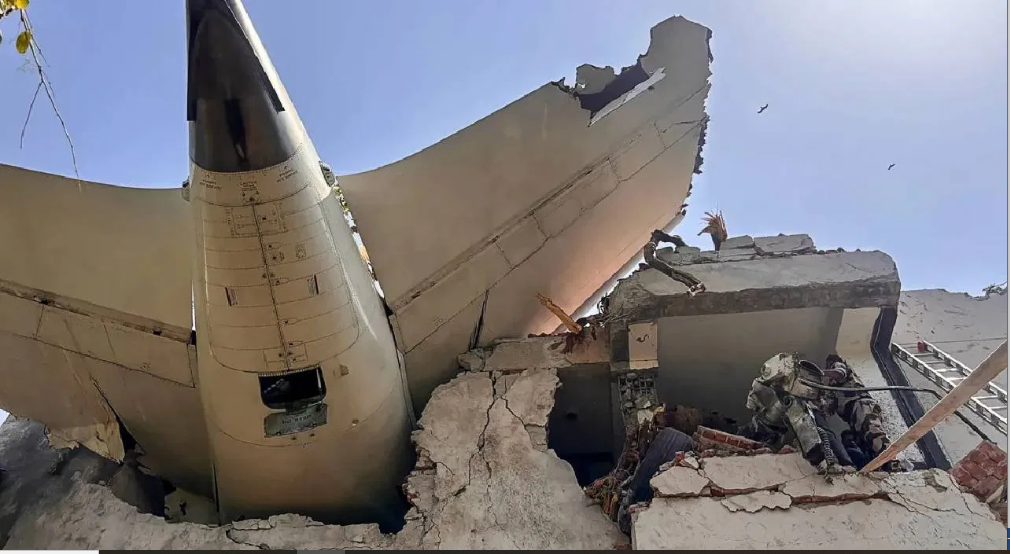
The Air India flight 171 from Ahmedabad to London Gatwick crashed seconds after take-off on the afternoon of June 12. All 12 crew members and 229 of the 230 passengers died. The aircraft crashed into the hostel of a medical college in Ahmedabad, killing 32 people on the ground. Only one passenger, an Indian origin UK citizen had miraculously survived the crash.