


Manas Dasgupta
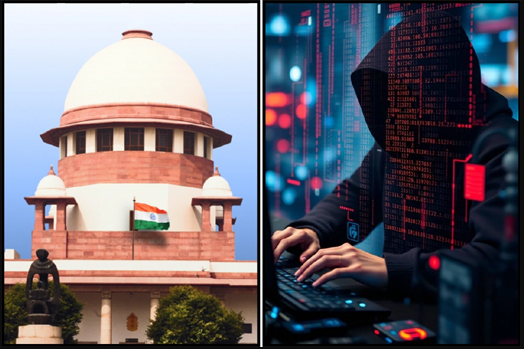
NEW DELHI, Dec 1: Taking note of flood of complaints of “digital arrests,” the Supreme Court in an extraordinary step on Monday directed the Central Bureau of Investigation (CBI) to crack down on such scammers and their associates giving the agency a “free hand” to even launch an anti-corruption probe into the role of banks where mule accounts linked to cybercrimes are found.
A Bench of the Chief Justice of India Surya Kant and Justice Joymalya Bagchi said “enough was enough” and that the ‘digital arrest’ scams required the immediate attention of the CBI. A note given by the Union government in the Supreme Court showed that ₹3,000 crore had already been scammed by fraudsters from victims, mostly drawn from the elderly population scaring them through ‘digital arrests.’ “Therefore we proceed with a clear direction that CBI shall firstly investigate cases on digital arrest scams in the first stage,” the bench said adding that other categories of cybercrimes shall be taken up in subsequent stages.
Given the role of mule accounts in perpetrating the scam, the court said the CBI shall have a free hand to probe the role of bankers under the Prevention of Corruption Act, where bank accounts are opened for the purpose of digital arrest scams. It further asked the Reserve Bank of India (RBI) to assist the court on whether artificial intelligence (AI) and Machine Learning Technology could be implemented to identify such suspicious accounts and freeze the proceeds of crime.
The Supreme Court directly ordering the CBI, overriding State consent, to conduct a pan-India investigation in hunting down scammers, is an extraordinary step. The court cannot order a CBI probe, except when compelled by exceptional circumstances.
As some states have done away with the general consent for CBI to probe cases in their jurisdiction, the Supreme Court asked states that have not granted consent to the premier central agency for the investigations to grant consent, so that it can carry out comprehensive action on a pan-India basis. Such states including Bihar, Tamil Nadu, Karnataka, Kerala, West Bengal, Madhya Pradesh, Uttarakhand, Rajasthan, Punjab, among others, have been directed to accord consent to the CBI under Section 6 of the Delhi Special Police Establishment Act for investigation in their jurisdictions. “We want the CBI to undertake a comprehensive investigation on a pan-India basis,” Chief Justice Kant observed.
Considering the magnitude of the ‘digital arrest’ scams and the widespread tentacles of the fraudsters, the Supreme Court directed the CBI to coordinate with the Interpol to identify cybercrime havens abroad, and crackdown on their operations in India.
The court impleaded and issued notice to the Reserve Bank of India to respond on the use of Artificial Intelligence and Machine Learning technology to trace ‘layering’ or the moving of the proceeds of crime through multiple bank accounts to escape detection.
Invoking the Information Technology (Intermediary Guidelines and Digital Media Ethics Code) Rules of 2021, the apex court directed the State police machinery, and domain experts of both the Centre and the States to work harmoniously to assist the CBI as and when the agency required it. All States and Union Territories have to ensure the establishment and operationalisation of cybercrime coordination centres to compile data on cybercrimes, and for initiating preventive measures against the offence.
The court said telecom operators had been careless in issuing SIM cards. “Records before this court show an alarming, negligent and irresponsible conduct of telecom operators in giving SIM cards,” Chief Justice Kant said. The Telecom Department was ordered to submit a proposal, to be eventually complied with by telecom operators, to prevent the misuse of SIMs.
The court’s amicus curiae in the case, advocate N.S. Nappinai, classified cyber frauds into three main categories — digital arrest, fraudulent investments, and the promise of part-time jobs. All these frauds are meant to defraud innocent victims, particularly senior citizens, of their hard-earned money. Scams related to investments, and part-time jobs lured the gullible with attractive schemes or job offers. Whatever the category, they need to be stopped, the CJI said.
It asked the CBI to request Interpol authorities for assistance as and when needed, given the magnitude of such crimes and the fact that they could extend beyond India’s territorial jurisdiction. The court also said if the facts expose the alarming and negligent approach of telecom service providers in issuing SIM cards or multiple SIM cards in the same name, the Department of Telecom should submit a proposal to the court for preventing such misuse.
It asked states which are yet to establish cybercrime centres to do so without further delay and apprise the court if they face any difficulty in doing so.
Taking suo motu cognisance of a complaint by a senior citizen couple from Ambala in Haryana, the Supreme Court had on October 17 sought the response of the Home Ministry and CBI in the matter. The couple had complained that they were defrauded of Rs 1.05 crore by digital arrest fraudsters who allegedly threatened them with forged orders of the Supreme Court, Bombay High Court and Enforcement Directorate (ED). The top court had then proposed transferring all the cases from different states to the CBI and asked them to submit details of the cases registered in this connection in their respective jurisdictions.