


Manas Dasgupta
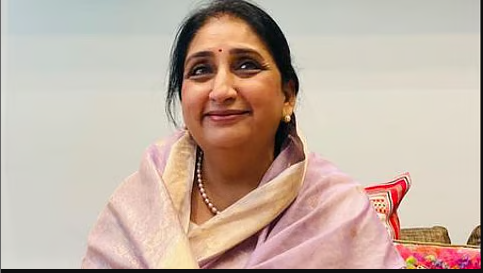
NEW DELHI, Jan 30: Even as Ms Sunetra Pawar seems to be all set to take over as the chief of the Nationalist Congress Party (NCP) to fill up the vacuum created by the untimely death of her husband Ajit Pawar in plane crash on Wednesday, the two factions of the party seemed to be ready to reunite to fulfil the last wish of the deceased leader.
Sources said a formal announcement of the reunification of the two factions could be expected by mid-February after the local body elections.
The senior leaders from both the factions point that Ajit Pawar had paved the way for the merger and held several meetings with uncle Sharad Pawar in December and January. The two leaders were scheduled to formally announce the merger through a joint press conference after the local body elections.
Leaders of both factions are expected to meet next week to finalise the merger, sources added, though some leaders from the NCP faction hitherto led by Ajit Pawar were reluctant of immediate merger while the faction led by veteran leader and founder of the party Sharad Pawar were all for immediate merger.
Sunetra Pawar’s role in the merger talk is likely to be crucial. Sources said apart from Sharad Pawar, there are three more frontrunners who are likely to lead the merged NCP – Sunetra Pawar, Sharad Pawar’s daughter and Lok Sabha member Supriya Sule, and Rajya Sabha member Praful Patel. However, the chorus within the NCP is seeking the appointment of Sunetra Pawar to lead the outfit both as the party president and legislative party leader. However, if this does not work out due to technical limitations or political considerations, NCP’s Praful Patel may be next in line to take the lead, sources said.
Sharad Pawar founded the NCP after splitting from the Congress in 1999. His nephew, Ajit Pawar, rebelled against the party in July 2023, and his faction joined the ruling Mahayuti and formed the government. Several of Sharad Pawar’s close associates, such as Praful Patel, Chhagan Bhujbal, and Dilip Walse-Patil, had also joined Ajit Pawar’s camp.
Ajit Pawar and four others died on Wednesday when their aircraft crashed nearly 100 metres from the edge of a tabletop runway at Baramati airport in Pune district. The aircraft burst into flames during what officials say was a second landing attempt amid poor visibility. Apart from Pawar, those onboard the plane who died included two pilots – Sumit Kapur and Sambhavi Pathak, Pawar’s personal security officer Vidip Jadhav, and a flight attendant, Pinky Mali.
Mourning his death, NCP leader Ankush Kakade recalled that Ajit Pawar wanted to merge the two factions last month as a ‘gift’ to uncle Sharad Pawar on his birthday (December 12), but the merger did not materialise at the time. Senior NCP (SP) leader Jayant Patil also said Ajit Pawar had pushed for a reunion and held high-level meetings for the same on January 16 and 17.
Merger apart, the current indication is that 63-year old Sunetra Pawar could become Maharashtra’s first woman deputy chief minister in place of her husband. Though she is married into the Pawar family for over four decades, Sunetra largely remained away from active politics until recently, though also comes from a another political family in the state.
Born in Osmanabad (now Dharashiv) in 1963 into a Maratha family with deep political roots, Sunetra grew up in an environment shaped by public life. Her father Bajirao Patil was a noted local politician, while her brother Padamsinh Bajirao Patil rose as a powerful political figure in the district during the 1980s. This placed her within one of Maharashtra’s most influential political lineages even before her marriage into the Pawar family.
For much of her life, Sunetra stayed away from formal politics and focused on social initiatives in Baramati. Her first major public work was in Kathewadi, the Pawar family’s ancestral village near Baramati, where she led a sanitation drive after noticing poor hygiene and open defecation. Residents recall that she personally participated in cleanliness campaigns and encouraged households to build toilets. The village later received the Centre’s “Nirmal Gram” status in 2006 for becoming free of open defecation.
Kathewadi later developed into a model eco village with solar streetlights, biogas plants, waste management systems and organic farming practices. It received several awards, including the Sant Gadgebaba Swachhata Abhiyan award. The village also introduced measures such as recording mothers’ names along with fathers’ names in land records and promoting women’s self-help groups.
She was also involved in setting up the Baramati Hi Tech Textile Park in 2008. The 65-acre facility, approved under the Centre’s Scheme for Integrated Textile Parks, employs more than 15,000 workers, most of them women, in apparel, weaving and printing units. Sunetra Pawar has chaired the project.
Sunetra entered electoral politics in the 2024 Lok Sabha polls after her husband fielded her as the NCP candidate, backed by the BJP-led NDA, as its candidate from Baramati against her sister-in-law Supriya Sule; Her candidature placed her at the centre of the split within the Pawar family and the NCP. She lost the election to Sule. In the months that followed, she was nominated to the Rajya Sabha. The move was seen as Ajit Pawar’s attempt to give her a formal political role after the Baramati defeat.
Since taking the oath in June 2024, her attendance in the Rajya Sabha has been around 69%. She has participated in four debates, compared with the national average of 58, which amounts to an average of 10 debates per year of a Rajya Sabha MP’s six-year term. Sunetra Pawar is soft-spoken and has limited political experience. If elevated to a senior leadership role in the NCP, she will have to deal with senior party leaders who have held organisational and ministerial positions for years.
In the event of a reunion of the two NCP factions, Sharad Pawar is expected to play a role in guiding the transition. Otherwise, she will have to depend mainly on her sons Parth and Jay, both of whom have yet to establish themselves politically, while managing party leaders who have often aligned with the BJP to ensure their own survival.