


Manas Dasgupta
NEW DELHI, May 21: In another attack by unidentified gunmen targeting terrorists in Pakistan, a top operational commander of the banned Al-Badr terror outfit who is said to be connected with the Pulwama attack and wanted in India, has reportedly been shot dead in Muzaffarabad in Pakistan-occupied-Kashmir (PoK), sources said on Thursday.
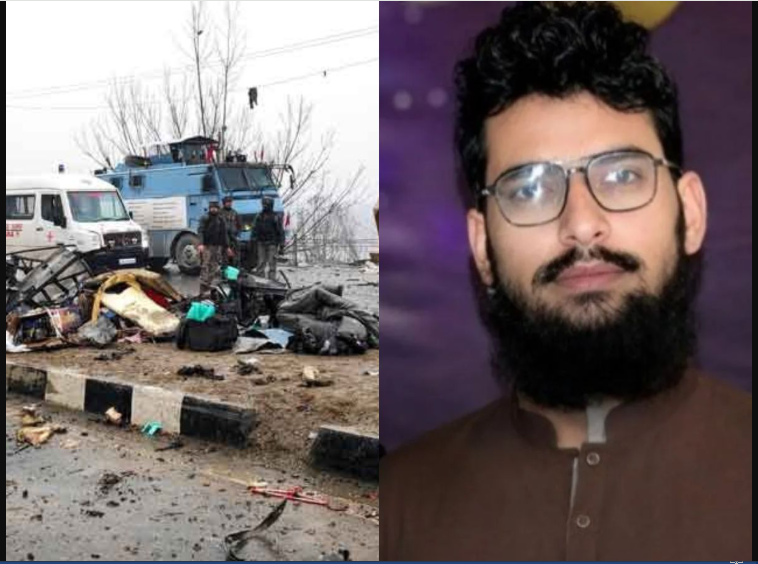
The terrorist, identified as Arjamand Gulzar alias Burhan Hamza, was attacked by unknown gunmen who opened fire on him, hitting him with multiple bullets. Sources claim that he succumbed to his injuries during the attack. Burhan was wanted in India for spearheading an elaborate terror network in Jammu and Kashmir.
Officials have not yet released an official statement regarding the identity of the attackers or the motive behind the killing. Hamza Burhan was reportedly considered one of the key masterminds associated with terror operations linked to the Pulwama attack.
According to intelligence agencies, Burhan had a long history of anti-India activities and was responsible for pushing youth in Jammu and Kashmir towards militancy and radicalisation. Originally a resident of the Ratnipora area of Pulwama district in Jammu and Kashmir, he had reportedly visited Pakistan seven years ago using valid documents and joined the Al-Badr terror outfit.
He later became the terror group’s operational commander and was responsible for recruiting militants for it. Additionally, he also looked for the group’s supply of weapons in Jammu and Kashmir. In 2022, the government designated him as a terrorist.
Agencies believe that Burhan was one of the masterminds in spreading terror in Pulwama and other parts of South Kashmir. They believed that Burhan used a ‘digital radicalisation’ model, which included using social media extensively, to incite people and recruit the youth.
Since 2023, over 50 top commanders of terror outfits like LeT, JeM and Hizbul Mujahideen have been gunned down by unidentified assailants in Pakistan and PoK. Pulwama has long remained a sensitive hub for terror activity. Like neutralised terrorist Burhan Wani, Arjamand Gulzar was seen as part of the digital radicalisation model that used social media and local networks to push youth towards terrorism.
Officials said his network was active in Pulwama, Shopian and Awantipora. He coordinated with overground workers (OGW) from Pakistan to send weapons, money and instructions to India. His name surfaced in several cases linked to explosives recovery, grenade attacks and terror recruitment.
The killing of Arjmand Gulzar marks another setback to terror outfits trying to revive terrorism in the Valley from bases in PoK, security sources said.
In March, an unidentified gunman targeted a wanted terrorist and LeT founding member Amir Hamza in Pakistan’s Lahore outside a TV station. He, however, survived.
In April, Sheikh Yousuf Afridi, a commander of the terror group Lashkar-e-Taiba (LeT), was shot dead by unknown gunmen in Pakistan’s Khyber Pakhtunkhwa province. The attackers fired multiple rounds at Afridi, a close associate of the LeT commander and mastermind behind the 26/11 Mumbai terror attack Hafiz Saeed.
Afridi was considered an important link in the US-proscribed terror group’s operations in the Khyber Pakhtunkhwa region, and investigators are treating his death as a targeted assassination.
The killing adds to a series of similar attacks on high-profile terrorists in Pakistan in recent months. Before the Amir Hamza, the Jaish-e-Mohammed chief Maulana Masood Azhar’s elder brother, Muhammad Tahir Anwar, died in Pakistan, reportedly under mysterious circumstances. Anwar played a key role within Jaish-e-Mohammed and was actively involved in the terror outfit’s operations.
In March last year, a top LeT terrorist, Abu Qatal aka Qatal Sindhi, was also killed by unidentified gunmen in Pakistan’s Jhelum Sindh. He was also a close aide of Hafiz Saeed. Qatal was allegedly the mastermind behind the Reasi attack in 2024 in Jammu and Kashmir, which killed nine people and injured 33 others.
The pattern of such killings has been evident in Pakistan since 2023, following the elimination of seven terrorists over a span of seven months. In 2026 alone, at least 30 terrorists linked to outfits like Lashkar-e-Taiba and Hizbul Mujahideen were targeted by unknown gunmen across cities like Lahore, Karachi and other regions.
The Pulwama attack occurred on February 14, 2019 when a suicide bomber targeted a convoy of India’s Central Reserve Police Force (CRPF) near Pulwama in Jammu and Kashmir. The attacker rammed an explosive-laden vehicle into a bus carrying security personnel, killing 40 CRPF personnel and injuring many others.
The Pakistan-based militant group Jaish-e-Mohammed had claimed the responsibility. The attack sharply increased tensions between India and Pakistan and led to diplomatic and military responses, including the Balakot airstrikes by India. It was one of the deadliest terrorist attacks on Indian security forces in the region’s history.