


Manas Dasgupta
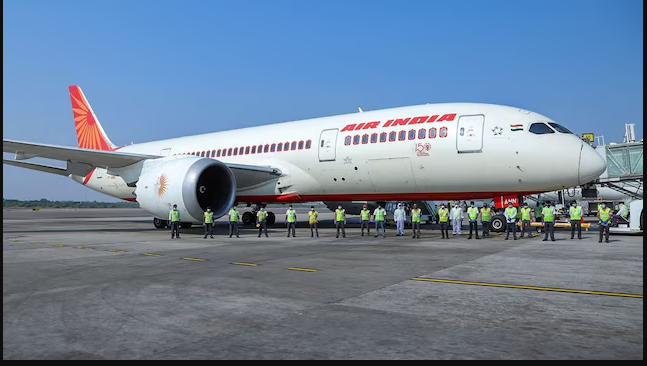
NEW DELHI, July 22: Complying with the directions of the aviation watchdog Directorate General of Civil Aviation (DGCA), private carrier Air India has completed precautionary inspections on the locking mechanism of the Fuel Control Switch (FCS) on all Boeing 787 and Boeing 737 aircraft in its fleet and on Tuesday said no issues were found with the locking system during the inspection.
The aviation safety regulator last week had directed airlines to inspect the fuel switch locking system in their Boeing 787 and 737 planes by July 21. The direction was issued after the Aircraft Accident Investigation Bureau (AAIB) in its investigation into the London-bound Air India flight crash just after take-off from Ahmedabad airport found that fuel switches were cut off causing twin engine failure on June 12 killing 270 people. “In the inspections, no issues were found with the said locking mechanism,” the Tata Group airline said in a statement.
Fuel control switches regulate the flow of fuel into the aircraft engines. In its preliminary report on the Boeing 787-8 crash, AAIB said the fuel supply to both engines of the plane was cut off within a gap of one second, causing confusion in the cockpit soon after take-off. Boeing 787s are part of Air India’s fleet, while B737s are operated by its low-cost subsidiary Air India Express.
Besides these, other domestic carriers — IndiGo, Spicejet and Akasa — also have these types of aircraft in their operations. With this, the two airlines — AI and AIX — have complied with the directives of the DGCA issued on July 14, Air India said in the statement.
Air India said it started voluntary inspections on July 12 and completed them within the prescribed time limit set by the DGCA. There are more than 150 Boeing 737s and 787s being operated by Indian airlines. Of these, IndiGo has seven B737 Max 8 and one B787-9. All these are leased planes — either on wet or damp lease — and therefore, they are not registered in India.
The Federal Aviation Administration (FAA), in 2018, flagged the potential disengagement of the fuel control switch locking feature on certain models of Boeing aircraft, including 787s and 737s. It was mentioned in a Special Airworthiness Information Bulletin (SAIB), but there was no airworthiness directive, indicating that the issue was not a safety concern.
“In the cockpit voice recording, one of the pilots is heard asking the other why did he cut off? The other pilot responded that he did not do so,” the AAIB preliminary report said. AAIB, which mentioned FAA’s SAIB in the report, did not suggest any recommended action.
Air India has a total of 33 wide-body Boeing 787s, while Air India Express has around 75 narrow-body 737s. Akasa Air and SpiceJet operate Boeing 737s. IndiGo also operates Boeing 787 and 737s, but they are leased from foreign airlines, which means they won’t be subject to the DGCA directive.
The AAIB preliminary probe report on the fatal Air India plane accident has put the spotlight on the fuel switches of the crashed Boeing 787-8 and the confusion among the two pilots over the switches being cut off. Fuel switches regulate the flow of fuel into an aircraft’s engines. The switch has two positions — ‘RUN’ and ‘CUT OFF’ — and are used to start or shut down engines.