


Manas Dasgupta
NEW DELHI, July 15: The execution of the Kerala nurse Nimisha Priya, on the death row in Yemen allegedly for the murder of a local citizen and her former business partner, scheduled for Wednesday, has been postponed with hectic parleys underway in Yemen in a last-ditch effort to save her life with “blood money” to the family members of the deceased.
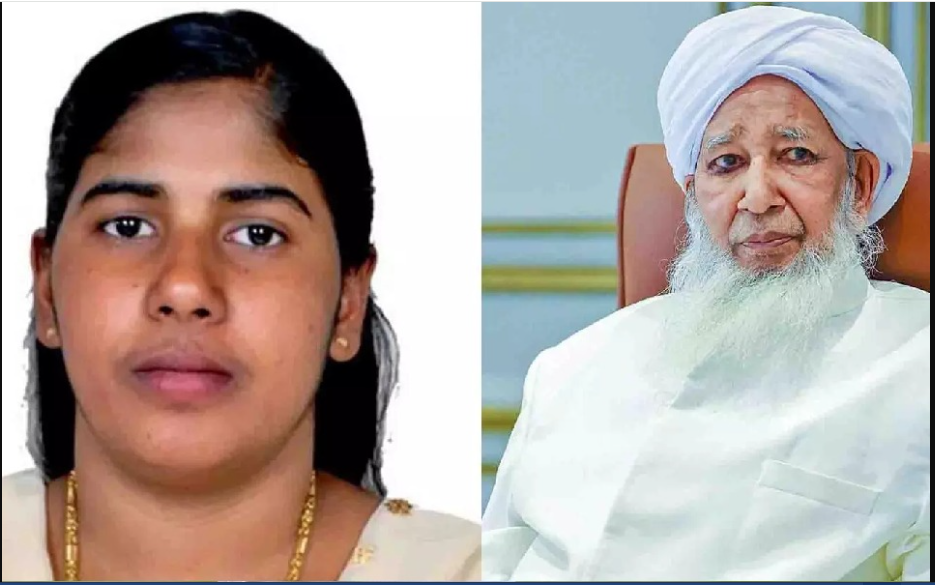
Nimisha is in the death row in a prison in Sanaa, the Houthi-hold capital of Yemen since 2018 for allegedly killing the Yemeni national Talal Abdo Mahdi., who was allegedly harassing her, the previous year. She was handed down the death sentence by the local authorities.
The Yemeni government on Tuesday stayed the execution pending negotiations with the family members of the deceased at the last minute intervention of prominent Yemeni Islamic scholar Habib Omar bin Hafiz on the request of influential Sunni leader Kanthapuram A.P. Aboobacker Musliar. Mr Musliar, in a Facebook post at 2.20 p.m. on Tuesday said the Yemeni government stayed the execution. He posted the government order in Arabic on his Facebook page. Mr Aboobacker Musliar thanked everyone who prayed for Nimisha’s life. He said “God’s grace be on them all.”
Mr Aboobacker Musliar’s last-minute intervention on Sunday sparked a ray of hope as all other efforts to obtain a reprieve for Nimisha had failed. He made the intervention following an appeal by a few politicians led by Congress leader Chandy Oommen.
Sheikh Habib Omar bin Hafiz, a much-respected scholar who is a member of the Yemen Shura Council and a follower of the Sufi order, entrusted his brother’s son Habib Abdurahman Ali Mashoor to initiate talks with Mahdi’s family. Mr Mashoor held several rounds of talks with Mahdi’s brother. Hudaida State court chief justice and Yemen Shura Council member too took part in the discussions on the request of Mr Hafiz.
Sources close to Mr Aboobacker Musliar said the murder of Mahdi, which took place in 2017, had made a deep emotional impact not only on the family of the deceased but also among the community at Dhamar in Yemen. “That was the reason why none could influence the family so far,” said one of the aides of Mr Aboobacker Musliar. But Mahdi’s family could not reject the request of Mr Hafiz, he said. “Sheikh Habib Omar wields such respect among the people in Yemen. We are all hopeful that Mahdi’s family will forgive Nimisha Priya,” he said.
Ms Priya’s execution was scheduled for Wednesday but it has now emerged that the murdered man’s family has been convinced to postpone it at least for tomorrow. This does not mean she would be released or sent back to India. India does not have any diplomatic relations with the Houthi rebels. The Indian government had asserted on Monday that it was doing everything within its limits to stop the execution suggesting that ‘blood money’ was the likely last option for her to evade death.
The government, which has been providing all possible assistance in the matter, had made concerted efforts in recent days to seek more time for the family of Nimisha Priya to reach a mutually agreeable solution with the victim’s family, said sources. Despite the sensitivities involved, Indian officials had been in regular touch with the local jail authorities and the prosecutor’s office, leading to securing this postponement, they added.
Nimisha Priya had taken up the role of a nurse in Yemen in 2008 while looking for a lucrative job to support her parents back in Kerala. She initially worked in hospitals but later opened her own clinic. And to comply with the local law, she took on board a local business partner Mahdi, 37.
Mahdi, however, started harassing her. He stole her money and snatched her passport, practically stopping her from leaving the country. With no other option to escape him, Ms Priya had injected him with a sedative in 2017, planning to recover her passport after he lost consciousness. But Mahdi died, and Ms Priya was arrested while trying to flee Yemen.
The government had earlier appointed a Yemeni lawyer to represent her in the local courts, but all her petitions were dismissed, said Babu John, an activist leading efforts on behalf of the nurse on death row. In 2023, Yemen’s Supreme Judicial Council upheld her conviction, following which the country’s President approved her death sentence, he said.
The Indian government yesterday described it as a “very complex case”, with Attorney General R Venkataramani telling the Supreme Court, “There is not much that the Indian government can do…we tried whatever was possible.” “The only way is if the family (of the Yemeni man) agrees to accept the ‘blood money’,” he said, referring to the financial compensation mentioned in the Quran that must be paid to the family of a murdered person for pardon.
The murdered person’s family reserves the right to accept or reject this ‘blood money.’ Ms Priya cannot be executed if the ‘blood money’ is accepted by the murdered man’s family, as per the Islamic law.
The case acquired its uniqueness because of the internal breakdown, Yemeni capital Sanaa is controlled by Ansar Ullah (Houthi) while the Internationally Recognised Government of Yemen operates out of Aden. In February, Iran’s Foreign Minister Syed Abbas Araghchi had appealed for pardoning Nimisha. Mr Araghchi had met with the Special Envoy of Ansar Ullah Mohammed Abdul Salam where the case had featured. Earlier the Yemen embassy in India had announced that the Government of Yemen had not sentenced Nimisha Priya to death.