


Manas Dasgupta
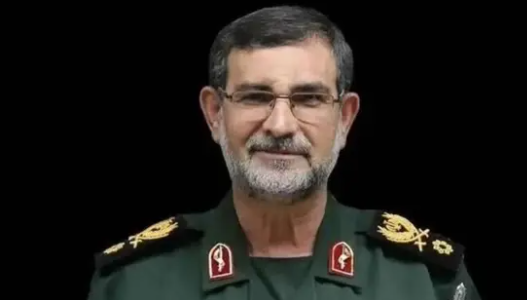
NEW DELHI, Mar 26: Even as Israel claimed to have eliminated the Islamic Revolutionary Guard Corps (IRGC) naval commander Alireza Tangsiri, responsible for the closure of the Strait of Hormuz disrupting the energy chain, Iran’s Parliament is learnt to be working on a bill to formalise the fees it is reportedly charging on some ship transiting through the Strait of Hormuz, local media reported on Thursday.
The report quoted lawmaker Mohammadreza Rezaei Kouchi as saying that “parliament is pursuing a plan to formally codify Iran’s sovereignty, control and oversight over the Strait of Hormuz, while also creating a source of revenue through the collection of fees.” Iran is reportedly instituting a “de facto ‘toll booth’ regime”, with some ships paying in Chinese yuan to pass through the strait.
Israeli media on Thursday claimed that Tangsiri had been killed in a US-Israeli strike in the coastal area of Bandar Abbas. There has been no comment yet from Iran or from the Israeli military on the strike. If confirmed, this would mark the latest high-profile casualty in the war that’s now in its fourth week.
Tangsiri was one of the few big names who had survived US-Israeli assassination attempts so far. An experienced commander in place since 2018, he has played a significant part in Iran’s closure of the Strait of Hormuz.
“The IDF eliminated the commander of the IRGC Navy,” said Israel defence minister Israel Katz later. Katz further stated that the strike was a “message” to Iran’s Guards, adding: “The IDF will hunt you down and eliminate you one by one.” The defence minister further said Israel would continue operations in Iran “with full force” to achieve its war aims.
Rear Admiral Alireza Tangsiri has been serving as the Commander of the Islamic Revolutionary Guard Corps Naval Division since August 2018.
Throughout his tenure, Tangsiri has remained a key figure in Iran’s maritime strategy in the Persian Gulf and the Strait of Hormuz. In January 2026, it was reported that the Naval Commander had been killed in a blast in the Bandar Abbas region. However, state media agency Tasnim later issued a statement from the IRGC, which denied these reports and stated that Tangsiri was alive and well.
With its stranglehold on traffic through the Strait of Hormuz, which leads from the Persian Gulf toward the open ocean, Iran has been blocking ships it perceives as linked to the US and Israeli war effort, but letting through a trickle of others. In peacetime, 20 per cent of all traded oil and natural gas is transported through the strategic waterway.
Tehran’s chokehold on the passage has led to a 95 per cent drop in daily shipping of energy through the critical waterways. The channel typically sees around 120 daily transits, according to shipping industry intelligence site Lloyd’s List. However, from March 1 to 25, commodity carriers made just 155 crossings, according to analytics firm Kpler — a decrease of 95 per cent. Of these, 99 were by oil tankers and gas carriers, and most were travelling east out of the strait. Just two vessels were detected crossing the strait on Wednesday, both heading west.
As continuing to blow hot and cold the US president Donald Trump on Thursday again warned Iran to engage in talks to end the war in West Asia “before it is too late”, after Tehran publicly spurned U.S. overtures to resolve the nearly four-week conflict. Mr Trump’s warning came after Israeli claimed killing of Tangsiri earlier in the day.
Iran’s initial response to the U.S. proposal to end the war, which was conveyed to Pakistan, was that it was “one-sided and unfair”, a senior Iranian official said adding that a path forward might still be found if realism prevailed in Washington. The official said the proposal “was reviewed in detail on Wednesday night by senior Iranian officials and the representative of Iran’s Supreme Leader.”
“In brief, the proposal suggests that Iran would relinquish its ability to defend itself in exchange for a vague plan to lift sanctions,” he said, adding that the proposal lacked the minimum requirements for success. He said there was “still no arrangement for negotiations, and no plan for talks appears realistic at this stage,” while Turkey and Pakistan were trying to help “establish common ground between Iran and the United States and reduce differences.”
Germany’s Foreign Minister said on Thursday that NATO countries would seek a common position with the US on the war against Iran, which he added would have to end as quickly as possible. “It is now important, together with our closest allies within NATO, particularly with the United States, to develop a common position,” Minister Johann Wadephul said in Vaux-de-Cernay Abbey near Paris ahead of a meeting of G7 Foreign Ministers.
There was unity with France and Britain on this, and planned talks with U.S. secretary of state Marco Rubio on Friday were particularly important, Mr Wadephul added. He said the Strait of Hormuz would have to be opened and Iran’s leadership must not pose a threat to other nations in the future.