


Manas Dasgupta
NEW DELHI, Mar 12: Iran’s new Supreme Leader Ayatollah Mojtaba Khamenei on Thursday delivered a series of warnings and declarations as the conflict involving United States, Israel and Iran continues to intensify across the region ordering to keep the Strait of Hormuz closed and asking the West Asian neighbours to close the US bases stating that vengeance was the priority until “fully achieved.”
On the other hand, the U.S. President Donald Trump said stopping the Islamic republic’s “evil empire” was more important than crude prices. Israel’s military said it began a new “wide-scale” wave of strikes across Iran. Blasts were also heard over Jerusalem, after the Israeli military reported missiles fired from Iran.
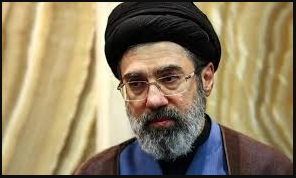
Mojtaba Khamenei, who was reportedly injured in an air strike, has yet to appear publicly since his nomination last Sunday as the Supreme Leader, and his defiant message was read by a newscaster on state television. “The lever of blocking the Strait of Hormuz must definitely be used,” Mr Khamenei, adding “a limited amount of” Iran’s revenge for U.S. and Israeli strikes had “taken concrete form, but until it is fully achieved, this case will remain among our priorities.”
In his first official address, Mojtaba Khamenei warned that all American military bases operating in the Middle East should be shut down. He stated that countries allowing the United States to maintain military installations on their territory would be putting themselves at risk of becoming targets.
According to the statement, Iran considers these bases to be instruments of American military pressure against Iran. Khamenei emphasized that if these installations remain operational, Iran reserves the right to attack them as part of its defensive strategy. This warning was directed not only at the United States but also at regional governments that cooperate with American forces.
Mojtaba Khamenei said the Strait of Hormuz should remain shut as a means of exerting pressure. The narrow waterway is one of the world’s most critical oil transit routes, and the Iranian leader suggested that maintaining its closure could be used as leverage during the ongoing conflict.
In his first remarks after assuming office, he said Iran “vows to avenge martyrs, keep strait closed.” In the same message, Khamenei warned that US military bases across the region should be closed, stating that they would be attacked. He also called on Gulf Arab countries hosting American forces to shut down those installations, saying the promised US protection was “nothing more than a lie.”
Khamenei indicated that Iran’s military actions against Gulf Arab neighbours would persist. According to the statement, Tehran intends to continue applying pressure in the region as part of its response to the ongoing war. The Iranian leader also issued a direct warning about retaliation against adversaries. Iran’s top leader said “we will obtain compensation” from the enemy or “we will destroy its assets to the same extent.”
The message comes as the conflict continues to escalate. Iranian attacks have targeted commercial ships near the Strait of Hormuz and around Basra Port, part of what officials describe as a strategy to pressure the United States by threatening energy routes in the Gulf. Oil markets have reacted strongly, with Brent crude climbing back above $100 a barrel as tensions show little sign of easing.
The leadership change in Iran occurred following the death of Iran’s long-time Supreme Leader, Ali Khamenei, who had ruled the country since 1989. His death created a significant shift in Iran’s political and military leadership during a period of heightened conflict involving Iran, the United States, and Israel. The new leader’s rise to power has been accompanied by strong rhetoric against the United States and its allies. The transition also comes at a time when tensions in the Middle East are already high due to military confrontations, economic sanctions, and disputes over Iran’s regional influence.
Among the countries in West Asia hosting US military bases as part of long-standing security partnerships with the United States included Qatar, Bahrain, Saudi Arabia, Kuwait and United Arab Emirates. These bases are essential for U.S. military operations in the region, including counterterrorism activities, maritime security, and strategic deterrence. Iran’s warning places these nations in a difficult position, as they must balance their security cooperation with the United States against the risk of escalating tensions with Iran.
The statement by Iran’s new Supreme Leader marks a critical moment in West Asian geopolitics. By demanding the closure of U.S. military bases and warning of possible attacks, Iran has directly challenged the strategic presence of the United States in the region. Combined with the strategic importance of the Strait of Hormuz, this situation has the potential to escalate into a broader regional conflict.