


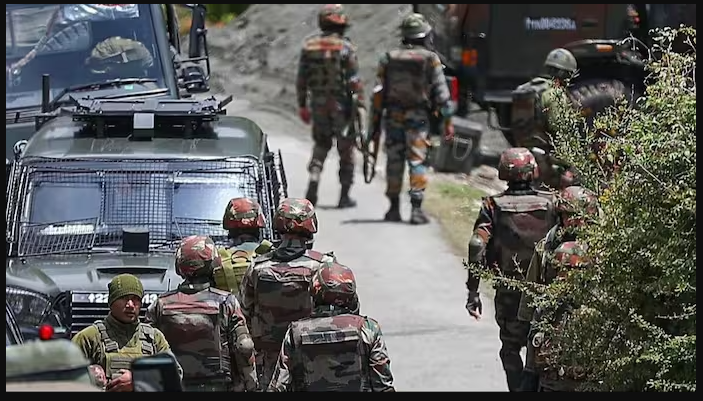
NEW DELHI, Dec 27: Amid freezing temperatures and treacherous terrains, the Indian Army has intensified its counter-terrorism operations across Kishtwar and Doda districts in Jammu and Kashmir to pursue and neutralise Pakistani terrorists attempting to exploit the harsh winter for concealment, official sources said on Saturday.
Traditionally, the onset of the 40-day ‘Chillai Kalan’, the harshest phase of winter in the Kashmir Valley from December 21 to January 31, ushers in a ‘temporary lull’ in terrorist activities, as communication routes close and heavy snowfall isolates the mountain regions, they said. However, this winter has marked a “decisive shift” in the operational approach of the Army and other security forces, a source in the defence establishment said.
Instead of reducing activities, the Army has adopted a “proactive winter posture,” establishing temporary bases and surveillance posts deep within the snow-capped areas to maintain pressure on the possible terrorist hideouts, the sources said. Operating in sub-zero temperatures with limited visibility, the Army patrols have been regularly traversing the high-altitude ridgelines, valleys, and forested areas to “deny the terrorists any sanctuary”, they added.
The shift, according to experts, signifies an evolution in counter-terrorism tactics, underlining both the Army’s adaptability and its resolve to maintain operational momentum, irrespective of the weather or terrain. According to assessments by various intelligence agencies, there are “approximately 30-35 Pakistani terrorists” in the Jammu region currently, defence sources said.
Inputs gathered over the past few months suggest that these Pakistani terrorist groups, finding themselves cornered by successful counter-terror operations, have shifted deeper into the higher and middle-mountain reaches of the region, areas now devoid of habitation, they said. These terrorists are believed to be seeking temporary winter hideouts to evade detection and avoid a direct confrontation with the security forces.
Reports indicate that these remnants of terror groups are attempting to coerce or threaten the local villagers for shelter and food supplies, even though their support among the locals and overground workers has sharply declined. The drying local support and continuous security vigilance in the lower altitudes have forced them into isolation, further restricting their ability to regroup or plan coordinated attacks, the sources said.
Security forces have launched concurrent operations along the valleys, mid-altitude regions and high ridges to maintain overlapping control and deny any potential movement corridor. Each operation is followed by sustained surveillance, ensuring that areas once cleared remain under watch, they said.
This “surveillance-sweep-surveillance” cycle forms the cornerstone of the Army’s “new winter doctrine” balancing aggressive field operations with steady technological oversight. The Army has also deployed specially trained winter warfare sub-units across several key sectors.
These troops, adept in high-altitude survival, snow navigation, avalanche response and snow combat, have been instrumental in maintaining operational effectiveness during the winter surge, the sources said. Modern technology has become a force multiplier in these operations. From drone-based reconnaissance to ground sensors and surveillance radars, a wide array of tools is being leveraged to detect movement, track heat signatures, and pinpoint the possible movement routes, they said.
(Manas Dasgupta)