


Manas Dasgupta
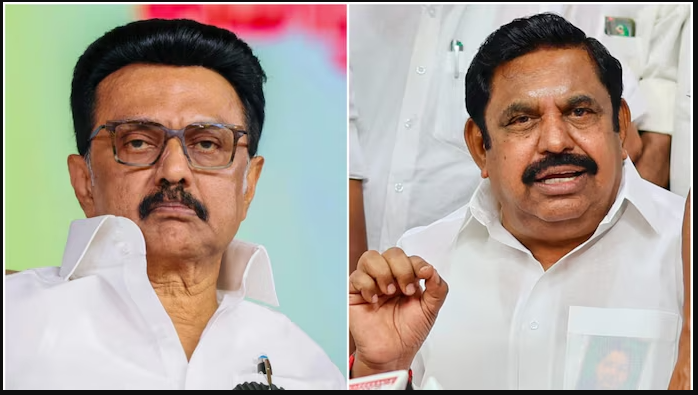
NEW DELHI, Jan 30: With the Assembly elections round the corner in Tamil Nadu, the ruling DMK and its great Dravidian rival, the AIADMK on Friday accused each other of playing second fiddle to their respective alliance partners, the Congress and the NDA, putting the interests of the state in jeopardy and questioning the other’s standing and credibility in that alliance.
While the AIADMK boss Edappadi Palaniswami snapped back at Chief Minister MK Stalin, declaring “he does not have the courage to oppose us… so he is trying to create confusion by dragging in the NDA (i.e., the BJP-led coalition that includes the AIADMK).”
Palaniswami was referring to sharp remarks by Stalin who criticised the AIADMK over its renewal of ties in April 2025 despite walking out just two years earlier claiming that the AIADMK – BJP alliance was born out of compulsion and lacked any cohesion or political ideology. “The NDA is a nationwide alliance…. but in Tamil Nadu it is the AIADMK that leads it and the people have decided the AIADMK will come to power…” Palaniswami claimed.
He said also there was “no pressure on us” to acquiesce to any demand by the BJP or any other alliance partner, rebutting suggestions the national party would demand a role in any prospective government. The ex-Chief Minister then countered by throwing corruption and ‘dynasty politics’ charges at the DMK, pointing first to the Stalin inducting V Senthil Balaji in the state government.
A former Excise Minister, Balaji was arrested in June 2023 over a corruption case dating back to 2011-15, when he was the Transport Minister in the AIADMK government run by J Jayalalithaa. Removed from the post after his arrest, Balaji was re-inducted days after securing bail.
“The DMK is buried in corruption… they made Senthil Balaji a minister,” EPS, as Palaniswami is sometimes called, said, “But AIADMK is known for a corruption-free government. Jayalalithaa showed what good governance is and I delivered a clean government.” “The DMK doesn’t have the courage to fight corruption… and only members of one family can rise in the party,” he continued, picking up ally BJP’s ‘dynasty politics’ line of attack. This brand of ‘family politics’ is dangerous for democracy, EPS declared.
Jabs were also exchanged over the NEET issue – i.e., Tamil Nadu’s long-standing opposition to the national entrance test for undergraduate medical courses. Earlier, Stalin asked the AIADMK why, despite being aware of the emotive subject, had not pushed for the state to be excluded.
EPS pointed out the NEET was set up when the Congress, the DMK’s ally, was in power at the centre and accused his rival of “doing drama” on this issue. The DMK vowed, he claimed, to push for an exemption when it came to power but has left the matter in court since. The Tamil people feel “cheated”, Palaniswami declared, adding, DMK allies are “abandoning” the Dravidian party. “I don’t know if DMK-Congress alliance will last…”
Meanwhile, actor-turned-politician C. Joseph Vijay’s Tamilaga Vettri Kazhagam (TVK) has filed a writ petition in the Madras High Court challenging two provisions of the Standard Operating Procedure (SOP) notified by the Tamil Nadu government on January 5, 2026, for permitting the conduct of public meetings, processions, roadshows, demonstrations, protests, cultural/religious events, and other public gatherings attended by over 5,000 people.
The party has urged the court to quash clauses 6(c) and 8(g)1 of the SOP after declaring them illegal, arbitrary, unconstitutional, and violative of the principles of natural justice. They further sought a consequent direct to the Home Secretary to reframe and notify a fresh SOP in a fair, uniform, and non-discriminatory manner after duly considering the objections and suggestions of all stakeholders, including registered political parties.
Clause 6(c) of the SOP states that if more than one application was received for the same venue and same date, the Sub Divisional Police Officer shall consider the applications on a first-come-first-serve basis and that priority would be given to political parties recognised by the Election Commission of India over other political parties/organisations. It further stated that priority among the recognised political parties would be given based on their representation in the Legislative Assembly.
Since the TVK was only a registered political party and not a recognised party and was yet to face any election in order to have any representation in the Legislative Assembly, it contended that such a clause in the SOP creates an “unconstitutional” classification between recognised and registered political parties and thereby discriminates the latter in the matter of granting preference in allotment of venues.
The TVK further challenged the validity of clause 8(g)1, which states that the organisers of events, in which more than 5,000 people participate, should bear full responsibility for crowd safety, regulation, and orderly management. It contended that the inclusion of such a clause in the SOP amounted to imposition of disproportionate burden on the organisers.
Filing an affidavit on behalf of the TVK, its deputy general secretary C.T.R. Nirmal Kumar said: “It shifts core State obligations onto political parties and operates as a deterrent to political participation. This also amounts to a colourable exercise of power, designed to stifle the lawful political activities of the petitioner party, in gross violation of Articles 14, 19(1)(a), and 19(1)(b) of the Constitution.”