


NEW DELHI, Nov 29: Airlines moved swiftly to fix a software on Airbus aircrafts after the Directorate General of Civil Aviation (DGCA) ordered grounding of those planes where this action was not carried out by Sunday morning based on an alert from the aircraft manufacturer.
“This is to be ensured that no person shall operate the product which falls under the applicability of this Mandatory Modification,” the DGCA order issued early Saturday stated. The grounding would kick in from 5.30 a.m. on Sunday allowing airlines enough time to carry out rectification action in between flights as well as move aircraft from smaller airports to bigger ones where they have a maintenance base.
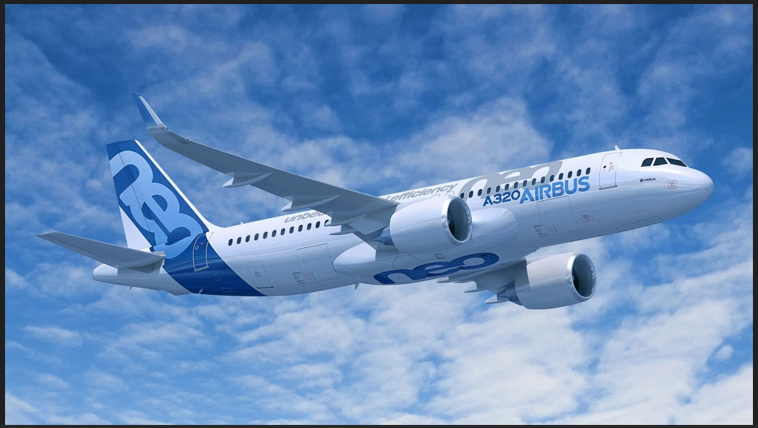
The order followed an alert from Airbus on Friday evening that stated that a recent event involving an Airbus A320 family aircraft revealed that intense solar radiation could corrupt data critical to the functioning of flight controls following which it has identified a “significant number” of Airbus A320 Family aircraft that may be impacted. This would entail either a software or a hardware modification for nearly 6,000 aircraft of the 12,000 A320-family aircraft worldwide, operated by about 300 airlines.
A320 family aircraft refers to A319, A320 and A321s.
In India, the alert impacted as many as 338 aircraft across IndiGo (200), Air India (113) and Air India Express (25). In less than 24 hours, ie by Saturday evening, the software modification was carried out for 270 of these aircraft averting major disruptions during the peak travel season.
The fix involves a software downgrade on the affected aircraft that took airlines up to 40 minutes to implement. Older aircraft such as Airbus A319s could possibly require a hardware replacement, industry sources explained.
The Airbus alert follows an incident aboard a Jetblue flight between Mexico and Newark on October 30 when the aircraft experienced an uncontrolled descent for approximately 4-5 seconds before the autopilot corrected the trajectory. The investigation traced the problem to a flight system called ELAC (Elevator and Aileron Computer), which sends commands from the pilot’s side-stick to elevators on the tail section of the aircraft. These in turn control the aircraft’s pitch or nose angle.
“Airbus acknowledges these recommendations will lead to operational disruptions to passengers and customers. We apologise for the inconvenience caused and will work closely with operators, while keeping safety as our number one and overriding priority,” the European aircraft manufacturer said on Friday.
(Manas Dasgupta)