


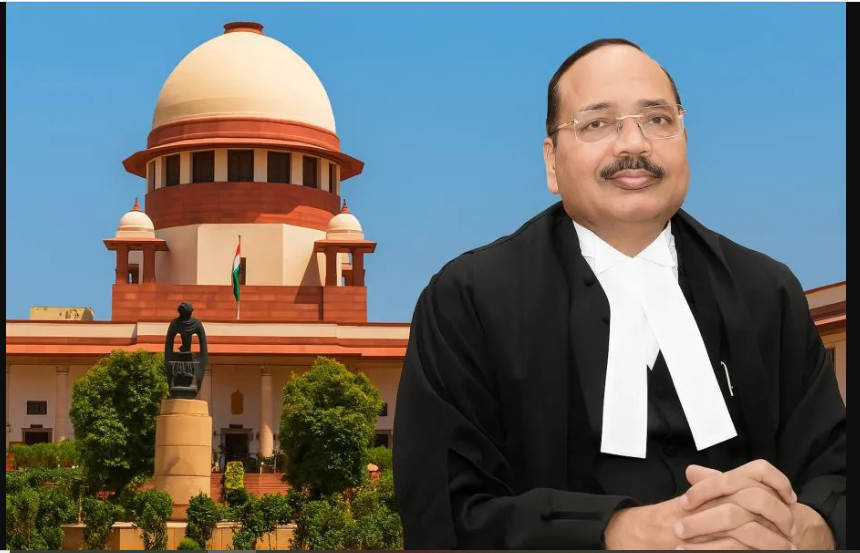
NEW DELHI, Dec 2: Coming down heavily on a petition that sought the tracking of five missing Rohingya, Chief Justice of India Surya Kant has asked if the country should roll out a red carpet for illegal immigrants. The Chief Justice also asked if the State has an obligation to keep someone in the country if s/he has entered illegally.
A Bench of Chief Justice of India Surya Kant and Justice Joymalya Bagchi was hearing the petition filed by rights activist Rita Manchanda, who alleged that the Rohingya had been picked up by the Delhi Police in May and that their present whereabouts remain unknown. She contended that they could not have been deported without following the procedure prescribed under the law.
“First, you cross the fenced border illegally, and you enter India. Then you declare that ‘now that I have entered, your laws must apply to me, that I should be issued a show-cause notice, I am entitled to be provided food, I am entitled to be provided shelter, my children are entitled to this and that’. Do we want to stretch the law like this?” the Chief Justice orally remarked, while addressing the submission that any deportation must conform to due process.
The petitioner’s counsel clarified that she was not opposing deportation per se, but insisted that any such exercise must be undertaken strictly in accordance with the law. She argued that the individuals were admittedly in police custody and that their unexplained disappearance amounted to “custodial disappearance.”
The Bench then asked whether the Union government had granted the individuals refugee status. “Where is the order by the Government of India declaring them refugees? Refugee is a well-defined legal term, and there is a prescribed authority to declare them,” the Chief Justice observed.
The counsel responded that she was not seeking refugee status for the missing individuals. Instead, she pointed to an existing government memorandum governing deportation procedure and argued that any departure from this framework would be unlawful. “What we cannot do is traffic them out; that is harmful to national security,” she submitted.
The Chief Justice, however, pointed to the security considerations inherent to India’s borders. “If you don’t have the legal status to stay as a refugee in India, and you are an intruder, you know very well that we have a very, very sensitive border on the north India side… If an intruder comes, do we give them a red carpet welcome, saying we would like to provide them with all facilities?”
The court also expressed surprise that individuals who had allegedly entered the country in violation of its laws were now invoking those very laws for protection. “We also have poor people in this country. They are citizens. Are they not entitled to certain privileges, benefits and amenities? Why not first concentrate on them? It is true that even if somebody has entered illegally, we cannot subject them to third-degree treatment unless they are involved in a crime,” the Chief Justice remarked.
Opposing the petition, Solicitor-General Tushar Mehta, appearing for the Union government, remarked that certain prayers in the petition were “worrying” as they allegedly sought that the deported individuals be repatriated. He further pointed out that the petition had not been filed by the aggrieved individuals or their families.
Questioning the bona fides of the petitioner, he said, “A petitioner who has nothing to do with the issue of Rohingya is seeking all these details from the government.” The petitioner’s counsel, however, clarified that repatriation was not being sought and described Mr Mehta’s submission as “misleading.”
The Bench ultimately adjourned the matter to December 16, when it is slated to take up a batch of petitions relating to Rohingya migrants detained in camps or claiming refugee status. The Union government has consistently opposed the maintainability of these petitions, relying on the Supreme Court’s April 2021 order, which permitted the Centre to initiate deportation proceedings in accordance with law. The ruling had stipulated that while non-citizens are entitled to the right to life and personal liberty, the right not to be deported stems from the constitutional right to reside or settle in India, which is conferred only on citizens under Article 19(1)(e).
In May, the court had expressed reservations about another petition alleging that 43 Rohingya refugees, including minors, elderly persons and individuals with serious medical conditions, had been abandoned in international waters during a forcible deportation to Myanmar. Justice Kant questioned why similar allegations were recurring and directed the petitioners to substantiate what he described as “fanciful” claims.
“Every day you come with one new story. Very beautifully crafted story. Please show us the material on record. When the country is going through such a difficult time, you bring such fanciful petitions,” the Bench observed, casting doubt on the credibility of the assertions. Over 7,00,000 Rohingya Muslims were forced to flee Myanmar, mostly to Bangladesh, in 2017 to escape a military campaign, which the United Nations has characterised as a genocide.
(Manas Dasgupta)