


Manas Dasgupta
NEW DELHI, June 30: True to India’s earlier prediction, the intensified anti-government protests in Pakistan-occupied-Kashmir (PoK) openly challenged Islamabad’s authority declaring that the region was “not part of Pakistan” and warned about seeking stronger engagement with India.
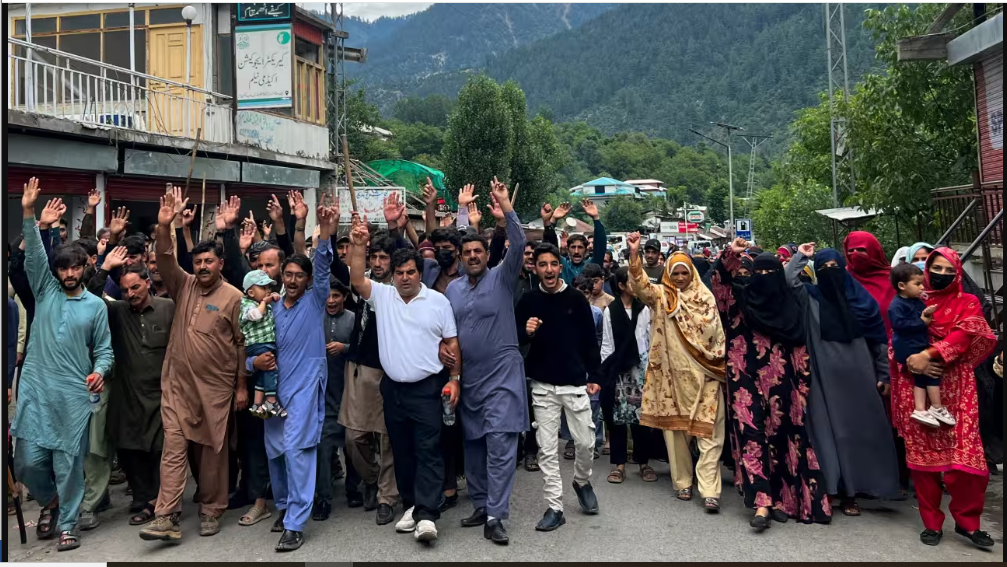
Thousands of protesters in Rawalakot in the PoK voiced opposition to Islamabad’s control of the region as the demonstration intensified on the 22nd day on Tuesday as demonstrators openly challenged Islamabad’s authority and warned that they would seek “other roads” if the supply of essential food items continued to be disrupted.
According to media reports, the remarks were made during a protest gathering at Eidgah Ground in Rawalakot, where hundreds of people have been participating in an ongoing agitation over food shortages, rising prices and governance issues. The speakers claimed that the region should no longer be considered under Pakistan’s control and warned about seeking stronger engagement with India.
The dissent was started to address long-standing concerns over governance, economic hardship, inflation, and what they describe as state repression and administrative neglect. The region is also facing an internet blackout since June 5 as authorities attempt to restrict communication and limit public awareness of the protests.
The protest is led by local figures, including civil rights activist Sardar Aman Khan, and gained more momentum after Pakistani authorities imposed a two-week blockade on food supplies and other essential goods.
In his address, Khan said Pakistan-occupied Kashmir was not part of Pakistan and claimed that Pakistan needed the region more than they depended on Pakistan. Now, since June 9, a separate sit-in has been underway near the Line of Control (LoC). During one of the demonstrations, Khan told supporters that if the restrictions on food and other necessities continued, people in the region might look toward India for assistance.
Khan said doing so would change the political dynamics of the region and put pressure on Islamabad. In one of the videos, people of Pakistan-occupied Kashmir have declared that the region is not a part of Pakistan. The residents have rejected Pakistan Army Chief Asim Munir and said they would not tolerate a dictator.
The protests are not limited to Pakistan-occupied Kashmir, and supporters living abroad have organised demonstrations outside Pakistani diplomatic missions in several countries. Protest leaders maintain that their campaign would continue until their political objectives regarding Muzaffarabad and the wider region were achieved.
Protesters accused the Pakistani government of deliberately restricting the movement of rations and other basic necessities in an attempt to weaken the movement. The latest statements reflect growing public anger in the region, where demonstrations have continued despite increased security measures and legal action against protest leaders.
Sardar Aman Khan had also accused the authorities of collectively punishing civilians by disrupting the supply of essential goods. “We don’t need your rations. You need us,” Khan said, adding that if food supplies remained blocked, residents would be forced to explore “other roads” to ensure their survival.
The protests are being led by the Jammu Kashmir Awami Action Committee (JAAC), which was banned by Pakistani authorities under anti-terrorism laws earlier this month. Despite the ban, demonstrations have continued across several parts of the region.
The protests have also gained momentum following recent remarks by Pakistan Defence Minister Khawaja Asif, who said residents of Rawalakot and Mirpur were “not proper Kashmiris.” The comments drew strong criticism from political leaders and residents across the PoK further straining relations between Islamabad and sections of the local leadership.
People familiar with the developments alleged that what began as a movement focused on economic issues and governance has increasingly been treated by the authorities as a security challenge. According to the media reports, activists, including Sardar Aman Khan and other members of the Awami Action Committee, have been booked under anti-terrorism laws, paving the way for arrests and a wider crackdown on those demanding lower prices, better governance and uninterrupted access to essential supplies.
Reports also suggest that internet services have remained restricted across parts of Pakistan-occupied Kashmir since early June. Protesters claim the communication restrictions are intended to prevent images and videos of the demonstrations from reaching a wider audience. The prolonged stand-off between protesters and security forces has disrupted normal life across several areas. Food shortages have been reported in affected regions. Reports say at least 22 people have died during clashes over the past two weeks.