


Manas Dasgupta
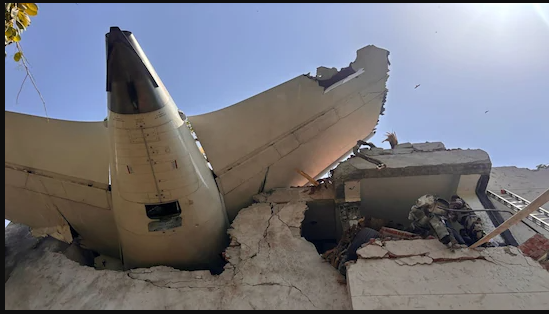
NEW DELHI, July 12: The preliminary report of the investigation into the Air India Dreamliner crash in Ahmedabad on June 12 in which 274 people were killed, including 241 on-board and 34 on the ground, confirmed what had been suspected, both the engines of the plane had shut down mid-air within seconds of take-off and the reason for the engine failure was “fuel cut-off.”
The preliminary report by the Aircraft Accident Investigation Bureau into the crash of the Air India Boeing Dreamliner 787-8 was released on Saturday. It said the fuel cut-off switches, which control the flow of fuel to the engines, transitioned from ‘RUN’ to ‘CUTOFF’ position one after another, within a second of each other, at 08:08:42 UTC, just as the aircraft reached its maximum speed of 180 knots during take-off.
This immediately cut fuel supply to both engines, causing them to lose power. However, the report did not determine what caused the fuel switches to move — whether it was human action, mechanical failure, or electronic malfunction. That critical question remained unanswered and is the focus of the ongoing investigation.
The investigation at the same time has eliminated several possible causes for the crash. There was no evidence in CCTV footage or physical examination signs of bird strike, weather conditions at the time of the flight was “good with light winds and clear skies,” the Aircraft configuration were right with flaps correctly set at 5 degrees for take-off, landing gear retracting normally, weight and balance was within normal operating limits, samples from airport fuel trucks tested showed that the fuel quality was satisfactory and no pre-existing engine problems were detected as both engines appeared to be operating normally until the fuel cut-off. The pilots were also medically fit and rested and had adequate experience flying that type of aircraft.
It was not clear how was fuel got cut-off from the engines. The cockpit voice recording reveals a crucial exchange: one pilot asked the other why he cut off the fuel, and the other responded saying he did not. This suggests that while one pilot noticed the fuel had been cut off, his colleague denied initiating the action. The denial by one pilot doesn’t definitively rule out human error, but it does suggest the fuel cut-off could have been unintentional.
The flight was being operated with First Officer Clive Kunder as the pilot flying (PF) and Captain Sumeet Sabharwal as the pilot monitoring (PM)—a standard arrangement where the more junior pilot flies while the senior captain monitors and manages the flight.
The report provides only a paraphrased account of cockpit communications pertaining to the fuel cut-off, not direct quotes or any other words that may have been spoken. According to the AAIB, “one of the pilots is heard asking the other why did you cutoff. The other pilot responded that I did not do so.”
The report doesn’t specify which pilot made which statement. Additional cockpit voice recorder analysis may reveal more details about crew communications and other audio, such as any alarms going off.
The pilots made a valiant attempt to save the aircraft. Within 10-14 seconds of the fuel cutoff, they moved both fuel switches back to the “RUN” position (Engine 1 at 08:08:52 UTC, Engine 2 at 08:08:56 UTC). Both engines began automatic restart sequences, with Engine 1 showing signs of recovery and Engine 2 attempting to relight.
However, recovery was ultimately impossible due to insufficient time and altitude. The aircraft was only about 625 feet above ground when the engines failed, and engine restart procedures require significantly more time than the 29 seconds available before impact. Modern jet engines can restart in flight, but typically need several minutes and higher altitudes to complete the process successfully.
The fact that the switches transitioned to ‘CUTOFF’, starving the engines of fuel, is expected to be the key focus area of the investigation going forward. The report noted that, as seen in footage of the crash, the Ram Air Turbine (RAT) was deployed, indicating a total loss of power and thrust in the aircraft.
“The CCTV footage obtained from the airport showed Ram Air Turbine (RAT) getting deployed during the initial climb immediately after lift-off. No significant bird activity is observed in the vicinity of the flight path. The aircraft started to lose altitude before crossing the airport perimeter wall,” the report states.
Data from the Enhanced Airborne Flight Recorder (EAFR), commonly known as the black box, revealed that both switches were moved back to the ‘RUN’ position and while Engine 1 showed signs of recovery, Engine 2 could not. “Engine 1’s core deceleration stopped, reversed and started to progress to recovery. Engine 2 was able to relight but could not arrest core speed deceleration and reintroduced fuel repeatedly to increase core speed acceleration and recovery,” the AAIB noted in the report.
The aircraft was airborne only for 32 seconds and the report notes that it travelled only 0.9 nautical miles before crashing into the BJ Medical College Hostel close to the airport. The crash occurred at 1.39 pm. The report said while the thrust levers were found near the idle position, the data from the black box revealed that they were in the forward position until the impact. Both fuel control switches were also in the ‘RUN’ position.
Another crucial observation made by the AAIB is that there is no immediate evidence of sabotage. The investigating body noted that the Federal Aviation Authority had issued an advisory in 2018 about the fuel control switches.
“The FAA issued Special Airworthiness Information Bulletin (SAIB) No. NM-18-33 on December 17, 2018, regarding the potential disengagement of the fuel control switch locking feature. This SAIB was issued based on reports from operators of Model 737 airplanes that the fuel control switches were installed with the locking feature disengaged. The airworthiness concern was not considered an unsafe condition that would warrant airworthiness directive (AD) by the FAA,” the report said.
Air India, it said, had not carried out the inspections, but they were not mandatory. “As per the information from Air India, the suggested inspections were not carried out as the SAIB was advisory and not mandatory. The scrutiny of maintenance records revealed that the throttle control module was replaced on VT-ANB in 2019 and 2023. However, the reason for the replacement was not linked to the fuel control switch. There has been no defect reported pertaining to the fuel control switch since 2023 on VT-ANB,” it noted.
The 2018 FAA bulletin addressed concerns about fuel control switch locking mechanisms that could become disengaged. These locking features are designed to prevent inadvertent movement of the fuel switches. When disengaged, the switches could potentially be moved more easily by vibration, inadvertent contact, or other factors.
While the FAA didn’t consider this serious enough to issue a mandatory directive, the bulletin recommended inspections to ensure the locking mechanisms were properly engaged.
The AAIB investigations into the crash would continue with several other key areas in focus including detailed analysis of black box data: While initial analysis has been completed, investigators are conducting detailed examination of the approximately 49 hours of flight data and two hours of voice recordings to uncover additional clues, detailed analysis of the limited fuel samples recovered from the aircraft, mechanical examination of the fuel control switches and related components to determine if they malfunctioned and
Interviews with additional witnesses or connected people and technical experts
The AAIB stated that “additional details are being gathered based on the initial leads” and that the investigation team would “review and examine additional evidence, records and information that is being sought from the stakeholders.” A final report, which will attempt to determine the probable cause and make safety recommendations, is expected to take months or potentially years to complete.
The Union Civil Aviation Minister Ram Mohan Naidu said the AAIB report was only based on preliminary findings, and urged against reaching any conclusions until the final report was released. “Till the final report doesn’t come out, we should not reach any conclusion,” said the aviation minister. He hailed the workforce of pilots, calling them the “backbone” of civil aviation.
“I truly believe we have the most wonderful workforce in terms of pilots and the crew in the whole world. Pilots and crew are the backbone of the aviation industry,” Naidu remarked.
Naidu said the concerned authorities were analysing the preliminary report and pointed out that any comment on the findings would be appropriate after the final report was released. He further commended the AAIB for its efforts in preparing the preliminary report, describing the task as “challenging” due to the complexities involved in securing the black boxes and retrieving critical data.
“I want to appreciate the job done by AAIB. It was a very challenging task—securing the black boxes, retrieving the data, and conducting the investigation entirely in India for the first time.” “AAIB has done a very mature and transparent job. All international protocols have been followed,” the minister remarked.
The AAIB investigation revealed that both engines of the ill-fated aircraft shut down mid-air just seconds after take-off, as the fuel cutoff switches were moved from RUN to CUTOFF within one second of each other.
Reacting to the findings, Naidu said, “These are technical things. Once AAIB is clear about the things, they will submit the final report. This is just the preliminary report.”